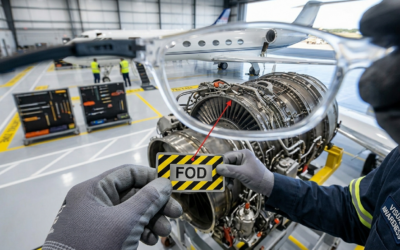
A FOD management system is the organized process a team uses to identify, collect, document, track, and reduce Foreign Object Debris. It brings together FOD prevention, FOD control, inspections, tool accountability, reporting, corrective action, and audits into one repeatable system.
In aviation, aerospace, defense, manufacturing, and maintenance environments, a FOD management system helps teams move beyond occasional cleanup. It creates a structured way to know where debris is appearing, why it is appearing, and what needs to change.
Quick Answer: A FOD management system is a structured way to manage Foreign Object Debris using inspections, FOD walks, FOD bags, tool control, reporting logs, corrective action, training, and audits. The goal is to prevent debris from becoming Foreign Object Damage.
View FOD Control Products | Read the FOD Prevention Program Guide | Read the FOD Control Guide
What Is a FOD Management System?
A FOD management system is the framework used to manage debris risk from start to finish.
It includes:
- Identifying FOD risk areas
- Assigning responsibilities
- Performing inspections
- Collecting and containing debris
- Documenting findings
- Tracking recurring sources
- Taking corrective action
- Training personnel
- Auditing the process
- Improving procedures over time
The FAA describes Foreign Object Debris as an object located in an inappropriate place in the airport environment that can injure personnel or damage aircraft. Source: FAA Foreign Object Debris Program
A management system helps teams control that risk consistently.
FOD Management vs. FOD Prevention vs. FOD Control
These terms are connected, but each has a different role.
| Term | Main Purpose | Example |
|---|---|---|
| FOD prevention | Stop debris before it becomes a hazard | Tool accountability and clean work practices |
| FOD control | Manage debris when it appears | Collecting debris with FOD bags during inspections |
| FOD management | Organize the full process | Tracking findings, assigning corrective action, auditing results |
FOD management is the larger system that connects prevention and control.
Read more: FOD Prevention vs. FOD Control
Why FOD Management Matters
FOD can damage aircraft engines, cut tires, lodge in mechanisms, damage equipment, or injure personnel.
SKYbrary notes that FOD can damage aircraft engines when ingested, cut aircraft tires, lodge in mechanisms, or injure people when moved by jet blast or prop wash. Source: SKYbrary Foreign Object Debris
A FOD management system matters because it helps teams:
- Reduce recurring debris
- Improve inspection consistency
- Track high-risk areas
- Strengthen tool accountability
- Support training and awareness
- Improve corrective action
- Keep FOD products available where needed
- Build audit-ready documentation
- Reduce the chance of Foreign Object Damage
Without management, FOD findings can become isolated cleanup events. With management, findings become useful data.
Core Parts of a FOD Management System
1. Risk Area Identification
Start by identifying where FOD is most likely to appear and where it can cause the most damage.
Common risk areas include:
- Runways
- Taxiways
- Ramps and aprons
- Hangars
- Flight lines
- Maintenance bays
- Tool-control zones
- Manufacturing floors
- Ground support equipment areas
- Packaging and disposal points
2. Clear Ownership
Each part of the system should have an owner. Teams should know who inspects, who collects debris, who reviews findings, and who follows up on recurring issues.
Ownership may include:
- Safety managers
- Maintenance leads
- Quality teams
- Inspectors
- Supervisors
- Ground support personnel
- Tool-room personnel
3. Inspection Schedule
A FOD management system should define when inspections happen.
Inspection triggers may include:
- Daily operations
- Shift changes
- Before aircraft movement
- Before and after maintenance
- After construction
- After severe weather
- Before audits
- After recurring debris findings
4. Collection and Containment Tools
FOD management requires practical tools for collection and containment.
Useful products include:
- FOD bags
- FOD pouches
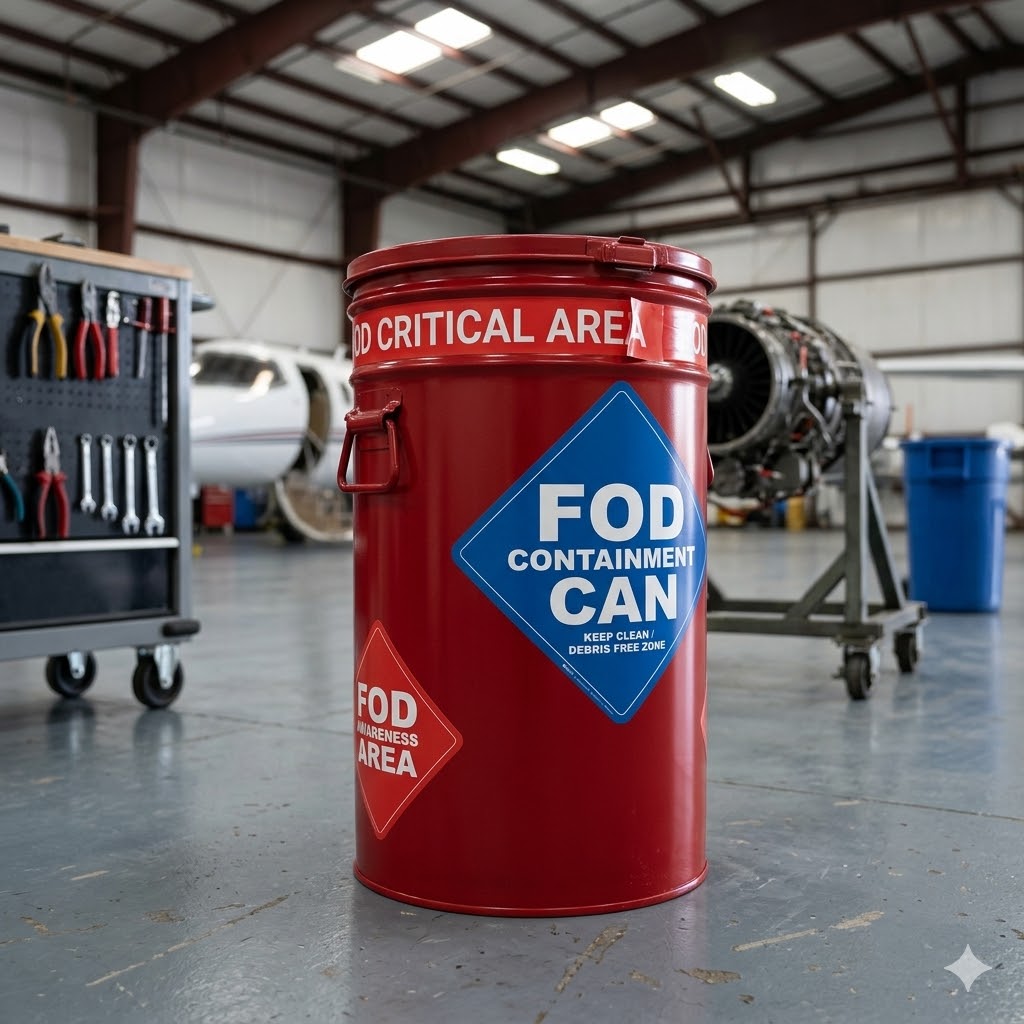
- FOD cans
- FOD buckets
- Tool bags
- Checklists
- Debris logs
- Visual-control products
5. Reporting Process
FOD findings should be documented. Reporting helps teams identify patterns and prove that inspections are happening.
Useful fields include:
- Date and time
- Area inspected
- Inspector or team
- Debris found
- Quantity or description
- Suspected source
- Corrective action
- Follow-up owner
- Status
6. Corrective Action Tracking
Recurring debris should trigger corrective action.
Corrective actions may include:
- Adding FOD containers
- Updating tool-control procedures
- Changing work-area layout
- Repairing pavement
- Increasing inspection frequency
- Retraining personnel
- Improving packaging disposal
7. Training and Awareness
Personnel should understand what FOD is, where it appears, how to collect it, and how to report it.
Training should be practical and connected to the actual work area.
8. Audit and Review
Audits confirm whether the system is being followed and whether it is working.
Audits may review:
- Inspection records
- FOD findings
- Corrective actions
- Tool-control records
- Product placement
- Training completion
- Repeat problem areas
FOD Management System Workflow
A simple workflow may look like this:
- Identify the area.
- Inspect the area.
- Collect debris.
- Document findings.
- Review the source.
- Assign corrective action.
- Track completion.
- Audit results.
- Improve the process.
This workflow helps teams turn debris findings into prevention improvements.
FOD Management Tools and Products
| Tool or Product | Role in the System | Best Use |
|---|---|---|
| FOD bags | Portable debris collection | FOD walks and inspections |
| FOD pouches | Individual collection | Technicians and inspectors |
| FOD buckets | Larger containment | Hangars and work zones |
| FOD cans | Fixed collection points | Ramps, hangars, tool rooms |
| Tool bags | Tool organization | Aircraft maintenance and tool control |
| Checklists | Inspection consistency | FOD walks and audits |
| Debris logs | Tracking | Reports and corrective action |
| FOD tape and signs | Awareness | Controlled areas and reminders |
Products make the management system easier to follow because personnel have visible tools where the work happens.
FOD Management Metrics
Tracking simple metrics can help teams understand whether the system is improving.
Useful metrics include:
- Number of FOD findings by area
- Types of debris found
- Repeat debris sources
- Inspection completion rate
- Corrective action completion rate
- Missing-tool incidents
- Areas with frequent debris
- Training completion
- Time to close corrective actions
The goal is not only to collect data. The goal is to use the data to reduce future debris.
FOD Management Checklist
Use this checklist to review a FOD management system.
System Setup
- FOD risk areas are identified
- The program owner is assigned
- The inspection schedule is defined
- The reporting process is documented
- The corrective action process is clear
- Training requirements are defined
Daily Operation
- FOD walks or inspections are performed
- FOD bags or containers are available
- Tools and small parts are controlled
- Findings are recorded
- Debris is removed and contained
- Repeat issues are reported
Review and Improvement
- Reports are reviewed regularly
- Recurring sources are identified
- Corrective actions are assigned
- Product placement is evaluated
- Training gaps are addressed
- Audit results are used to improve the system
Common FOD Management Mistakes
Avoid these issues:
- Treating FOD as cleanup only
- Not documenting findings
- Failing to track recurring debris
- Placing FOD products too far from work areas
- Not assigning corrective action owners
- Ignoring tool-control weaknesses
- Using training without practical collection tools
- Reviewing reports without making improvements
A good system should make FOD prevention easier, not more complicated.
How FOD Management Supports a Prevention Program
A FOD prevention program defines the overall approach. A FOD management system helps operate and measure that approach.
The prevention program answers:
- What are we trying to prevent?
- What procedures do we follow?
- Who is responsible?
The management system answers:
- What did we find?
- Where did it come from?
- What did we do about it?
- Did the problem return?
Together, they create a stronger FOD safety process.
FAQ: FOD Management Systems
What is a FOD management system?
A FOD management system is a structured process for identifying, collecting, documenting, tracking, and reducing Foreign Object Debris.
What should a FOD management system include?
It should include inspections, FOD walks, collection products, tool control, reporting, corrective action, training, audits, and continuous improvement.
What is the difference between FOD management and FOD prevention?
FOD prevention focuses on reducing debris risk. FOD management organizes the full process for inspections, reporting, tracking, corrective action, and improvement.
What products support FOD management?
Useful products include FOD bags, pouches, buckets, cans, tool bags, checklists, logs, FOD tape, signs, and visual reminders.
How do FOD bags support a management system?
FOD bags give personnel a portable way to collect and contain debris during inspections, FOD walks, and daily work.
What should be tracked in a FOD management system?
Teams should track where debris was found, what type of debris it was, suspected source, corrective action, follow-up owner, and whether the issue repeats.
Who is responsible for FOD management?
Responsibility may include safety managers, maintenance teams, quality teams, inspectors, supervisors, ground support personnel, and tool-room personnel.
Final Takeaway
A FOD management system turns FOD prevention into a measurable daily process. It helps teams inspect areas, collect debris, document findings, track recurring sources, assign corrective action, and improve over time.
For aviation, aerospace, defense, manufacturing, and maintenance teams, the strongest systems combine clear procedures with practical tools such as FOD bags, buckets, cans, pouches, tool bags, checklists, and reporting logs.
View FOD Control Products | Shop FOD Bags