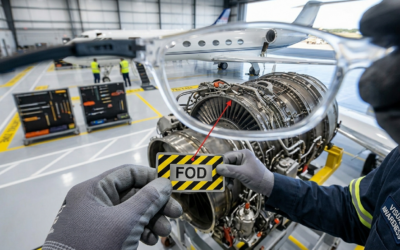

The types of FOD in aviation can include loose hardware, tools, pavement fragments, stones, packaging, trash, safety wire, broken parts, wildlife, ice, and other objects that do not belong in aircraft operating or maintenance areas.
FOD stands for Foreign Object Debris. When that debris causes harm, it becomes Foreign Object Damage. In aviation, FOD is especially important because small objects can damage aircraft engines, cut tires, lodge in mechanisms, injure personnel, or delay operations.
Quick Answer: The main types of FOD in aviation are runway FOD, taxiway and apron FOD, maintenance FOD, tool-related FOD, pavement FOD, environmental FOD, wildlife-related FOD, and operational debris such as packaging, trash, or ground support equipment fragments.
View FOD Control Products | Shop FOD Bags | Read the Aircraft FOD Guide
What Is FOD in Aviation?
In aviation, FOD usually means Foreign Object Debris. It refers to any object in the wrong place that can injure personnel or damage aircraft, equipment, engines, tires, or systems.
The FAA defines airport Foreign Object Debris as an object located in an inappropriate place in the airport environment that can injure personnel or damage aircraft. Source: FAA Foreign Object Debris Program
Examples may include:
- Screws
- Bolts
- Nuts and washers
- Safety wire
- Hand tools
- Stones and gravel
- Pavement fragments
- Plastic wrap
- Paper and packaging
- Rubber pieces
- Ice and snow
- Wildlife remains
- Broken aircraft or equipment parts
FOD can be found in aircraft movement areas, maintenance areas, hangars, ramps, aprons, taxiways, runways, and manufacturing floors.
Foreign Object Debris vs. Foreign Object Damage
The term FOD is often used for both debris and damage, but they are not exactly the same.
| Term | Meaning | Example |
|---|---|---|
| Foreign Object Debris | The object in the wrong place | A screw on a runway |
| Foreign Object Damage | The harm caused by the object | Engine damage after the screw is ingested |
The goal of FOD prevention is to remove debris before it creates damage.
Main Types of FOD in Aviation
SKYbrary identifies runway FOD, taxiway/apron FOD, and maintenance FOD as major areas requiring attention. Source: SKYbrary Foreign Object Debris
Those categories are a strong starting point, but aviation teams often classify FOD by both location and source.
1. Runway FOD
Runway FOD includes debris found on or near runways where aircraft take off and land. This type of FOD can carry high risk because aircraft are moving quickly and engines may ingest debris.
Examples include:
- Stones
- Pavement fragments
- Loose hardware
- Broken aircraft parts
- Tire fragments
- Wildlife remains
- Ice or snow
- Construction debris
- Objects dropped by aircraft or vehicles
Runway FOD is dangerous because it can be ingested by engines, strike aircraft surfaces, or damage tires during takeoff and landing.
2. Taxiway and Apron FOD
Taxiway and apron FOD includes debris found where aircraft taxi, park, load, unload, refuel, or receive ground support.
Examples include:
- Ground support equipment fragments
- Baggage or cargo debris
- Plastic wrap
- Paper
- Food-service or catering debris
- Stones and sand
- Rubber pieces
- Loose vehicle parts
- Safety wire and hardware
This type of FOD may appear less urgent than runway debris, but it can still move into aircraft paths. SKYbrary notes that jet blast can move small objects onto the runway. Source: SKYbrary Foreign Object Debris
3. Maintenance FOD
Maintenance FOD comes from aircraft maintenance, repair, inspection, and assembly work. It is especially important because tools, parts, and materials may be used near open aircraft systems.
Examples include:
- Tools
- Tool fragments
- Screws and bolts
- Nuts and washers
- Safety wire
- Drill shavings
- Rags and wipes
- Gloves
- Tape
- Packaging
- Removed parts
- Fasteners
Maintenance FOD can become hidden inside aircraft systems, around engines, near panels, or in tool-control areas.
View tool bags for maintenance control
4. Tool-Related FOD
Tool-related FOD occurs when tools, tool fragments, or small maintenance items are misplaced or left behind.
Examples include:
- Wrenches
- Screwdrivers
- Sockets
- Drill bits
- Tool clips
- Broken tool pieces
- Fasteners
- Magnetic wristband contents
Tool-related FOD is preventable through tool-control procedures, organized tool bags, inspection checks, and immediate reporting of missing items.
5. Pavement FOD
Pavement FOD comes from damaged runway, taxiway, ramp, apron, or hangar surfaces.
Examples include:
- Asphalt fragments
- Concrete fragments
- Loose aggregate
- Spalling material
- Raveling debris
- Joint material
- Broken surface patches
The FAA FOD Index measures pavement distresses that generate loose pieces with the potential to damage aircraft. These include conditions such as cracking, raveling, patching, spalling, scaling, and joint damage. Source: FAA FOD Index
Pavement FOD can be sharp, heavy, and located directly in aircraft operating areas.
6. Environmental FOD
Environmental FOD comes from weather, wind, natural materials, or outdoor conditions.
Examples include:
- Ice
- Snow
- Hail
- Sand
- Dirt
- Leaves
- Branches
- Dust
- Standing water carrying debris
Environmental FOD can appear quickly after storms, high winds, construction activity, or seasonal weather changes.
7. Wildlife-Related FOD
Wildlife-related FOD includes birds, insects, animal remains, nesting material, or other biological material that can affect aircraft operations.
Examples include:
- Birds
- Bird remains
- Feathers
- Nesting materials
- Insects
- Small animals
Wildlife hazards are often managed through airport wildlife control programs, but they are also part of the broader foreign object risk environment.
8. Operational and Housekeeping FOD
Operational FOD comes from normal daily activity around aircraft, vehicles, personnel, cargo, baggage, and equipment.
Examples include:
- Plastic wrap
- Paper
- Food packaging
- Tape
- Zip ties
- Pens
- Badge clips
- Gloves
- Rags
- Labels
- Trash
- Loose personal items
This type of FOD is often controlled through housekeeping, disposal points, FOD bags, awareness training, and routine inspections.
FOD Types by Location
| Location | Common FOD Types | Prevention Method |
|---|---|---|
| Runway | Pavement fragments, stones, aircraft parts, wildlife | Runway inspections, sweeping, reporting |
| Taxiway | Rubber, stones, vehicle debris, loose parts | Routine inspection and surface maintenance |
| Ramp or apron | Packaging, ground support debris, loose hardware | FOD cans, FOD bags, housekeeping |
| Hangar | Tools, fasteners, rags, packaging | Tool control, FOD bags, cleanup checks |
| Maintenance area | Safety wire, screws, drill shavings, parts | Tool bags, part control, inspection logs |
| Manufacturing floor | Shavings, parts, packaging, labels | Collection containers and process controls |
This location-based view helps teams decide which FOD control products and procedures are needed.
FOD Types by Material
FOD can also be grouped by material type.
| Material Type | Examples | Risk |
|---|---|---|
| Metal | Screws, bolts, washers, safety wire | Engine, tire, and mechanism damage |
| Stone or pavement | Gravel, asphalt, concrete fragments | Tire cuts and engine ingestion |
| Plastic | Wrap, packaging, caps, containers | Airflow blockage and housekeeping risk |
| Paper and fabric | Rags, wipes, labels, paper | Fire, contamination, and mechanism risk |
| Organic | Birds, insects, leaves, nesting material | Engine ingestion and contamination |
| Ice and snow | Ice chunks, hail, frozen buildup | Impact, ingestion, and traction risk |
Material classification can help teams identify where debris comes from and how to prevent repeat findings.
How Different Types of FOD Cause Damage
Different types of FOD create different risks.
- Metal FOD can cut tires, damage engines, or jam mechanisms.
- Pavement FOD can strike aircraft or be ingested into engines.
- Tool-related FOD can create hidden maintenance hazards.
- Packaging FOD can move into aircraft operating areas.
- Wildlife-related FOD can cause strike or ingestion risk.
- Environmental FOD can appear after weather events.
SKYbrary notes that FOD can damage engines, cut tires, lodge in mechanisms, or injure people when propelled by jet blast or prop wash. Source: SKYbrary Foreign Object Debris and Damage Prevention
How To Prevent Different Types of FOD
Different FOD types require different controls.
For Runway and Pavement FOD
- Perform scheduled runway inspections
- Sweep aircraft movement areas
- Report damaged pavement
- Inspect after construction or severe weather
- Use detection systems where appropriate
For Maintenance and Tool FOD
- Use tool-control procedures
- Store tools in organized tool bags
- Account for fasteners and small parts
- Inspect work areas before closeout
- Report missing tools immediately
For Ramp and Apron FOD
- Place FOD cans near active areas
- Use FOD bags during inspections
- Control packaging and trash
- Inspect around ground support equipment
- Train personnel to remove debris immediately
For Environmental FOD
- Inspect after storms or high winds
- Remove ice, snow, and natural debris
- Monitor areas where debris collects
- Adjust inspection frequency during weather events
Products That Help Control FOD Types
FOD prevention products help teams collect and contain debris at the point of use.
| Product | Best For | Use Case |
|---|---|---|
| FOD bags | Small debris | FOD walks, ramp inspections, maintenance areas |
| FOD pouches | Individual inspectors | Portable debris collection |
| FOD buckets | Larger debris | Hangars and work zones |
| FOD cans | Designated disposal | Ramps, gates, hangars, tool rooms |
| Tool bags | Tool-related FOD | Aircraft maintenance and tool control |
| FOD tape and stickers | Awareness | Controlled zones and reminders |
| Inspection checklists | Documentation | FOD walks and audits |
FOD Identification Checklist
Use this checklist when inspecting aviation or aerospace work areas.
Look for Metal FOD
- Screws
- Bolts
- Nuts
- Washers
- Safety wire
- Drill shavings
- Broken parts
Look for Tool FOD
- Missing tools
- Tool fragments
- Loose sockets
- Drill bits
- Fasteners
- Magnetic wristband contents
Look for Pavement FOD
- Gravel
- Concrete fragments
- Asphalt pieces
- Loose aggregate
- Joint material
- Broken surface patches
Look for Operational FOD
- Plastic wrap
- Paper
- Tape
- Zip ties
- Gloves
- Rags
- Labels
- Packaging
Look for Environmental FOD
- Ice
- Snow
- Sand
- Leaves
- Branches
- Wildlife remains
FAQ: Types of FOD in Aviation
What are the main types of FOD in aviation?
The main types of FOD in aviation include runway FOD, taxiway and apron FOD, maintenance FOD, tool-related FOD, pavement FOD, environmental FOD, wildlife-related FOD, and operational debris.
What are examples of FOD?
Examples of FOD include screws, bolts, washers, tools, safety wire, stones, pavement fragments, plastic wrap, paper, packaging, ice, wildlife remains, and broken aircraft parts.
What is runway FOD?
Runway FOD is debris located on or near a runway where aircraft take off and land. It may include stones, pavement fragments, aircraft parts, wildlife, or loose hardware.
What is maintenance FOD?
Maintenance FOD is debris created or left behind during aircraft maintenance, repair, inspection, or assembly. Examples include tools, fasteners, safety wire, rags, gloves, tape, and removed parts.
What type of FOD is most dangerous?
Runway FOD can be especially dangerous because aircraft are moving quickly during takeoff and landing. Engine-area FOD and tool-related FOD can also create serious safety risks.
How do you identify FOD?
FOD is identified through visual inspections, FOD walks, tool-control checks, runway inspections, maintenance closeout checks, and reporting from personnel.
How can different types of FOD be prevented?
FOD can be prevented through regular inspections, FOD walks, tool control, FOD bags, FOD cans, pavement maintenance, housekeeping, training, and corrective action tracking.
What products help control different types of FOD?
Useful products include FOD bags, pouches, buckets, cans, tool bags, tape, stickers, signs, checklists, and other FOD control products.
Final Takeaway
The different types of FOD in aviation can come from runways, ramps, maintenance work, tools, pavement, weather, wildlife, packaging, and daily operations. The best prevention programs identify where each type appears, collect debris quickly, document recurring sources, and correct the process that created the risk.
FOD bags, pouches, buckets, cans, tool bags, and visual-control products help teams keep debris contained and visible before it becomes damage.
Shop FOD Bags | View FOD Control Products