
FOD Cans for Aviation & Aerospace
FOD cans are dedicated collection containers used to safely gather and contain foreign object debris (FOD) in hangars, ramps, maintenance bays, and manufacturing floors. Unlike a general-purpose trash can, a FOD can is purpose-built for one job: giving loose hardware, safety wire, fasteners, rivets, and other debris a clearly marked, dedicated place to go, separate from ordinary waste. That distinction matters more than it might first appear. When debris is mixed in with regular trash, it becomes nearly impossible to track what’s being found, where it’s coming from, or whether your prevention program is actually working. A dedicated FOD can turns debris collection into something visible and measurable — a real part of your daily FOD walk and audit process, not an afterthought.
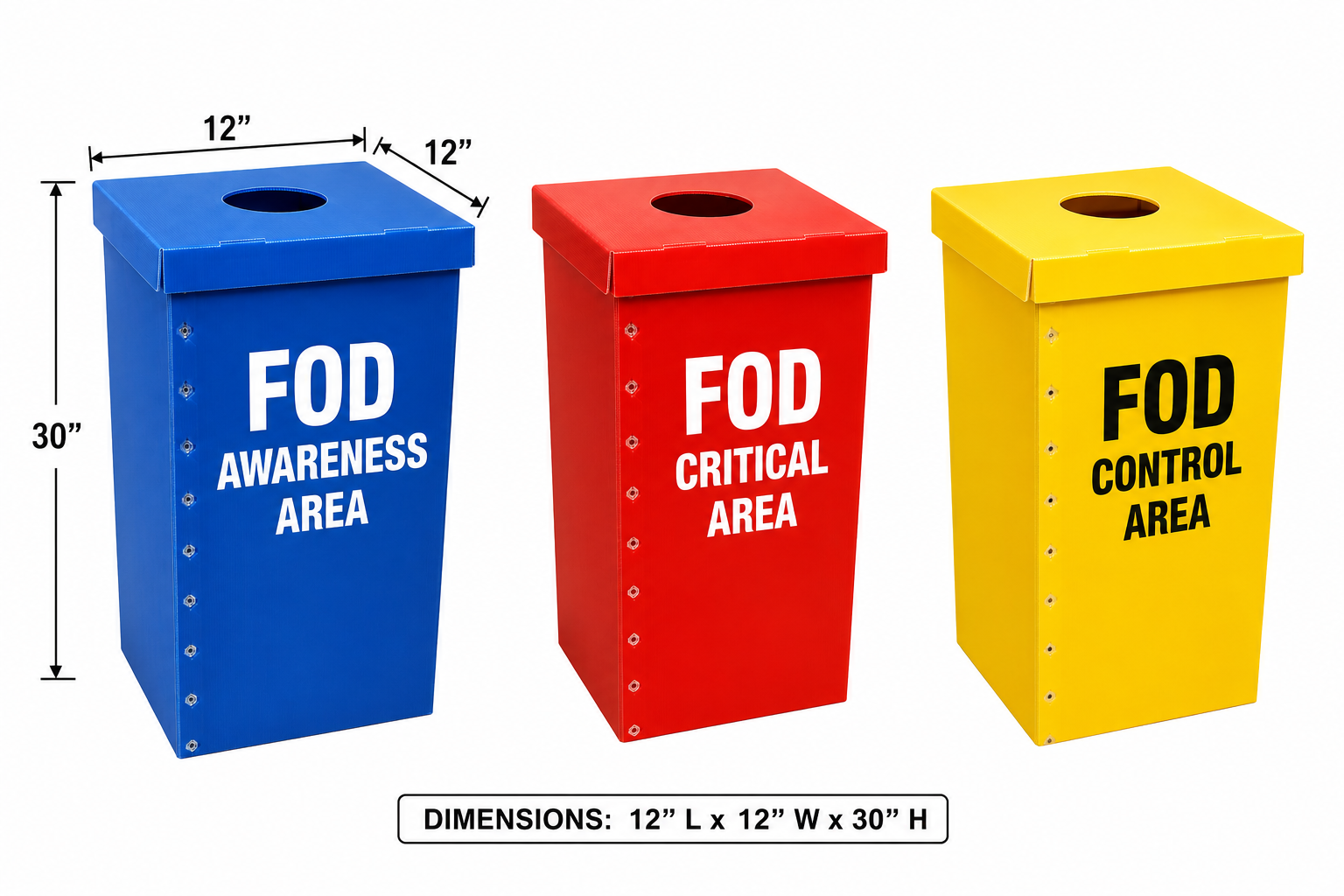
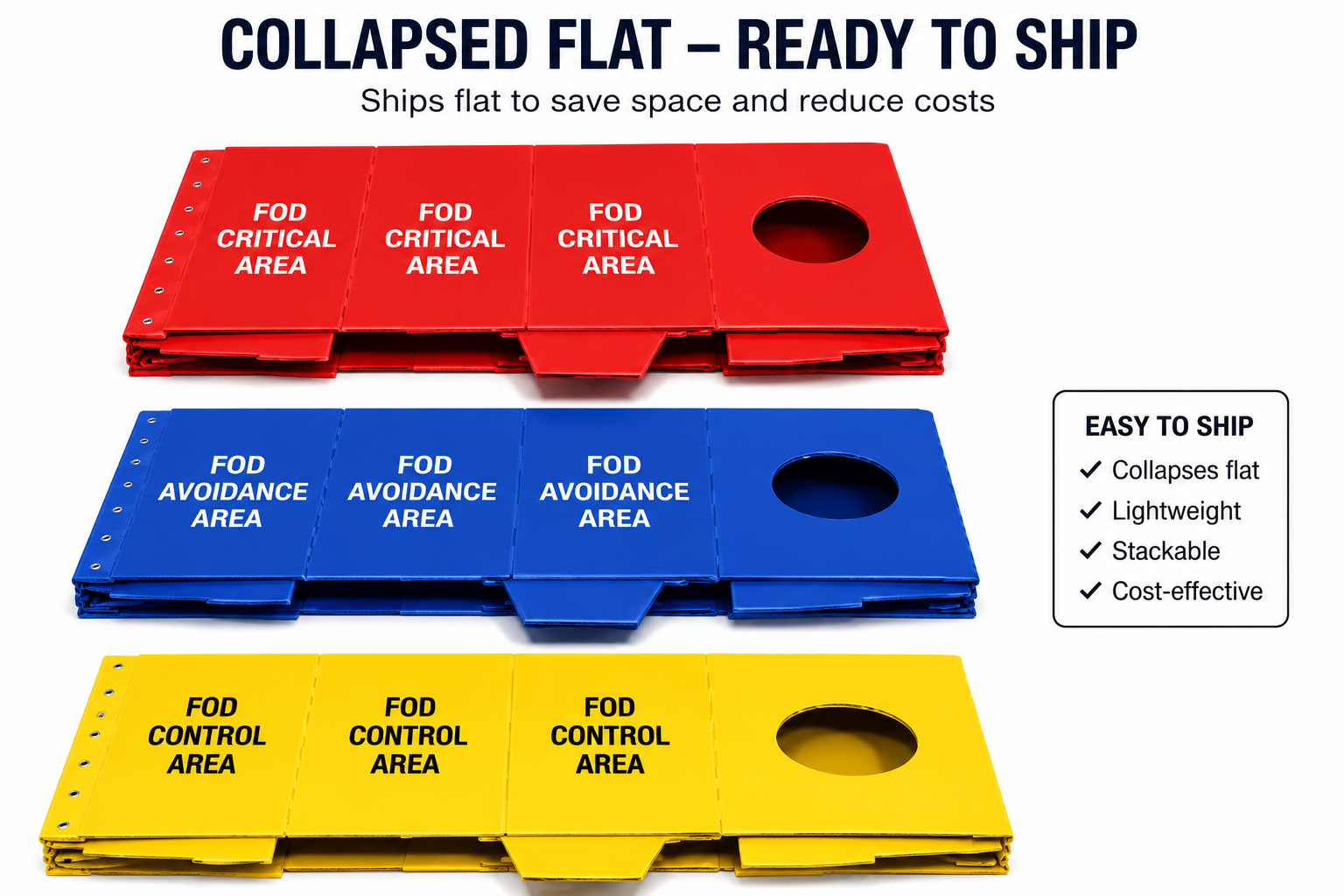
Why a Dedicated FOD Can Matters
Foreign object debris is one of the leading causes of preventable damage in aviation and aerospace environments — from engine ingestion events and tire damage to costly aircraft-on-ground delays and, in the worst cases, safety incidents. Most formal FOD prevention programs, including those built around NAS412 and AS9146, treat debris containment as a foundational control rather than an optional extra layered on top of existing procedures.
A properly placed, properly labeled FOD can supports that control at the exact point where debris is actually generated: the tool crib, the individual workstation, the ramp checkpoint. This is a deliberate design principle, not an accident. Debris control works best when it requires the least effort from the person closest to the problem. If a technician has to walk across a hangar to dispose of a stray fastener, there’s a real chance it ends up in a pocket, a toolbox, or worse, left behind entirely.
Facilities that skip this step often find that debris still gets picked up eventually — just later, by someone walking the floor during a scheduled FOD walk, after it’s already had the chance to migrate somewhere it shouldn’t be. The goal of a FOD can isn’t just cleanup after the fact. It’s making the safe choice the easy choice, every time, for every technician, on every shift.
There’s also a compliance dimension worth understanding. Auditors and program reviewers evaluating a facility’s FOD prevention program don’t just look at whether debris control equipment exists — they look at whether it’s placed sensibly, labeled clearly, and actually used. A FOD can sitting unused in a supply closet does nothing for your program. One positioned at the point of use, checked regularly, and visibly part of the daily routine is a genuine control, not paperwork.
Where FOD Cans Are Used?
- Aircraft hangars and maintenance bays, positioned near tool cribs and aircraft access points
- Ramp and flight line areas, where ground crews and maintenance personnel move frequently
- Manufacturing and assembly floors, particularly in facilities producing aerospace components
- Tool cribs and staging zones, where hardware and small parts are handled constantly
- Motorsport and industrial facilities with similar debris-control and safety requirements
Placement should always follow where the work actually happens, not where it’s most convenient to put a container. A FOD can positioned out of the natural flow of a technician’s day will get used far less often than one placed directly at the point where debris is generated.
Available Options
FODBag offers FOD cans built for the specific environments where debris control matters most, not repurposed janitorial or office equipment that happens to have a lid:
Bench-mount FOD cans
sized for tool cribs and individual workstations, keeping debris containment within arm's reach during maintenance and inspection tasks. These are ideal for high-frequency, small-item debris like screws, washers, and safety wire clippings.
Standing floor FOD cans
larger capacity units built for hangars and high-traffic maintenance bays where debris volume is higher and multiple technicians share the same work zone. These are typically the primary containers checked during scheduled FOD walks.
Wall-mount FOD cans
space-saving option for tight maintenance areas, mobile service carts, or facilities where floor space is at a premium and a standing unit isn't practical.
High-visibility marked cans
designed for flight line and outdoor ramp use, with weather-resistant construction, secure mounting or weighting options, and clear high-contrast FOD marking that holds up under sun and weather exposure.
FOD Cans and Compliance
FOD cans support the debris-control expectations referenced in FOD prevention programs built around NAS412 standards, and they’re typically one of the specific items checked during a routine FOD walk. Facilities working toward AS9146 compliance often find that formalizing debris collection, including documenting where FOD cans are placed, how often they’re emptied, and who’s responsible for checking them, is one of the more straightforward and immediately actionable pieces of building out a documented, auditable program.
It’s worth noting that compliance isn’t really about owning the equipment. It’s about being able to demonstrate, consistently, that debris control is an active part of daily operations rather than a policy that exists only on paper.
Frequently Asked Questions
How often should FOD cans be emptied?
Daily in high-traffic maintenance areas, logged as part of routine FOD walk procedures.
FOD can vs. FOD bucket: what's the difference?
Both serve the same purpose; “bucket” typically refers to a portable, handled container, “can” to a fixed or standing unit.
What size do I need for my facility?
Depends on traffic volume and layout, hangars typically need larger standing units, ramps favor smaller, high-visibility marked cans.