
A FOD walk is an aviation safety inspection where personnel walk through a runway, ramp, hangar, flight line, maintenance area, or other controlled work zone to find and remove Foreign Object Debris before it can damage aircraft, equipment, tools, engines, tires, or personnel.
In aviation, a FOD walk may also be called a FOD walkdown. Teams inspect runways, ramps, taxiways, hangars, flight lines, maintenance areas, and tool-control zones to identify debris, collect it in FOD bags or containers, document findings, and correct the source of recurring debris.
The goal is simple: remove debris before it becomes damage.
Quick Answer: A FOD walk is a visual inspection for Foreign Object Debris. Personnel move through a defined area, often in a line or organized pattern, looking for loose objects such as hardware, tools, stones, pavement fragments, packaging, safety wire, plastic, or other debris. Items found during the inspection are collected, recorded, and removed from the operational area. A FOD walk is also commonly called a FOD walkdown.
View Fod Bag FOD Control Products Fod Prevention Program
What Is a FOD Walk?
A FOD walk is a proactive debris inspection process used to locate and remove objects that do not belong in an operational environment. These objects may include loose hardware, tools, stones, pavement fragments, plastic, packaging material, personal items, or aircraft maintenance debris.
The FAA describes Foreign Object Debris as an object located in an inappropriate place in the airport environment that can injure personnel or damage aircraft. This is why airports, airlines, military aviation teams, maintenance crews, and aerospace facilities use FOD prevention programs, inspections, and debris-control procedures. Source: FAA Foreign Object Debris Program
FOD walks are often performed in:
- Airport ramps and aprons
- Runways and taxiways
- Aircraft maintenance hangars
- Military flight lines
- Aerospace manufacturing areas
- Tool-control zones
- Assembly floors
- Ground support equipment areas
The purpose is simple: identify debris before it becomes damage.
FOD Walk vs. FOD Walkdown
The terms FOD walk and FOD walkdown are often used for the same activity.
A FOD walk usually refers to a routine inspection of a runway, ramp, hangar, maintenance area, production floor, or other controlled space.
A FOD walkdown often refers to a more formal inspection where personnel line up and move shoulder-to-shoulder across a flight line, flight deck, runway area, or military aviation environment.
Both methods have the same purpose: to identify, collect, and remove Foreign Object Debris before it causes damage.
The U.S. Air Force publicly describes FOD walks as routine flightline cleanups used to clear objects that could damage aircraft. Source: U.S. Air Forces Central FOD Walk
Why FOD Walks Matter in Aviation and Aerospace
Foreign Object Debris is a serious concern because aircraft and aerospace systems operate in highly controlled environments. Loose debris can cause costly damage, operational delays, and safety incidents.
FOD can lead to:
- Engine ingestion
- Tire punctures
- Aircraft surface damage
- Tool accountability issues
- Maintenance delays
- Production interruptions
- Safety risks for personnel
- Increased repair and inspection costs
SKYbrary identifies runway FOD, taxiway/apron FOD, and maintenance FOD as major areas of concern because debris in these areas can damage equipment or injure personnel. Source: SKYbrary Foreign Object Debris
A FOD walk helps reduce these risks by creating a repeatable inspection process. When performed consistently, it supports safer operations, cleaner work areas, and stronger accountability across teams.
FOD walks are not just cleanup tasks. They are part of a safety system.
Where FOD Walks Are Performed
FOD walks are used anywhere loose objects can create damage, downtime, or safety hazards.
Common inspection areas include:
- Runways
- Taxiways
- Airport ramps
- Aprons
- Aircraft parking areas
- Maintenance hangars
- Military flight lines
- Flight decks
- Aerospace assembly areas
- Manufacturing floors
- Tool-control zones
- Ground support equipment areas
- Construction or repair zones near aircraft operations
Areas with aircraft movement, vehicle traffic, tool use, open packaging, or recent maintenance activity should be treated as higher-risk zones.
When Should a FOD Walk Be Performed?
The right schedule depends on the risk level of the area, but FOD walks should be performed before debris can affect operations.
Common times include:
- Before aircraft movement
- Before flight operations
- Before and after maintenance work
- At the start or end of a shift
- After severe weather
- After construction or pavement work
- After loading, unloading, or ground handling activity
- Before audits or safety inspections
- When recurring debris has been reported
- Any time debris is observed in a controlled area
High-risk aviation areas may require daily or shift-based inspections. Lower-risk work areas may use scheduled or event-based FOD walks.
Step-by-Step FOD Walk Procedure
1. Define the Inspection Area
Before the walk begins, define the exact area to inspect. This prevents missed zones and keeps personnel focused.
The inspection area may include a ramp, runway section, hangar bay, flight line, tool-control zone, production floor, or maintenance work area.
2. Assign a Lead Person
Assign a lead person to coordinate the inspection, confirm coverage, communicate safety requirements, and collect documentation.
For larger areas, the lead should divide the space into sections so the team can inspect systematically.
3. Gather FOD Collection Tools
Personnel should have the correct tools before entering the inspection area.
Useful tools include:
- FOD bags
- FOD pouches
- FOD cans or collection containers
- Gloves
- High-visibility vests
- Flashlights
- Inspection checklist
- Debris log
- Marking tape
- Camera or phone for documentation when allowed
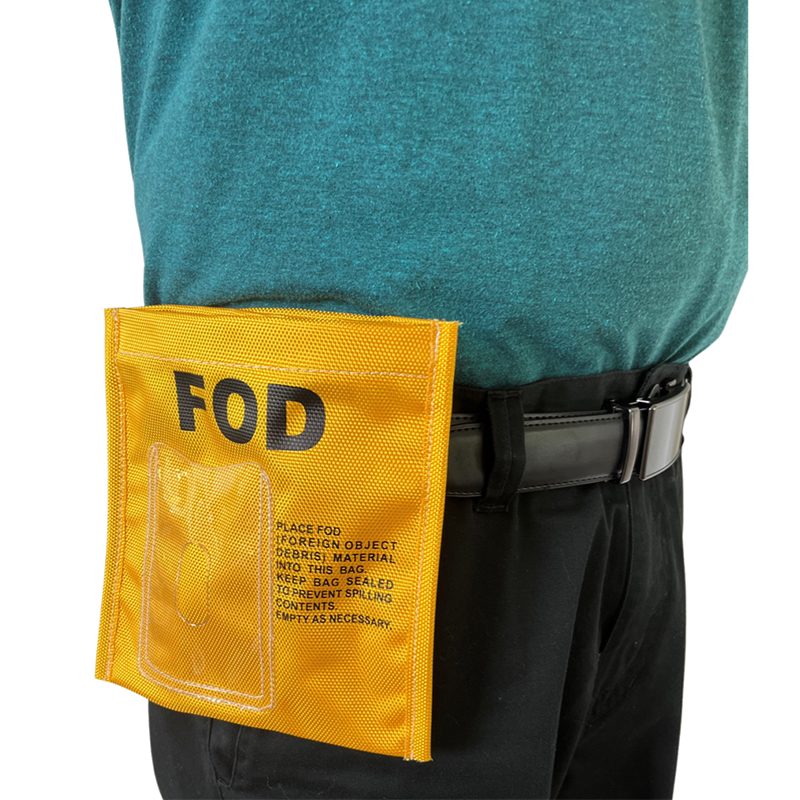
FOD bags and pouches are especially useful because they allow inspectors to collect small debris while keeping their hands free and the debris contained.
4. Review Safety Requirements
Before entering the area, confirm site-specific safety rules.
Personnel should understand:
- Where they are allowed to walk
- Whether aircraft or vehicles are active
- What PPE is required
- How to communicate hazards
- What debris should not be touched
- Who receives the final report
Safety comes before debris removal.
5. Walk the Area Systematically
The team should inspect the area using a consistent pattern. In large areas, personnel may line up and move together. In smaller work areas, one or two inspectors may follow a grid, aisle, or zone-based pattern.
Inspectors should check:
- Walkways
- Corners and edges
- Under benches
- Around toolboxes
- Near the aircraft stands
- Around carts and ground support equipment
- Near doors and high-traffic areas
- Around trash and disposal points
- Under or near work platforms
- Areas affected by wind or vehicle movement
6. Collect and Contain Debris
All debris should be collected in a dedicated FOD bag, pouch, can, or container. Debris should not be placed in pockets, left on carts, or moved to another uncontrolled area.
If an object may be hazardous, sharp, contaminated, or connected to a maintenance issue, follow site procedures before handling it.
7. Identify the Type and Source of Debris
When possible, note what type of debris was found and where it may have come from.
Common FOD sources include:
- Maintenance work
- Loose hardware
- Packaging
- Damaged pavement
- Tool-control issues
- Vehicle traffic
- Weather
- Construction activity
- Trash handling
- Ground support equipment
This step helps teams prevent repeat findings.
8. Document the Findings
A FOD walk should be documented, especially in aviation, aerospace, defense, and regulated manufacturing environments.
Record:
- Date and time
- Area inspected
- Personnel involved
- Debris found
- Quantity or description
- Location
- Suspected source
- Corrective action
- Follow-up owner if needed
Documentation turns a cleanup activity into a measurable prevention process.
9. Report Recurring Problems
A single bolt may be an isolated finding. Repeated bolts in the same area may indicate a process problem.
Recurring FOD should trigger corrective action. This may involve tool-control review, housekeeping changes, better disposal points, damaged pavement repair, packaging changes, or additional training.
10. Close the Inspection
At the end of the walk, confirm that debris was removed, tools were returned, findings were recorded, and follow-up actions were assigned.
FOD Walk Checklist
Use this checklist as a starting point for a FOD walk or FOD walkdown.
Before the Walk
- Define the inspection area
- Assign a lead person
- Confirm inspection personnel
- Review safety requirements
- Gather FOD bags or containers
- Prepare the inspection checklist
- Identify high-risk zones
- Review previous FOD findings
- Confirm reporting process
During the Walk
- Inspect the area in a consistent pattern
- Check edges, corners, and traffic zones
- Look under benches, carts, stands, and equipment
- Watch for loose hardware, tools, packaging, and pavement debris
- Collect debris in FOD bags or containers
- Mark hazards that require follow-up
- Photograph or document unusual findings when allowed
- Keep personnel aware of vehicles, aircraft, and active work
After the Walk
- Review debris collected
- Record findings
- Note location and suspected source
- Dispose of debris properly
- Report recurring problems
- Assign corrective action if needed
- Store FOD collection tools
- Update inspection records
Common Types of FOD Found During Walks
FOD can be small, easy to miss, and still dangerous.
Common examples include:
- Screws
- Bolts
- Nuts
- Washers
- Safety wire
- Drill shavings
- Tool fragments
- Plastic wrap
- Paper
- Tape
- Zip ties
- Gloves
- Rags
- Pens
- Badge clips
- Stones
- Sand
- Pavement fragments
- Rubber pieces
- Broken parts
- Packaging material
In aircraft operating areas, lightweight debris can be moved by wind, jet blast, prop wash, vehicle tires, or ground handling activity.
Tools and Products Used During FOD Walks
FOD walks are more effective when personnel have dedicated tools for collecting, containing, marking, and documenting debris.
| Tool or Product | Purpose | Common Use |
|---|---|---|
| FOD bags | Collect small debris during inspections | Carried by personnel during walkdowns |
| FOD pouches | Portable debris collection | Useful for individual inspectors |
| FOD cans and containment products | Designated debris disposal | Used in controlled areas |
| FOD buckets | Larger containment | Used in work zones or maintenance areas |
| FOD tape | Marking and visual control | Identifies sensitive or controlled areas |
| FOD stickers | Awareness reminders | Reinforces FOD prevention behavior |
| Gloves | Hand protection | Used when collecting sharp or unknown debris |
| Checklists | Inspection consistency | Documents areas, findings, and action items |
FODBag.com supplies FOD bags, pouches, buckets, and containment products for aviation, aerospace, defense, and manufacturing teams that need practical tools for daily FOD control.
How FOD Bags Support FOD Walks
FOD bags give inspectors a dedicated way to collect and contain debris during a walk. Instead of carrying loose objects by hand or placing them in pockets, personnel can place debris into a visible, purpose-built collection bag.
This supports:
- Safer debris handling
- Better containment
- Cleaner inspection procedures
- Faster collection during walkdowns
- Stronger accountability
- Easier post-inspection review
FOD bags are useful for flight line inspections, maintenance hangars, aerospace assembly areas, tool-control zones, and manufacturing floors.
FOD Walk Safety Procedures
A FOD walk should never create a new hazard. Personnel should follow local safety procedures and avoid entering active areas without permission.
Important safety procedures include:
- Wear required PPE
- Use high-visibility gear where needed
- Stay clear of active aircraft, vehicles, and equipment
- Follow ramp, runway, or facility movement rules
- Use gloves when handling sharp or unknown debris
- Do not touch hazardous materials unless trained
- Report items that cannot be safely removed
- Follow site communication procedures
- Maintain awareness of moving equipment
If an area is active or restricted, the FOD walk should be coordinated with the proper operations or safety personnel.
How FOD Walks Fit Into a FOD Prevention Program
A FOD walk is one part of a complete FOD prevention program.
FOD walks remove visible debris, but long-term prevention also requires training, accountability, reporting, and corrective action.
A strong FOD prevention program may include:
- FOD awareness training
- Scheduled inspections
- Tool accountability
- FOD bags and collection stations
- FOD cans or designated disposal points
- Floor markings and signage
- Housekeeping standards
- Debris reporting
- Corrective action tracking
- Periodic audits
When the same debris appears repeatedly, the FOD walk should help identify the source so the team can prevent the issue from returning.
FOD Walk Best Practices
Use a Consistent Inspection Pattern
A consistent pattern reduces missed areas and makes training easier.
Inspect High-Risk Areas First
Prioritize areas near aircraft, tools, equipment, vehicles, doors, carts, and active maintenance work.
Make Collection Tools Easy to Reach
Personnel are more likely to follow procedures when FOD bags, cans, and collection tools are available where work happens.
Track Recurring Findings
Repeated debris findings may reveal a process issue. Tracking patterns helps teams move from cleanup to prevention.
Keep the Checklist Practical
A checklist should be easy to use during real inspections. If it is too long or unclear, personnel may stop using it.
Train Personnel Regularly
Training should explain what FOD is, why it matters, what to look for, how to collect it, and how to report it.
Example FOD Walk Report Fields
Teams can use a simple report format after each inspection.
| Field | Example |
|---|---|
| Date | April 30, 2026 |
| Area inspected | Hangar Bay 2 |
| Inspector or team | Maintenance Safety Team |
| Debris found | 3 screws, plastic wrap, safety wire |
| Suspected source | Tool cart and packaging station |
| Corrective action | Reviewed tool-control process and added disposal container |
| Follow-up required | Yes |
Simple reporting makes it easier to spot recurring issues and prove that inspections are being performed.
Frequently Asked Questions About FOD Walks
What does FOD walk mean?
A FOD walk is an inspection where personnel walk through a defined area to find, collect, and remove Foreign Object Debris.
What is a FOD walkdown?
A FOD walkdown is a structured FOD inspection, often performed shoulder-to-shoulder by a group of personnel across a flight line, runway, ramp, flight deck, or controlled work area.
What is the purpose of a FOD walk?
The purpose is to remove debris before it causes aircraft damage, equipment damage, tire punctures, engine ingestion, safety hazards, or operational delays.
Where are FOD walks performed?
FOD walks are performed on runways, taxiways, ramps, aprons, hangars, flight lines, tool-control zones, maintenance areas, and manufacturing floors.
What should be included in a FOD walk checklist?
A checklist should include the inspection area, assigned personnel, required tools, safety requirements, debris types, findings, corrective actions, and post-inspection documentation.
What tools are used during a FOD walk?
Common tools include FOD bags, FOD pouches, FOD cans, gloves, safety vests, checklists, flashlights, marking tape, and debris logs.
How often should FOD walks be performed?
The frequency depends on the environment. High-risk aviation areas may require daily or shift-based FOD walks. Other areas may use scheduled weekly, daily, or event-based inspections.
Why are FOD bags important during inspections?
FOD bags provide a dedicated place to collect and contain debris during inspections. They help personnel avoid carrying loose debris by hand or placing it in uncontrolled locations.
What are common examples of FOD?
Common examples include screws, bolts, washers, safety wire, tool fragments, plastic, paper, tape, stones, pavement fragments, rubber pieces, packaging, and personal items.
How do FOD walks help prevent aircraft damage?
FOD walks remove debris before it can be ingested into engines, puncture tires, strike aircraft surfaces, or interfere with maintenance and ground operations.
Final Takeaway
A FOD walk is one of the most practical ways to prevent Foreign Object Debris from becoming Foreign Object Damage. By inspecting areas systematically, collecting debris in dedicated FOD bags or containers, documenting findings, and correcting recurring sources, aviation and aerospace teams can reduce risk and strengthen daily safety procedures.
For organizations building a stronger FOD prevention program, regular FOD walks should be supported by training, checklists, reporting, and reliable FOD collection products.
Sources and Citations
Shop FOD Prevention Products
Put this guidance into practice with products built for FOD control.