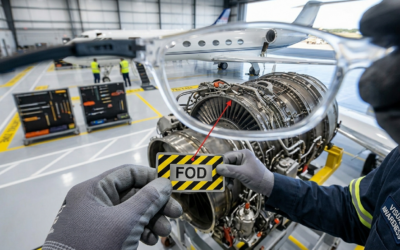
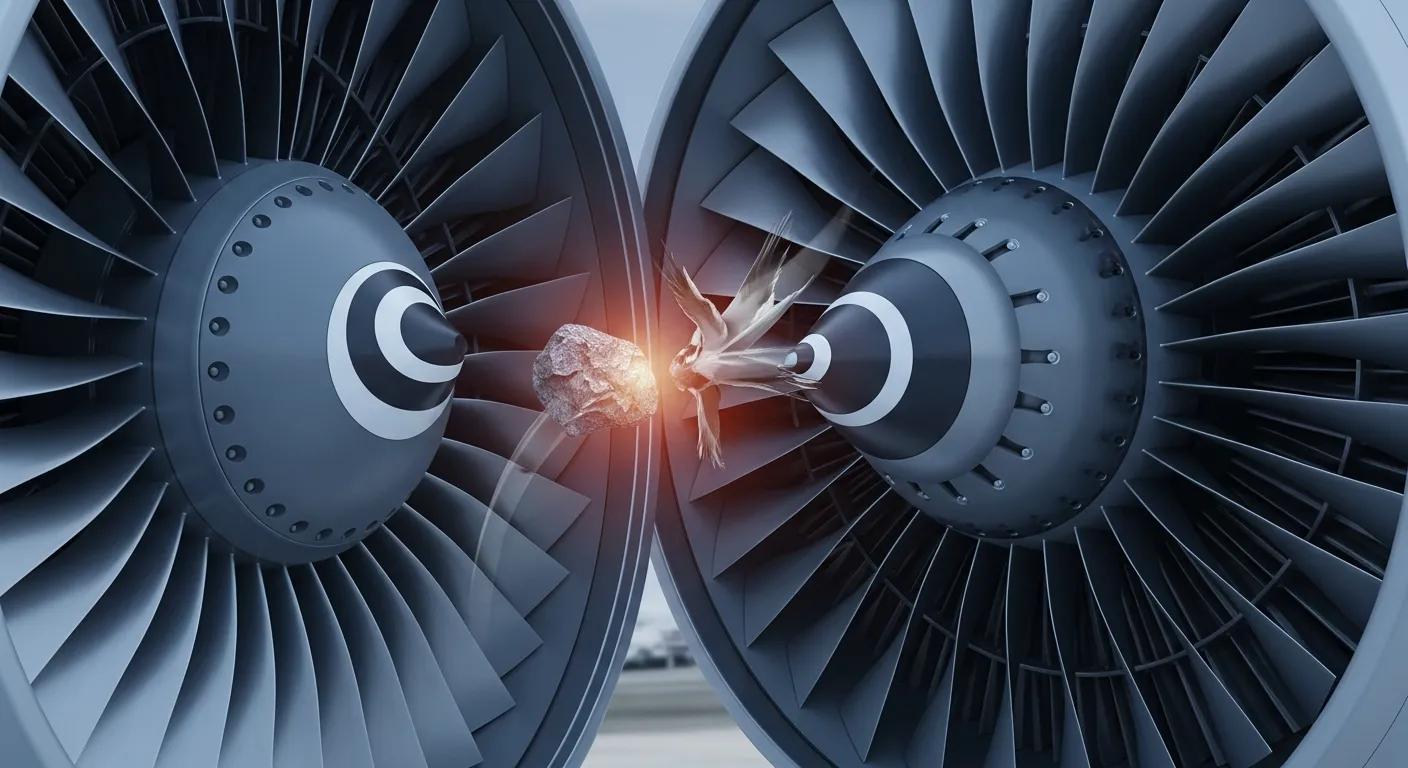
Foreign Object Debris, or FOD, can cause serious damage when loose objects enter or strike aircraft engines. Small items such as bolts, stones, pavement fragments, safety wire, broken parts, packaging, ice, or wildlife can damage fan blades, disrupt airflow, cause vibration, or trigger additional internal failures.
For aviation teams, the goal is not only to remove debris after it is found. The goal is to prevent Foreign Object Debris from becoming Foreign Object Damage. This requires inspections, FOD walks, tool control, collection products, containment systems, pavement maintenance, and other aircraft secondary damage prevention equipment.
Quick Answer: FOD engine damage happens when debris is ingested into or strikes an aircraft engine. The first impact can damage fan blades, compressor blades, seals, or airflow paths. Secondary damage can occur when broken pieces move through the engine and damage other components. FOD prevention products, inspections, and containment tools help reduce the risk before debris reaches the aircraft.
View FOD Control Products | Shop FOD Bags | Read the FOD Walk Guide
What Is FOD Engine Damage?
FOD engine damage is damage caused when a foreign object enters, strikes, or interferes with an aircraft engine. The object may come from a runway, ramp, hangar, maintenance area, tool-control zone, vehicle path, or nearby environment.
The FAA defines airport Foreign Object Debris as an object located in an inappropriate place in the airport environment that can injure personnel or damage aircraft. Source: FAA Foreign Object Debris Program
In engine environments, FOD risk is especially serious because aircraft engines are built with high-speed rotating components and narrow operating tolerances. Even small debris can create damage when it meets fan blades, compressor stages, turbine paths, sensors, or surrounding structures.
Foreign Object Debris vs. Foreign Object Damage
The word FOD is often used in two related ways:
- Foreign Object Debris: The object itself, such as a bolt, stone, tool, plastic, or pavement fragment.
- Foreign Object Damage: The harm caused when debris damages aircraft, engines, tires, equipment, or personnel.
For example, a loose screw on a ramp is Foreign Object Debris. If that screw is ingested into an engine and damages compressor blades, the result is Foreign Object Damage.
This distinction matters because aviation teams can control debris before it becomes damage.
How Foreign Object Debris Damages Aircraft Engines
Aircraft engines operate with fast-moving components, high airflow, and precisely engineered clearances. When debris enters that system, damage can happen quickly.
Impact Damage
Impact damage occurs when debris strikes fan blades, compressor blades, inlet surfaces, or other engine components. The result may include dents, nicks, cracks, bends, or blade deformation.
Even small blade damage can affect airflow and balance. If the damage is severe, the engine may require inspection, repair, or removal from service.
Ingestion Damage
Ingestion damage occurs when debris is pulled into the engine airflow path. Small items can move through multiple engine stages and damage several components.
Common ingested FOD may include stones, metal fragments, loose hardware, ice, birds, or pavement debris.
Abrasion and Erosion
Fine debris such as sand, grit, dust, or small particles can wear surfaces over time. This may reduce efficiency, accelerate maintenance needs, and contribute to long-term component wear.
Blockage and Contamination
Some debris can block airflow, interfere with sensors, contaminate systems, or create abnormal operating conditions. Depending on the location and severity, this may affect performance or require maintenance action.
Secondary Damage
Secondary damage happens after the first impact. A damaged blade, broken part, or loose fragment can move through the engine and damage additional components.
This is why prevention is so important. A small object can lead to a larger chain of damage if it reaches the engine.
What Is Aircraft Secondary Damage Prevention Equipment?
Aircraft secondary damage prevention equipment refers to tools, products, and systems used to stop debris, loose hardware, tools, and other objects from creating additional damage in aircraft environments.
In practical FOD control, this may include:
- FOD bags for debris collection
- FOD pouches for inspectors and maintenance personnel
- FOD cans and containers for designated disposal
- FOD buckets for controlled work areas
- Tool bags and tool-control systems
- FOD tape and markings
- FOD signage and awareness products
- Runway and ramp inspection systems
- FOD detection equipment
- Sweeping and cleaning equipment
The FAA lists Foreign Object Debris Detection Equipment as a related advisory circular topic and has evaluated automated FOD detection systems for airport surfaces. Source: FAA Automated FOD Detection System Evaluation
FODBag.com focuses on practical FOD collection and containment products such as FOD bags, pouches, buckets, and related control products used by aviation, aerospace, defense, and manufacturing teams.
Common Sources of Engine FOD
FOD can come from many sources in aviation environments.
Common sources include:
- Loose hardware
- Tools or tool fragments
- Safety wire
- Pavement fragments
- Stones and gravel
- Broken aircraft parts
- Packaging materials
- Plastic and paper
- Vehicle debris
- Ice, snow, or hail
- Wildlife and bird remains
- Construction debris
- Maintenance materials
- Personal items
- Trash blown by wind or jet blast
The FAA notes that FOD can come from aircraft parts, pavement cracking, wildlife, ice and salt accumulation, and construction debris. Source: FAA Automated FOD Detection System Evaluation
Why Aircraft Engines Are Vulnerable to FOD
Aircraft engines are vulnerable to FOD because they move large volumes of air and operate under extreme mechanical conditions.
Important risk factors include:
- High-speed rotating fan and compressor blades
- Tight engine tolerances
- Powerful inlet airflow
- Exposure during takeoff, taxi, and ground operations
- Debris movement from wind, jet blast, prop wash, and vehicles
- Maintenance activity near open aircraft systems
- Pavement and ramp conditions near aircraft operating areas
The closer debris is to aircraft movement areas, maintenance areas, or engine inlet zones, the more urgent the risk becomes.
Examples of FOD and Engine Ingestion Risk
Bird strikes are one form of foreign object risk because wildlife can be ingested into aircraft engines. In testimony about US Airways Flight 1549, the U.S. Department of Transportation described the aircraft encountering Canada geese, with bird strikes affecting the airframe and engines. Source: U.S. Department of Transportation, US Airways Flight 1549 Testimony
Not all FOD events involve birds. Many engine and aircraft damage risks come from preventable ground debris such as loose hardware, pavement fragments, tools, construction materials, and trash.
That is why airports and aviation operators use a combination of FOD walks, inspections, pavement maintenance, tool control, wildlife management, and debris collection procedures.
How Pavement Conditions Contribute to FOD
Runway, taxiway, ramp, and apron pavement can become a source of FOD when surfaces crack, ravel, spall, or break apart.
The FAA uses a FOD Index as a measure of pavement distress that can generate loose pieces with the potential to damage aircraft. This includes distress types such as cracking, raveling, joint damage, patching, spalling, and related pavement defects. Source: FAA FOD Index
Pavement-related debris can be especially dangerous because it may be hard, sharp, and located directly in aircraft movement areas.
FOD Engine Damage Prevention Methods
Preventing engine FOD damage requires a layered approach. No single product or procedure solves the problem alone.
FOD Walks and Walkdowns
FOD walks help teams inspect runways, ramps, hangars, flight lines, and maintenance areas before debris reaches aircraft. These inspections are especially useful before aircraft movement, after maintenance, after weather events, or after construction activity.
FOD Bags and Collection Products
FOD bags, pouches, buckets, and containers give personnel a dedicated place to collect and contain debris. This prevents loose objects from being carried by hand, placed in pockets, or moved to another uncontrolled area.
Tool Control
Tool-control procedures reduce the chance that tools, fasteners, or small parts are left inside aircraft, around engines, or in maintenance areas.
FOD Control Products
FOD control products support daily prevention by helping teams collect, contain, mark, and manage debris.
Pavement Inspection and Maintenance
Damaged pavement can create stones, fragments, and loose material. Regular pavement inspection and maintenance help reduce FOD generated by airport surfaces.
Training and Reporting
Personnel should understand what FOD is, where it comes from, how to collect it, and how to report repeat findings. Documentation helps teams identify patterns before they become larger safety issues.
FOD Engine Damage Prevention Checklist
Use this checklist as a starting point for aviation, aerospace, and maintenance environments.
Daily Prevention
- Perform scheduled FOD walks
- Inspect aircraft movement areas
- Check ramp, hangar, and maintenance zones
- Use FOD bags or containers during inspections
- Remove loose hardware, trash, and packaging
- Confirm tool accountability
- Report recurring debris sources
Maintenance Area Prevention
- Account for all tools before and after work
- Use dedicated tool bags or storage systems
- Inspect around aircraft engines and open panels
- Remove packaging and loose materials
- Keep hardware controlled during maintenance
- Document missing or found items
Ramp and Runway Prevention
- Monitor pavement condition
- Remove stones, rubber, fragments, and trash
- Inspect after construction or severe weather
- Use approved sweeping or detection processes
- Report damaged pavement or recurring debris
Program-Level Prevention
- Train personnel on FOD risks
- Use visible FOD awareness materials
- Place FOD containers where work happens
- Track findings by location and source
- Review repeat incidents
- Assign corrective actions
Recommended Products for FOD Damage Prevention
FOD prevention is most effective when personnel have easy access to the right tools.
| Product or Tool | Purpose | How It Helps |
|---|---|---|
| FOD bags | Portable debris collection | Helps personnel collect small debris during inspections |
| FOD pouches | Individual collection | Useful for maintenance teams and inspectors |
| FOD control products | Debris management | Supports collection, containment, and prevention programs |
| FOD buckets | Larger debris containment | Useful in hangars, ramps, and work zones |
| Tool bags | Tool organization | Supports tool accountability during aircraft maintenance |
| FOD cans | Designated disposal | Gives teams a visible place to deposit debris |
| FOD tape and markings | Visual control | Helps identify controlled or high-risk areas |
These products support the daily actions that reduce the chance of engine FOD damage.
FAQ: FOD Engine Damage
What is FOD engine damage?
FOD engine damage is damage caused when Foreign Object Debris enters, strikes, or interferes with an aircraft engine. It may affect fan blades, compressor blades, airflow paths, sensors, or other components.
What causes engine FOD?
Engine FOD can be caused by loose hardware, tools, stones, pavement fragments, ice, wildlife, construction debris, packaging, trash, or maintenance materials near aircraft operating areas.
What is secondary damage in aircraft engines?
Secondary damage happens when the first damaged component or debris fragment causes additional damage inside the engine or surrounding aircraft systems.
How can FOD engine damage be prevented?
FOD engine damage can be reduced through FOD walks, inspections, tool control, FOD bags, collection containers, pavement maintenance, training, reporting, and FOD detection systems.
What products help prevent FOD damage?
Useful products include FOD bags, FOD pouches, FOD cans, FOD buckets, tool bags, FOD tape, signs, and other FOD control products that help teams collect and contain debris.
Is wildlife considered FOD?
Wildlife can create foreign object risk when birds or animals strike or are ingested by aircraft. Aviation safety programs often address wildlife hazards alongside other FOD risks.
Why is FOD dangerous during takeoff?
Takeoff creates high engine airflow and aircraft movement. Debris near the runway, taxiway, ramp, or aircraft path can be ingested, thrown, or struck during this phase.
What is the difference between Foreign Object Debris and Foreign Object Damage?
Foreign Object Debris is the object in the wrong place. Foreign Object Damage is the harm caused when that debris damages aircraft, engines, tires, equipment, or personnel.
Final Takeaway
FOD engine damage is preventable when aviation teams control debris before it reaches the aircraft. FOD walks, tool control, pavement inspection, training, and dedicated FOD collection products all help reduce the risk of Foreign Object Debris becoming Foreign Object Damage.
For aviation, aerospace, defense, and maintenance teams, practical prevention starts with daily habits: inspect the area, collect debris, contain it properly, document findings, and correct the source.