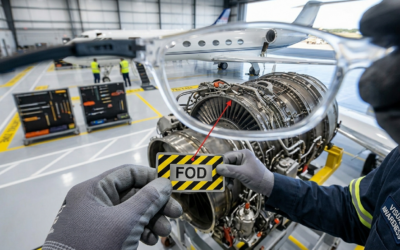
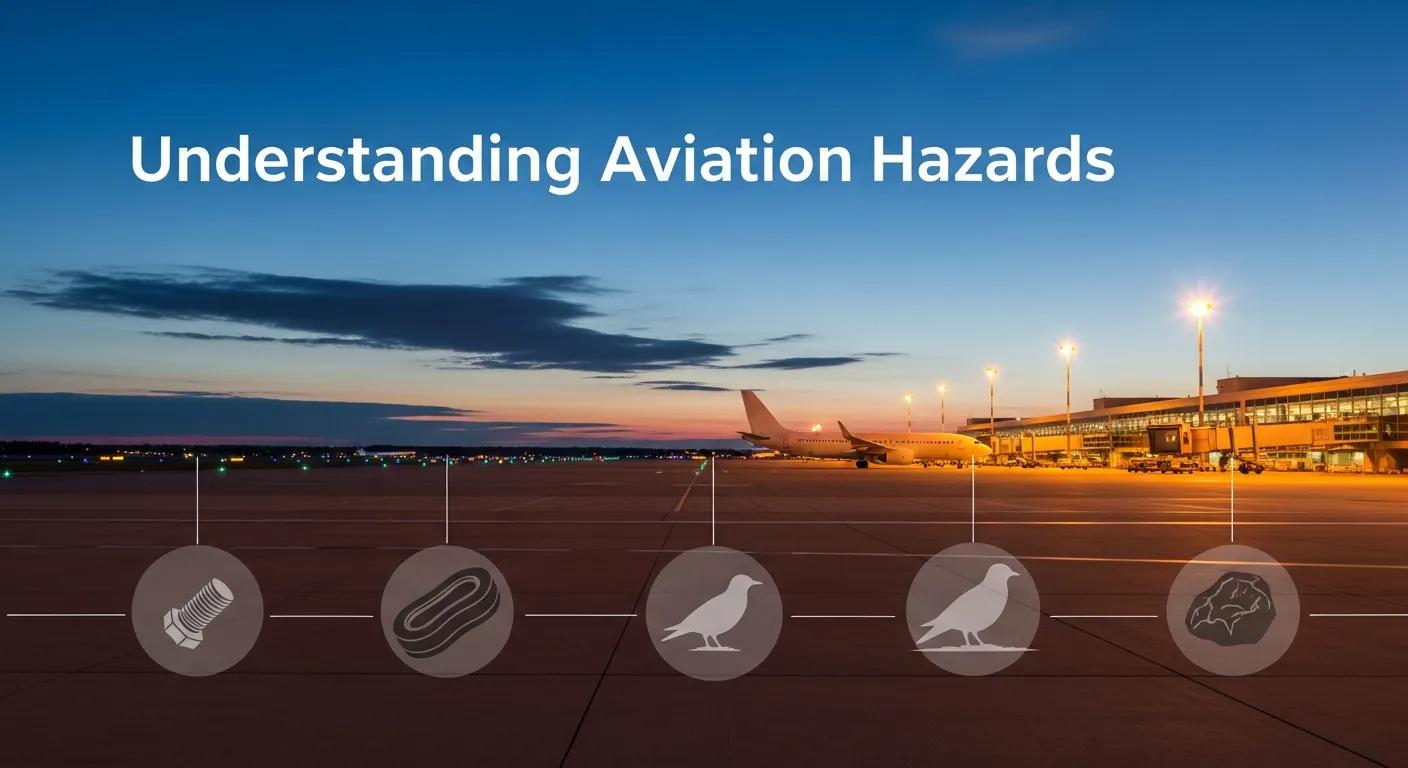
FOD hazards are safety and damage risks created by Foreign Object Debris in aviation environments. A loose screw, stone, tool, pavement fragment, plastic wrapper, or broken part may look small, but in the wrong place it can damage aircraft, engines, tires, equipment, or personnel.
In aviation, FOD hazards are found on runways, taxiways, ramps, aprons, hangars, flight lines, maintenance areas, tool-control zones, and aerospace manufacturing floors. The risk depends on the type of debris, where it is located, and whether aircraft, vehicles, personnel, or equipment can move it into a dangerous position.
Quick Answer: The main FOD hazards in aviation include engine ingestion, tire punctures, aircraft surface damage, jammed mechanisms, tool-related hazards, runway debris, maintenance debris, pavement fragments, wildlife hazards, and personnel injury from debris moved by jet blast or prop wash.
View FOD Control Products | Shop FOD Bags | Read the Aircraft FOD Guide
What Are FOD Hazards?
FOD hazards are the risks created when Foreign Object Debris is present in an area where it can cause harm.
The FAA describes airport Foreign Object Debris as an object located in an inappropriate place in the airport environment that can injure personnel or damage aircraft. Source: FAA Foreign Object Debris Program
In practical terms:
- A bolt on a runway is a FOD hazard.
- A missing tool near an aircraft engine is a FOD hazard.
- Broken pavement on a taxiway is a FOD hazard.
- Trash near a ramp or apron can become a FOD hazard if wind, jet blast, or vehicle movement carries it toward aircraft.
FOD hazard control begins with identifying the object, removing it, documenting the source, and correcting the process that allowed it to appear.
FOD Hazard vs. FOD Damage
FOD hazards and FOD damage are related, but they are not the same.
| Term | Meaning | Example |
|---|---|---|
| FOD hazard | A debris-related risk before damage occurs | A screw on a ramp |
| FOD damage | The harm caused by the debris | Tire damage after the screw is struck |
| FOD prevention | Actions used to stop debris from creating risk | FOD walks, tool control, FOD bags, inspections |
The goal is to remove FOD hazards before they become FOD damage.
Major Types of FOD Hazards in Aviation
FOD hazards can be grouped by the type of damage they may cause.
1. Engine Ingestion Hazards
Engine ingestion is one of the most serious FOD hazards. Debris can be pulled into the engine airflow path and damage fan blades, compressor blades, sensors, seals, or other internal components.
Common engine-ingestion hazards include:
- Stones
- Pavement fragments
- Loose hardware
- Ice
- Wildlife
- Broken parts
- Plastic or packaging
Read more about FOD engine damage
2. Tire Damage Hazards
Aircraft tires can be cut, punctured, or damaged by hard or sharp debris.
Common tire hazards include:
- Screws
- Bolts
- Metal fragments
- Stones
- Pavement pieces
- Ground support equipment debris
- Construction debris
Tire-related FOD hazards are especially important on runways, taxiways, ramps, and aprons.
3. Runway and Taxiway FOD Hazards
Runway and taxiway hazards are dangerous because aircraft operate in these areas during takeoff, landing, and ground movement.
Examples include:
- Loose pavement
- Gravel
- Rubber fragments
- Aircraft parts
- Tools
- Wildlife remains
- Debris from construction or maintenance activity
SKYbrary identifies runway FOD and taxiway/apron FOD as major areas of concern because debris in these locations can damage aircraft and may be moved by aircraft operations. Source: SKYbrary Foreign Object Debris
4. Maintenance FOD Hazards
Maintenance FOD hazards come from tools, parts, materials, and work processes used around aircraft.
Examples include:
- Hand tools
- Tool fragments
- Fasteners
- Safety wire
- Drill shavings
- Rags
- Gloves
- Tape
- Removed parts
- Packaging
Maintenance hazards can be hidden inside aircraft systems, near engine areas, under panels, around benches, or in tool-control zones.
View tool bags for aircraft maintenance
5. Tool-Control Hazards
Tools can become FOD when they are misplaced, left behind, broken, or not accounted for after work.
Tool-control hazards include:
- Missing tools
- Loose sockets
- Drill bits
- Screwdrivers
- Wrenches
- Magnetic wristband contents
- Tool clips
- Fasteners and hardware
Tool-control procedures, organized tool bags, and closeout inspections reduce the risk that tools become aircraft FOD.
6. Pavement FOD Hazards
Pavement hazards come from cracked, raveled, spalled, patched, or damaged airport surfaces.
Examples include:
- Asphalt fragments
- Concrete pieces
- Loose aggregate
- Joint material
- Broken surface patches
- Crumbling edges
The FAA FOD Index measures pavement distresses that generate loose pieces with the potential to damage aircraft. Source: FAA FOD Index
Pavement hazards can become serious because they may appear directly in aircraft movement areas.
7. Environmental and Weather Hazards
Weather can create or move FOD quickly.
Examples include:
- Ice
- Snow
- Hail
- Sand
- Dirt
- Leaves
- Branches
- Wind-blown trash
- Water-carried debris
Environmental FOD hazards often increase after storms, high winds, construction activity, or seasonal weather changes.
8. Wildlife-Related FOD Hazards
Wildlife hazards can involve birds, insects, nesting materials, animal remains, or other biological debris.
Bird strikes and wildlife ingestion are serious aviation hazards and are often managed through airport wildlife programs. In a FOD prevention context, wildlife-related material is part of the broader foreign object risk environment.
9. Personnel Injury Hazards
FOD is not only an aircraft risk. Loose debris can injure people, especially when moved by jet blast, prop wash, wind, or vehicles.
Personnel hazards include:
- Flying debris
- Sharp objects
- Trip hazards
- Contaminated debris
- Objects thrown by equipment movement
SKYbrary notes that debris can injure people when propelled by jet blast or prop wash. Source: SKYbrary Foreign Object Debris
FOD Hazards by Work Area
| Work Area | Common Hazards | Prevention Method |
|---|---|---|
| Runway | Pavement fragments, stones, aircraft parts, wildlife | Runway inspections, sweeping, reporting |
| Taxiway | Rubber fragments, loose hardware, stones | Surface checks and debris removal |
| Ramp or apron | Packaging, vehicle debris, trash, loose parts | FOD cans, FOD bags, housekeeping |
| Hangar | Tools, fasteners, rags, packaging | Tool control and FOD walks |
| Maintenance area | Safety wire, drill shavings, missing tools | Tool bags, inspection logs, closeout checks |
| Manufacturing floor | Shavings, parts, labels, packaging | Collection containers and process control |
This work-area view helps teams decide where to place FOD bags, cans, buckets, and inspection procedures.
How To Identify FOD Hazards
FOD hazard identification should be visual, practical, and routine.
Teams should inspect:
- Edges and corners
- Under benches and carts
- Around toolboxes
- Near aircraft stands
- Around ground support equipment
- On ramps and aprons
- Near trash and packaging stations
- Around construction or repair work
- On pavement with cracks or loose material
- Near aircraft engines, panels, and work areas
FOD walks are one of the simplest methods for identifying hazards before damage occurs.
How To Prevent FOD Hazards
Preventing FOD hazards requires a combination of products, procedures, and accountability.
Use FOD Bags and Collection Products
FOD bags, pouches, buckets, and cans give personnel a dedicated place to collect and contain debris.
Conduct Scheduled FOD Walks
FOD walks help personnel inspect high-risk areas and remove debris before it damages aircraft or equipment.
Strengthen Tool Control
Tool-control procedures help prevent tools, fasteners, and small parts from becoming FOD.
Place FOD Cans Where Work Happens
FOD cans and containers should be visible and easy to reach in active work areas.
Inspect Pavement and Work Surfaces
Damaged pavement, cracked flooring, and loose surface material should be reported and corrected.
Train Personnel
Personnel should understand what FOD hazards look like, how to collect debris, and how to report recurring sources.
Track Recurring Findings
Repeated debris is a sign of a process problem. Track what is found, where it appears, and what correction is needed.
FOD Hazard Prevention Products
| Product | Purpose | Helps Prevent |
|---|---|---|
| FOD bags | Portable collection | Small debris left during inspections |
| FOD pouches | Individual collection | Technician and inspector debris |
| FOD buckets | Larger containment | Work-zone debris and tool control |
| FOD cans | Fixed collection points | Debris left in hangars, ramps, and shops |
| Tool bags | Tool organization | Missing tools and loose equipment |
| FOD tape and stickers | Visual reminders | Awareness and controlled-zone risks |
| Checklists | Inspection consistency | Missed hazards and undocumented findings |
FOD Hazard Checklist
Use this checklist during inspections, FOD walks, or work-area reviews.
Look for Engine and Aircraft Hazards
- Stones or pavement fragments near aircraft movement areas
- Loose hardware near engines or panels
- Objects around aircraft stands or ground equipment
- Plastic or paper that can be moved by airflow
Look for Tool and Maintenance Hazards
- Missing tools
- Loose sockets or bits
- Safety wire
- Drill shavings
- Removed parts
- Rags, gloves, and tape
Look for Area Hazards
- Damaged pavement
- Trash accumulation
- Packaging near work areas
- Debris under benches or carts
- Debris near doors or high-traffic zones
Look for Recurring Sources
- Same debris in the same area
- Debris near a specific workstation
- Loose materials after specific tasks
- Pavement or flooring that repeatedly sheds fragments
FAQ: FOD Hazards
What are FOD hazards?
FOD hazards are risks created by Foreign Object Debris in areas where loose objects can damage aircraft, engines, tires, equipment, tools, or personnel.
What are examples of FOD hazards in aviation?
Examples include loose hardware, tools, pavement fragments, stones, packaging, trash, safety wire, ice, wildlife remains, construction debris, and broken aircraft parts.
What is the most serious FOD hazard?
Engine ingestion, runway debris, tire damage hazards, and tool-related FOD can all be serious. The highest risk depends on the location, aircraft activity, and type of debris.
How do FOD hazards cause damage?
FOD hazards can damage engines, puncture tires, strike aircraft surfaces, jam mechanisms, interfere with maintenance work, or injure personnel when moved by jet blast or prop wash.
Where are FOD hazards commonly found?
FOD hazards are commonly found on runways, taxiways, ramps, aprons, hangars, flight lines, maintenance areas, tool-control zones, and manufacturing floors.
How can FOD hazards be prevented?
FOD hazards can be prevented through FOD walks, inspections, tool control, FOD bags, FOD cans, pavement maintenance, housekeeping, training, and reporting.
What products help reduce FOD hazards?
Useful products include FOD bags, pouches, buckets, cans, tool bags, visual-control products, and inspection checklists.
Is a FOD hazard the same as FOD damage?
No. A FOD hazard is the risk before damage occurs. FOD damage is the actual harm caused when debris damages aircraft, equipment, or personnel.
Final Takeaway
FOD hazards are preventable when teams identify debris early, collect it properly, and correct the source. The most effective aviation FOD programs combine inspections, tool control, training, reporting, pavement awareness, and practical products such as FOD bags, cans, buckets, pouches, and tool bags.
Every piece of debris removed from a runway, ramp, hangar, or maintenance area reduces the chance of damage, delay, or injury.
View FOD Control Products | Shop FOD Bags