
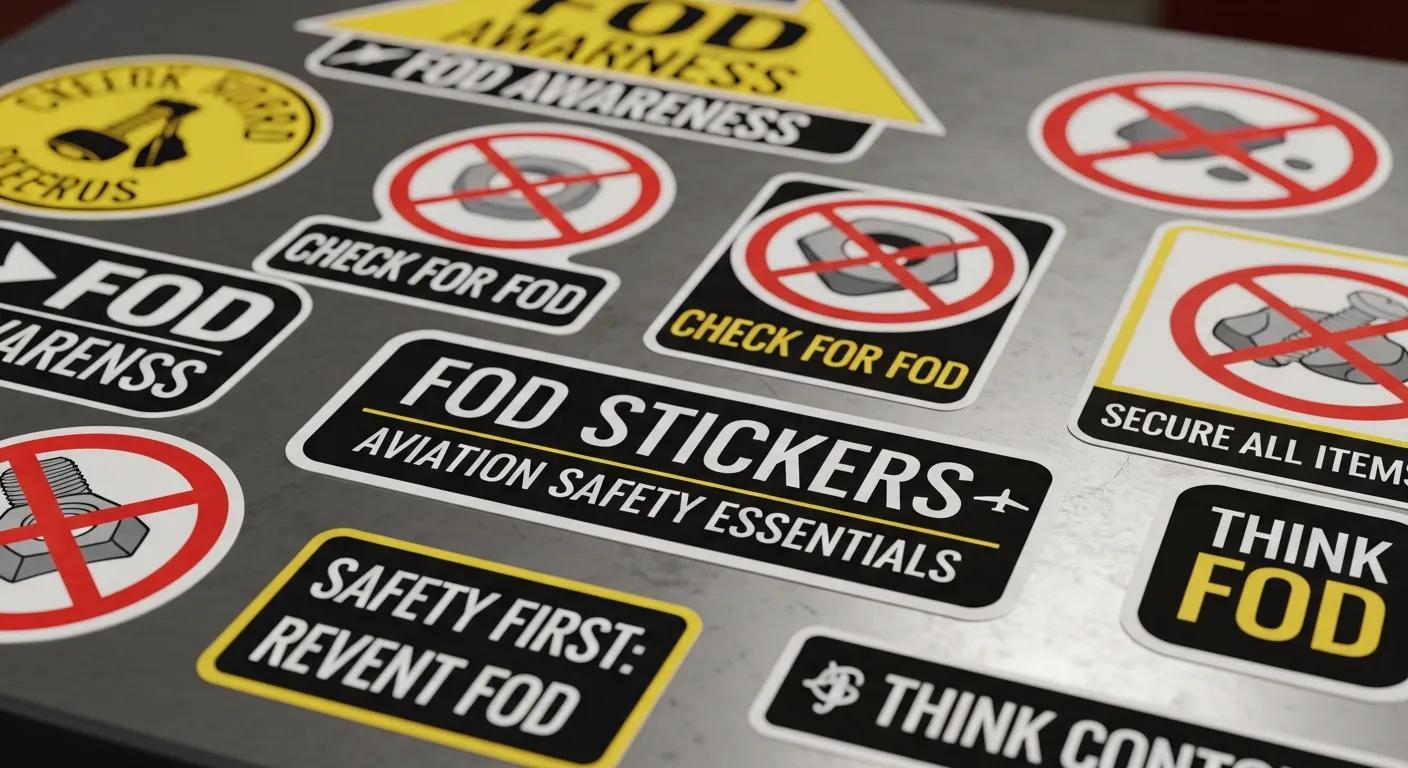
In aviation, safety is paramount, and preventing Foreign Object Debris (FOD) is a critical part of maintaining aircraft integrity and operational reliability. A FOD sticker is a simple yet essential tool used by maintenance crews and ground personnel to indicate that a component, panel, or access point on an aircraft has been opened or removed and requires attention before flight. This guide explains what a FOD sticker is, why it matters, how it helps prevent accidents, and best practices for its use in aviation environments.
What Is Foreign Object Debris (FOD) in Aviation?
Foreign Object Debris (FOD) refers to any loose object or debris found on airport runways, taxiways, ramps, or within aircraft systems that can cause damage to aircraft or pose safety hazards. Examples include tools, hardware, loose parts, rocks, or trash. FOD can lead to serious incidents such as engine damage, tire punctures, or compromised flight control systems. Preventing FOD is a key focus of aviation safety programs worldwide.
How Does a FOD Sticker Help Prevent Foreign Object Debris Incidents?
A FOD sticker is a brightly colored, highly visible label placed on aircraft components or panels that have been opened during maintenance or inspection. It serves as a visual reminder that the area is not yet secured and that any tools or parts used must be accounted for before the aircraft is cleared for operation. By drawing attention to potential FOD risks, these stickers help ensure thorough inspections and reduce the chance of leaving debris inside or around the aircraft.
What Does a Typical FOD Sticker Look Like?
FOD stickers are usually made of durable, weather-resistant material and feature bold colors such as red or orange to stand out against aircraft surfaces. They often include clear text such as “Remove Before Flight,” “FOD Check Required,” or “Do Not Operate” to communicate the status of the component. Some stickers have tags or streamers attached to make them easier to spot during pre-flight checks.
When and Where Are FOD Stickers Used?
FOD stickers are applied during various maintenance activities, including:
- Opening access panels for inspection or repair
- Removing components such as sensors, covers, or filters
- Performing system tests that require temporary disassembly
- During pre-flight or post-maintenance inspections, to highlight areas needing verification
They are commonly found on engine cowlings, landing gear doors, avionics bays, and other critical access points. The stickers remain in place until the maintenance task is complete and the area is secured, ensuring no tools or debris are left behind.
Who Is Responsible for Managing FOD Stickers?
Aircraft maintenance technicians, ground crew, and quality assurance personnel share responsibility for applying, monitoring, and removing FOD stickers. Proper training and adherence to standard operating procedures are essential to ensure that stickers are used consistently and effectively. Supervisors often conduct final checks to confirm all FOD stickers have been removed before the aircraft is released for flight.
What Are the Safety Benefits of Using FOD Stickers?
Using FOD stickers contributes to aviation safety by:
- Reducing the risk of foreign object damage to engines and airframes
- Enhancing visibility of maintenance status and open access points
- Supporting compliance with regulatory and manufacturer maintenance requirements
- Improving communication among maintenance teams and flight crews
- Preventing costly repairs and operational delays caused by FOD-related incidents
How Do FOD Stickers Fit Into Broader FOD Prevention Programs?
FOD stickers are one element of comprehensive FOD prevention strategies that include regular runway inspections, tool control programs, personnel training, and the use of specialized equipment like FOD detection systems. Together, these measures create multiple layers of defense against debris-related hazards, promoting safer and more efficient aviation operations.
Best Practices for Using FOD Stickers Effectively
- Always apply a FOD sticker immediately after opening or removing any aircraft component.
- Use stickers that are clearly visible and durable enough to withstand environmental conditions.
- Maintain a log or checklist of all FOD stickers applied during maintenance tasks.
- Conduct thorough inspections to ensure all stickers and associated tools are removed before flight.
- Train all personnel on the importance of FOD stickers and proper handling procedures.
What Should You Do If a FOD Sticker Is Found on an Aircraft Before Flight?
If a FOD sticker is discovered during pre-flight checks, the flight crew or ground personnel must notify maintenance immediately. The aircraft should not be operated until the sticker is removed and the underlying component is verified as secure and free of debris. This precaution prevents potential safety hazards and ensures compliance with operational protocols.
Conclusion
A FOD sticker is a vital safety tool in aviation that helps prevent foreign object debris incidents by clearly marking open or unsecured aircraft components during maintenance. Its use supports thorough inspections, effective communication, and adherence to safety standards, ultimately protecting aircraft, crew, and passengers. Incorporating FOD stickers into maintenance routines is a simple yet powerful way to enhance aviation safety and operational reliability.