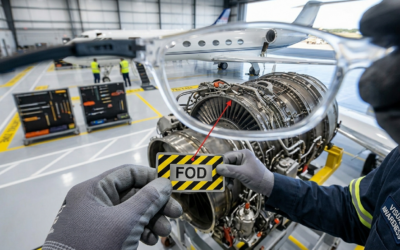
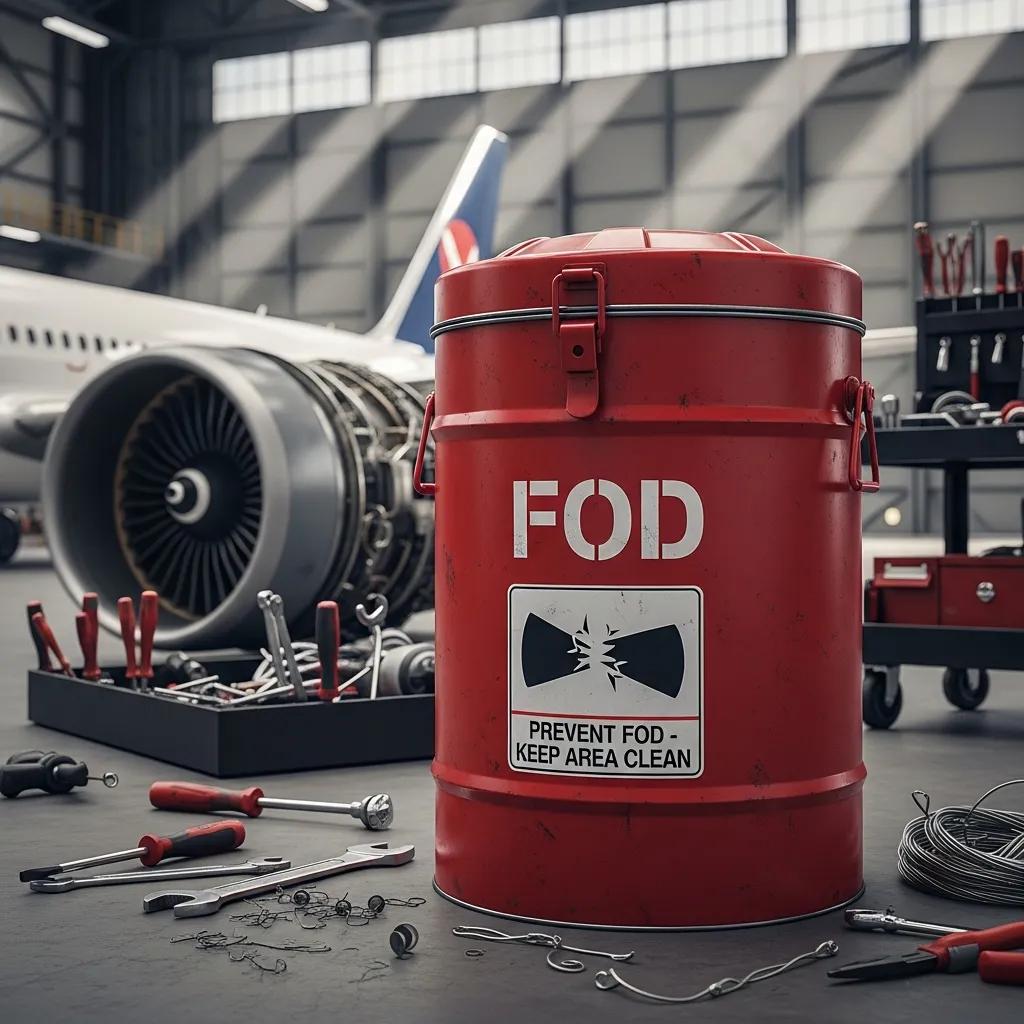
A FOD can is a designated container used to collect and contain Foreign Object Debris in aviation, aerospace, maintenance, manufacturing, and controlled work areas. FOD cans help teams remove loose objects before they damage aircraft, engines, tires, tools, equipment, or personnel.
In aviation maintenance, FOD cans are commonly placed near workstations, hangars, ramps, tool-control areas, inspection zones, and other places where debris may appear. They give personnel a visible and consistent place to deposit debris during daily work.
Quick Answer: A FOD can is a debris collection container used to collect Foreign Object Debris in aviation and maintenance environments. It helps prevent loose objects such as screws, washers, safety wire, packaging, tool fragments, and trash from remaining in areas where they could damage aircraft or equipment.
View FOD Control Products | Shop FOD Bags | Read the FOD Prevention Program Guide
What Is a FOD Can?
A FOD can is a dedicated container for collecting Foreign Object Debris. It may be a rigid can, soft-sided container, bucket, pouch, or other designated collection point depending on the work environment.
The FAA defines airport Foreign Object Debris as an object located in an inappropriate place in the airport environment that can injure personnel or damage aircraft. Source: FAA Foreign Object Debris Program
Common debris placed in a FOD can may include:
- Screws
- Bolts
- Nuts and washers
- Safety wire
- Drill shavings
- Plastic wrap
- Paper
- Tape
- Packaging
- Small broken parts
- Trash
- Loose personal items
The purpose of a FOD can is simple: keep debris out of the work area and in a controlled location.
What Is a FOD Can Used For in Aviation?
In aviation, a FOD can is used to collect loose objects before they become safety or damage risks.
FOD cans support:
- Aircraft maintenance
- Hangar housekeeping
- Ramp and apron operations
- FOD walks
- Tool-control programs
- Debris disposal
- Inspection routines
- FOD prevention programs
FOD cans are often used with FOD bags, pouches, buckets, tool bags, visual reminders, and inspection checklists.
FOD Can vs. FOD Bag vs. FOD Bucket
FOD cans, bags, and buckets all support debris collection, but each one works best in a different situation.
| Product | Best Use | Example |
|---|---|---|
| FOD can | Fixed or designated collection point | Placed in a hangar, ramp, or tool-control area |
| FOD bag | Portable debris collection | Carried during FOD walks or inspections |
| FOD bucket | Larger debris or work-zone containment | Used in maintenance areas or temporary stations |
| FOD pouch | Individual inspector collection | Worn or carried by technicians and line personnel |
A FOD can is best when personnel need a visible place to deposit debris. A FOD bag or pouch is better when personnel are moving through an area during an inspection.
Where Should FOD Cans Be Placed?
FOD cans should be placed where debris is likely to appear and where personnel can use them easily.
Good locations include:
- Hangar entrances
- Maintenance bays
- Aircraft workstations
- Tool-control areas
- Ramp support areas
- Inspection zones
- Manufacturing work cells
- Ground support equipment areas
- Packaging and disposal points
- Near benches, carts, and stands
If a FOD can is too far from the work area, personnel are less likely to use it consistently. Placement should match the workflow.
How FOD Cans Help Prevent Foreign Object Damage
FOD cans help prevent damage by making debris collection immediate, visible, and routine.
They help teams:
- Remove loose debris quickly
- Keep work areas cleaner
- Support FOD walks and inspections
- Reduce the chance of debris being left on floors or benches
- Reinforce accountability
- Support reporting and corrective action
- Create a visible reminder of FOD risk
SKYbrary notes that FOD can damage aircraft engines, cut tires, lodge in mechanisms, or injure personnel when moved by jet blast or prop wash. Source: SKYbrary Foreign Object Debris
FOD cans help reduce this risk by giving debris a controlled destination.
Common Areas Where FOD Cans Are Useful
Aircraft Maintenance Hangars
Hangars produce FOD through tools, fasteners, packaging, removed parts, safety wire, rags, and daily maintenance activity.
Tool-Control Zones
Tool-control areas benefit from dedicated FOD collection points because small tools, tool fragments, and fasteners can become debris.
Ramps and Aprons
Ramp and apron operations may create trash, vehicle debris, packaging, cargo-related material, and loose hardware.
Aerospace Manufacturing Floors
Manufacturing environments may generate shavings, labels, packaging, small parts, and process debris.
FOD Walk Stations
FOD cans can be placed near the start or end of a FOD walk so teams have a consistent location to deposit collected debris.
Features To Look For in a FOD Can
The best FOD can depends on the environment, but useful features may include:
- Durable construction
- High visibility
- Easy access
- Stable placement
- Appropriate size
- Clear purpose
- Easy emptying
- Compatibility with FOD procedures
- Placement near work activity
- Support for labeling or identification
For some teams, a rigid can may be best. For others, a soft-sided FOD bag, bucket, or pouch may better match the workflow.
FOD Can Usage Guidelines
Use these guidelines to make FOD cans more effective.
Place Cans Where Work Happens
Locate FOD cans near the areas where debris is created or found. This may include maintenance bays, ramps, tool areas, and inspection stations.
Empty and Inspect Cans Regularly
FOD cans should be emptied on a schedule. Reviewing collected debris can help identify recurring sources.
Train Personnel To Use Them
Personnel should know what goes into a FOD can, when to use it, and how to report unusual or repeated findings.
Use Cans With FOD Walks
FOD walk teams can use portable FOD bags during the inspection and then deposit collected debris into a designated FOD can or review station.
Track Recurring Debris
If the same type of debris appears repeatedly, document it and investigate the source.
FOD Can Selection Checklist
Use this checklist when deciding what type of FOD can or container is needed.
- Where will the container be used?
- What type of debris is most common?
- Does the area need a fixed can or portable collection product?
- Does the product need to be highly visible?
- How often will it be emptied?
- Who is responsible for checking it?
- Will personnel use it during FOD walks?
- Does the area also need FOD bags or pouches?
- Is the environment indoors, outdoors, or both?
- Are bulk quantities needed?
The best FOD can is the one personnel will actually use consistently.
How FOD Cans Fit Into a FOD Prevention Program
A FOD can is one part of a complete FOD prevention program.
A strong program may include:
- FOD awareness training
- FOD walks
- Tool-control procedures
- FOD bags and pouches
- FOD cans and buckets
- Visual controls
- Inspection logs
- Corrective action tracking
- Regular audits
Products make the program practical because they give personnel the tools needed to collect and contain debris every day.
Recommended FOD Containment Products
FOD cans work best when paired with the right collection products.
| Product | Purpose | Best Use |
|---|---|---|
| FOD can | Designated debris collection | Hangars, ramps, workstations |
| FOD bags | Portable debris collection | FOD walks and inspections |
| FOD pouches | Individual collection | Technicians and inspectors |
| FOD buckets | Larger containment | Maintenance and work zones |
| Tool bags | Tool organization | Aircraft maintenance and tool control |
| FOD control products | Broader debris management | Program-level FOD prevention |
FODBag.com supplies FOD bags, pouches, buckets, and related containment products for aviation, aerospace, defense, manufacturing, and maintenance teams.
FAQ: FOD Cans
What is a FOD can?
A FOD can is a designated container used to collect and contain Foreign Object Debris in aviation, aerospace, maintenance, manufacturing, or controlled work areas.
What is a FOD can used for?
A FOD can is used to collect loose debris such as hardware, safety wire, packaging, tool fragments, paper, plastic, and trash before it damages aircraft or equipment.
Where should FOD cans be placed?
FOD cans should be placed near work areas where debris appears, such as hangars, ramps, tool-control zones, inspection areas, maintenance bays, and manufacturing floors.
What is the difference between a FOD can and a FOD bag?
A FOD can is usually a fixed or designated collection point. A FOD bag is portable and is often carried during inspections, FOD walks, or maintenance work.
Do aviation teams need both FOD cans and FOD bags?
Many teams use both. FOD bags are useful for collecting debris while moving through an area, while FOD cans provide a visible place to deposit or review collected debris.
How often should FOD cans be emptied?
The schedule depends on the environment. High-activity areas may need daily or shift-based checks, while lower-risk areas may use a regular inspection schedule.
How do FOD cans support safety?
FOD cans support safety by giving personnel a clear place to remove debris before it damages aircraft, engines, tires, tools, equipment, or personnel.
Are FOD cans part of a FOD prevention program?
Yes. FOD cans are one practical tool within a FOD prevention program that may also include inspections, FOD walks, tool control, training, reporting, and audits.
Final Takeaway
A FOD can gives aviation and maintenance teams a visible, dedicated place to collect Foreign Object Debris. When placed correctly and used consistently, FOD cans help support cleaner work areas, better accountability, and stronger FOD prevention.
For best results, use FOD cans alongside FOD bags, pouches, buckets, tool-control procedures, inspections, and a structured FOD prevention program.
View FOD Control Products | Shop FOD Bags