
FOD Tape for Aviation and Aerospace Zone Marking
Short Answer
FOD tape is a visual-control product used to mark FOD-sensitive areas, boundaries, transition points, work zones, inspection areas, and designated locations for FOD-control equipment. Selection should be based on the surface, traffic, indoor or outdoor exposure, visibility, removal requirements, facility color system, and the verified specifications of the tape being considered.
A written procedure can define a FOD prevention program, but personnel still need to recognize a controlled area during daily work. Well-planned tape markings can make boundaries and designated locations easier to see, helping teams apply the same visual system across shifts, workstations, and visitor routes.
FODBag supplies FOD tape and related visual-control products for aviation, aerospace, defense, maintenance, manufacturing, and other controlled environments. Contact the FODBag team with the surface, location, traffic, exposure, color, quantity, and removal requirements so current product options can be confirmed before ordering.
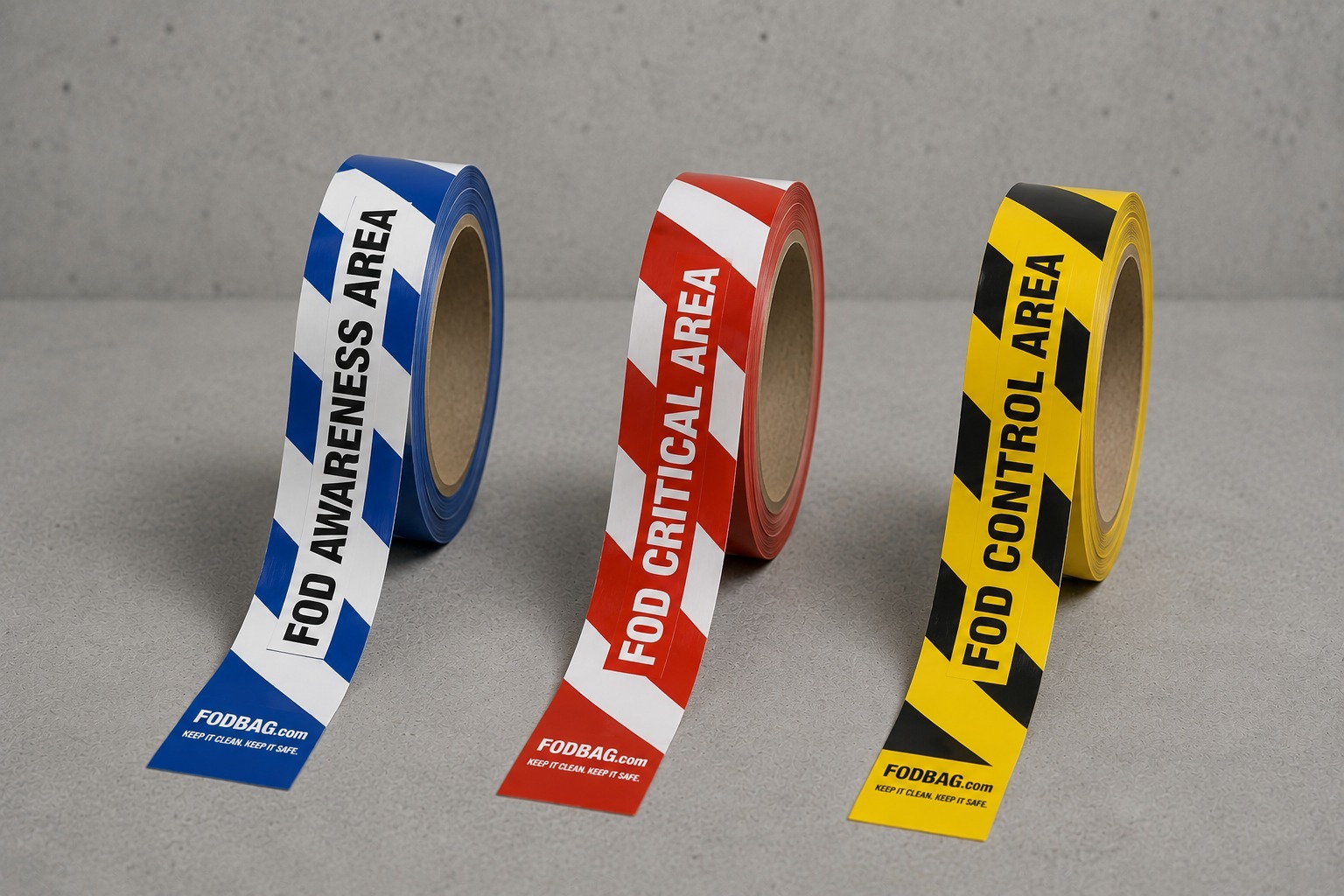
What FOD Tape Can Mark
- •FOD-sensitive or restricted work-area boundaries.
- •Transition points between general and controlled areas.
- •Tool-control, parts-handling, staging, and inspection zones.
- •Designated positions for FOD cans, bags, carts, or other equipment.
- •Pedestrian approaches or check points where local procedures require a visible cue.
- •Temporary or permanent work zones when the chosen tape is suitable for the surface and duration.
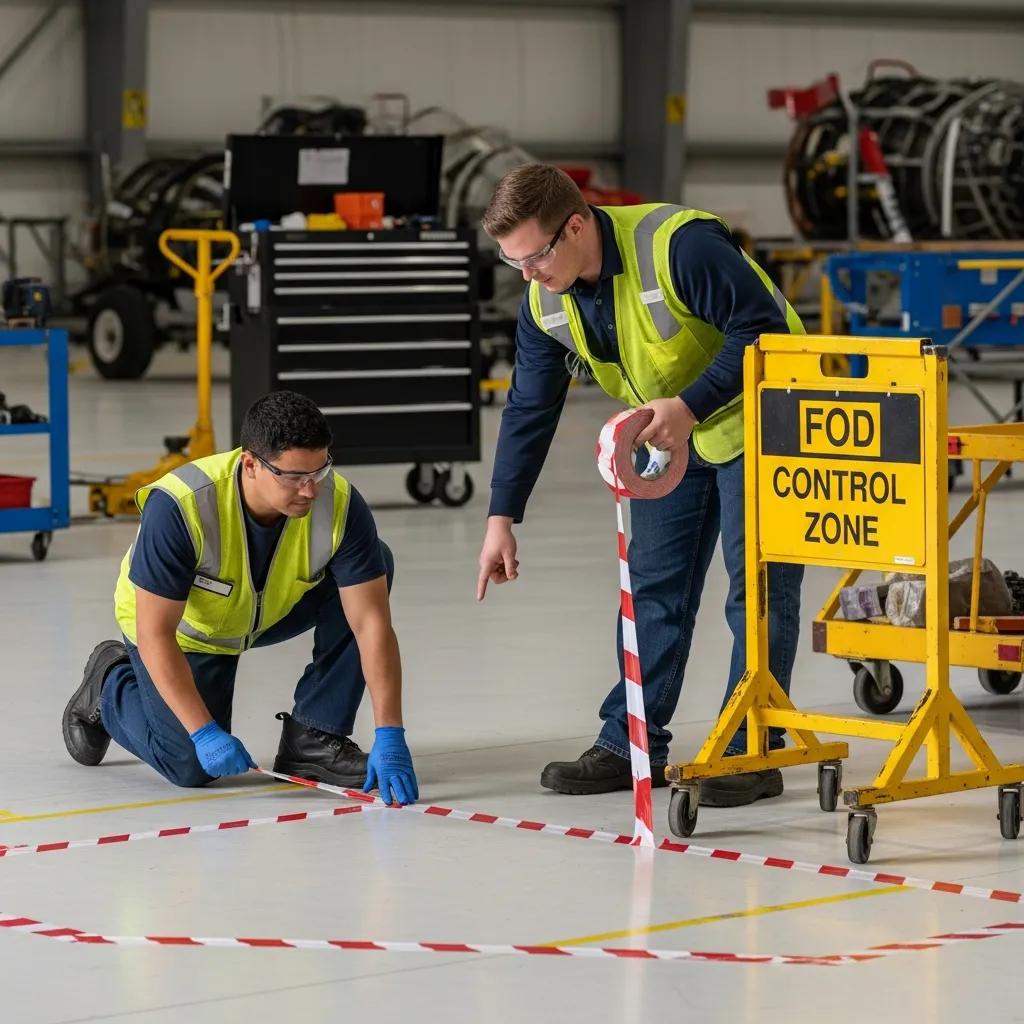
Where FOD Tape Is Commonly Used
- •Aircraft maintenance hangars and maintenance bays.
- •Tool cribs, parts rooms, benches, carts, and controlled work cells.
- •Aerospace manufacturing, assembly, inspection, and packaging areas.
- •Entrances and transition points into FOD-sensitive zones.
- •Indoor staging, equipment-position, and inspection locations.
- •Ramp or apron support areas only where the product and installation are approved for the surface, exposure, traffic, and operating environment.

How to Choose FOD Tape
The words “FOD tape” describe the intended visual-control role, not a universal performance specification. Confirm the following factors for the exact product before purchase.
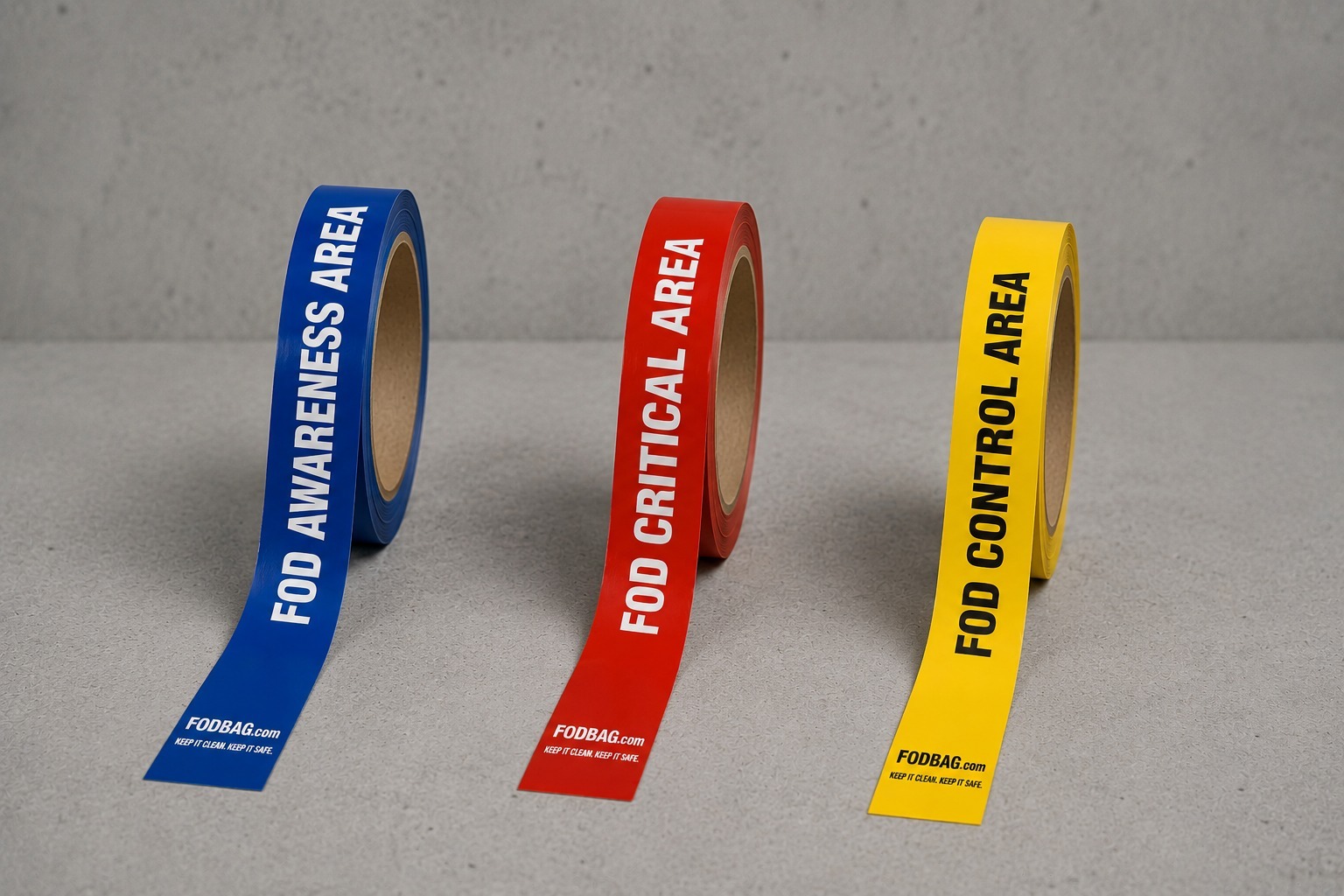
Plan the Marking Before Installation
- •Define the zone and the behavior required at each boundary or marked location.
- •Check the facility’s existing floor-marking, safety-color, fire-code, accessibility, and operational requirements as part of the site’s FOD control methods.
- •Measure the area and identify corners, thresholds, drains, uneven surfaces, vehicle paths, and locations exposed to cleaning or fluids.
- •Test a small, inconspicuous area when surface compatibility, adhesion, removal, or residue is uncertain.
- •Confirm that signs and written procedures use the same terminology and meaning as the tape.
- •Assign responsibility for installation approval, inspection, cleaning, repair, replacement, and removal.

Application and Maintenance Guidance
Always follow the instructions for the exact tape and the facility’s work controls. General planning considerations include:
- •Use only on an approved, compatible surface that is clean, dry, sound, and properly prepared.
- •Do not cover cracks, loose coatings, contamination, damage, drains, required markings, or other conditions that need correction.
- •Apply with consistent alignment and firm contact, paying special attention to edges and transitions.
- •Protect the installation for any required set or cure period before exposing it to traffic or cleaning.
- •Inspect for lifted edges, tears, fading, contamination, residue, loss of contrast, or a changed layout as part of routine inspections and the FOD walk procedure.
- •Replace or remove markings that are damaged, misleading, obsolete, or no longer consistent with the current procedure.
Important Limitation
Do not publish a universal lifespan, floor compatibility, chemical resistance, weather resistance, or “long-term” claim without a verified technical data sheet for the exact tape offered on this page.

FOD Tape, Signs, Stickers, and Cans Work Differently
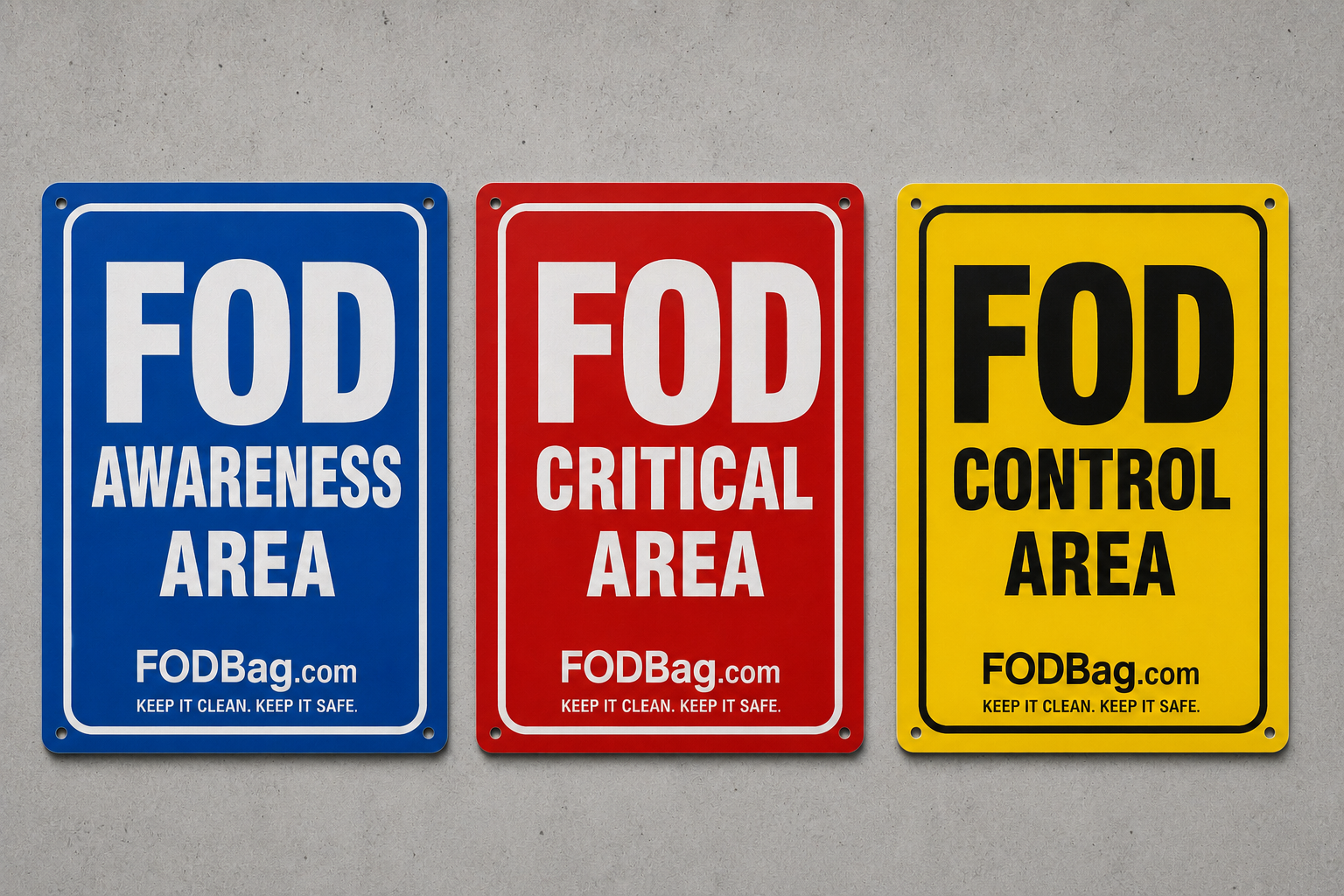
FOD tape marks a location or boundary. FOD signs explain a rule, warning, or instruction. Stickers reinforce awareness on approved equipment or surfaces. FOD cans provide a designated collection point. A facility may use these together, but each element should have a distinct purpose so the visual system remains clear rather than crowded. See FOD signs for aviation for the full comparison.
FOD Tape and Prevention-Program Requirements
Visual controls can support a documented FOD prevention program, but tape itself does not make an organization compliant with NAS412, AS9146, an FAA advisory circular, a customer requirement, or a local procedure. AS9146 defines FOD prevention program requirements for aviation, space, and defense organizations, while FAA AC 150/5210-24A provides airport FOD-management guidance. The organization remains responsible for determining which requirements apply and how its complete program meets them.
Use careful language such as “supports visual control within a FOD prevention program.” Do not call the tape NAS412-certified, AS9146-certified, FAA-approved, or compliant unless verified product-specific evidence supports that exact claim. Review the NAS412 FOD prevention guidance for more context.

Discuss Your FOD Marking Requirements
Share the surface, indoor or outdoor location, expected traffic, exposure, facility color system, dimensions, required duration, removal expectations, quantity, and related signs or collection points. FODBag can confirm the current options and ordering information relevant to the request.