
FOD Cans and Collection Containers for Aviation
Short Answer
FOD cans are clearly identified collection containers that give personnel a designated place to deposit Foreign Object Debris. They are commonly positioned near hangars, maintenance workstations, tool-control areas, ramps, inspection stations, and aerospace production zones. The right container should match the debris being collected, the work area, placement method, servicing routine, and local FOD-control procedure.
Loose fasteners, safety-wire clippings, packaging, fragments, and other unwanted material should not remain on a bench, cart, hangar floor, or operational surface. A dedicated FOD can makes the collection point visible and consistent so personnel do not have to decide where an item belongs after they find it. See how FOD cans are used in aviation for the full picture.
FODBag supplies FOD cans and related collection solutions for aviation, aerospace, defense, maintenance, manufacturing, and other controlled environments. Contact the FODBag team to discuss the work area, intended contents, placement, capacity, labeling, and ordering requirements before selecting a configuration.
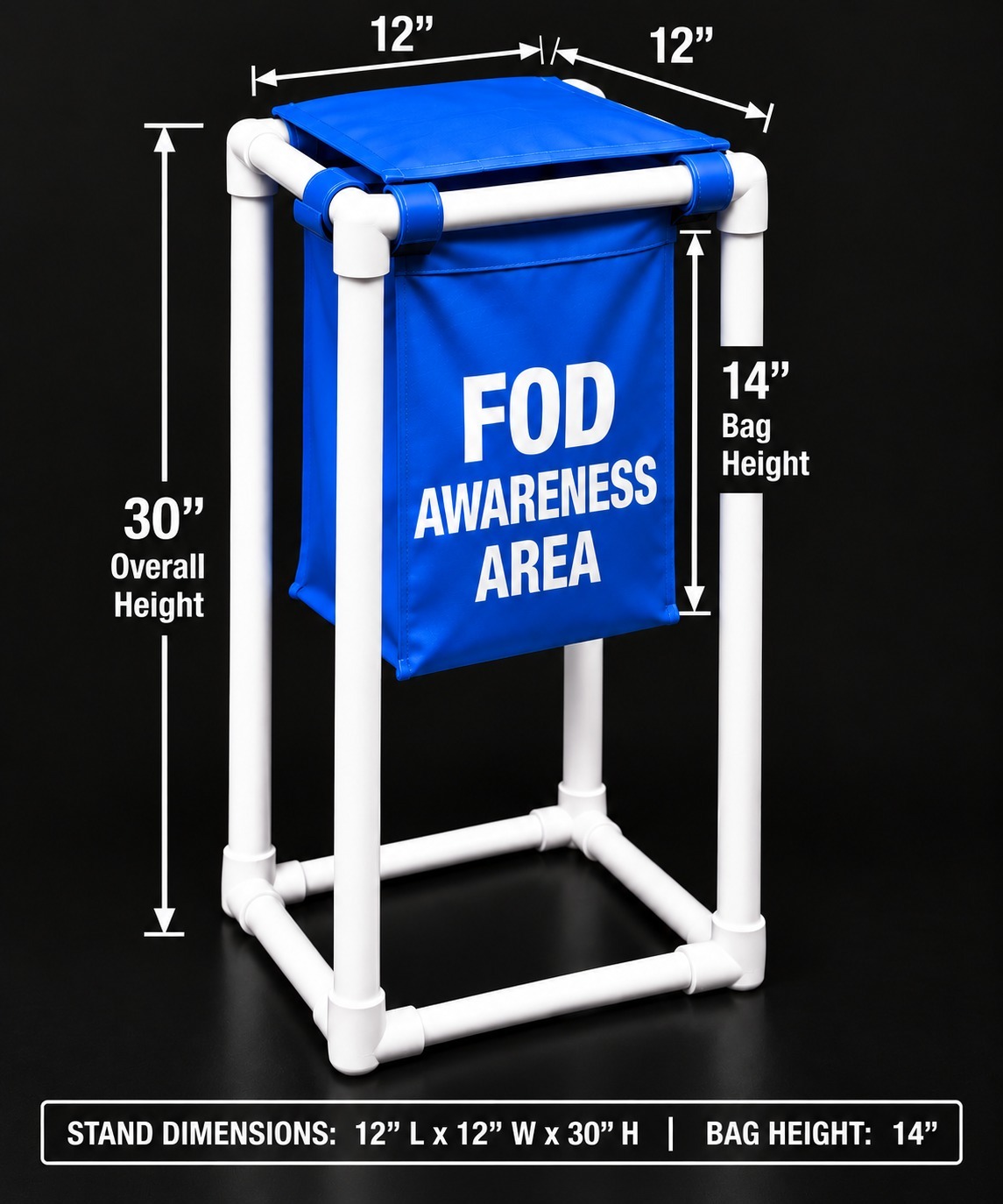
Why Use a Dedicated FOD Can?
A general trash receptacle is intended for ordinary waste. A FOD can has a separate operational role: it identifies a controlled destination for foreign objects found during work, inspections, or FOD walks. Keeping these streams separate can also make it easier for a program owner to observe recurring findings and investigate their source before disposal, when local procedures require that review. This supports the broader FOD prevention program at a facility.
- •Creates a visible, designated collection point for foreign object debris.
- •Supports clean-as-you-go routines near the point where debris is generated.
- •Helps personnel avoid placing loose objects in pockets, toolboxes, on carts, or on nearby surfaces.
- •Supports the FOD walk procedure, inspections, housekeeping, reporting, and corrective-action routines.
- •Reinforces the difference between ordinary waste and items that may need review or accountability.
A collection container supports a FOD prevention program; it does not replace training, tool and hardware accountability, inspection, reporting, or corrective action.
Where FOD Cans Are Commonly Placed
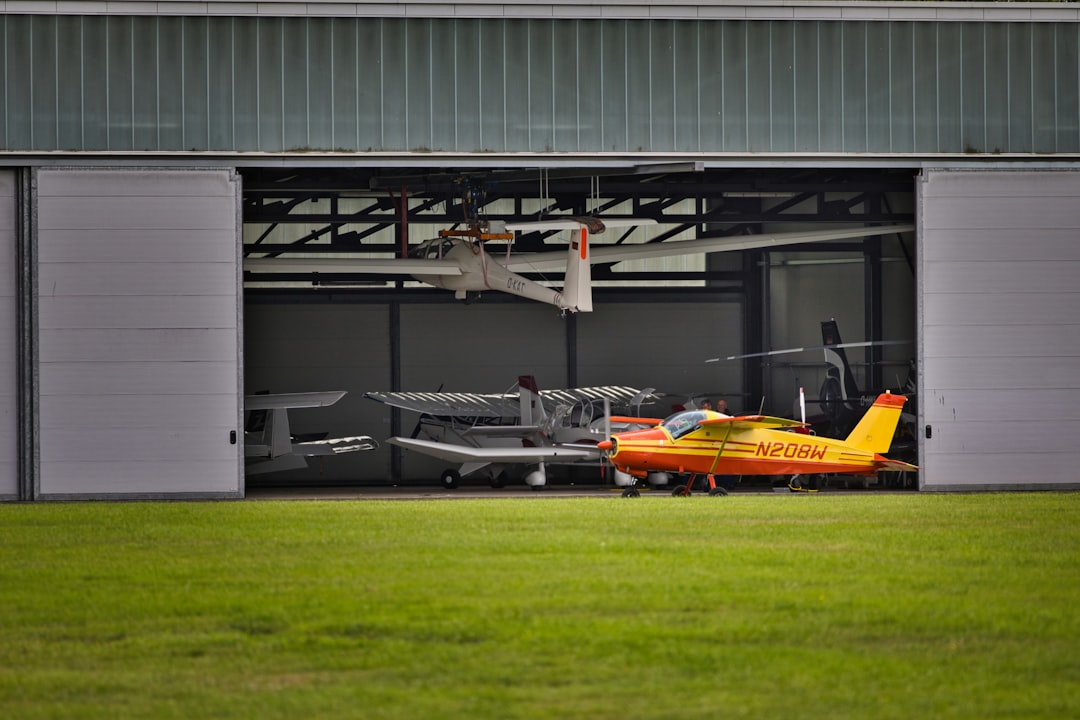
- •Aircraft hangars and maintenance bays near active work areas.
- •Tool cribs, parts counters, benches, carts, and staging zones.
- •Ramp, apron, flight-line support, and ground-equipment areas where permitted by local procedures.
- •Aerospace manufacturing, assembly, inspection, and packaging areas.
- •FOD-walk start or finish points where collected items are transferred for review.
- •Controlled entrances, transition areas, or shared work zones that need an obvious collection point.
Placement should follow the actual workflow. A container that is difficult to see, reach, empty, secure, or inspect is less useful than one positioned close to the activity it supports. Outdoor or movement-area placement also requires site-specific review so the container itself does not become unsecured debris or interfere with operations.
How to Choose the Right FOD Collection Container
There is no single best can for every facility. Use the following selection process before ordering.
Bench, Wall, Floor, or Portable Collection?
Configuration follows the work area, not the other way around. FODBag can help match a placement method, size, and marking scheme to the specific location.
Using FOD Cans Within a Controlled Process
- •Place and label each approved collection point according to the facility plan.
- •Explain what may be deposited and what must follow a separate tool, hardware, hazardous-material, or evidence-retention process.
- •Check the container at the frequency defined by traffic, risk, volume, and local procedure.
- •Review unusual, recurring, or unaccounted-for items before disposal when required.
- •Record trends and correct the source of repeat debris rather than treating the can as the final control.
- •Clean, repair, replace, or relocate the container when damage, poor visibility, contamination, or low use reduces its effectiveness.
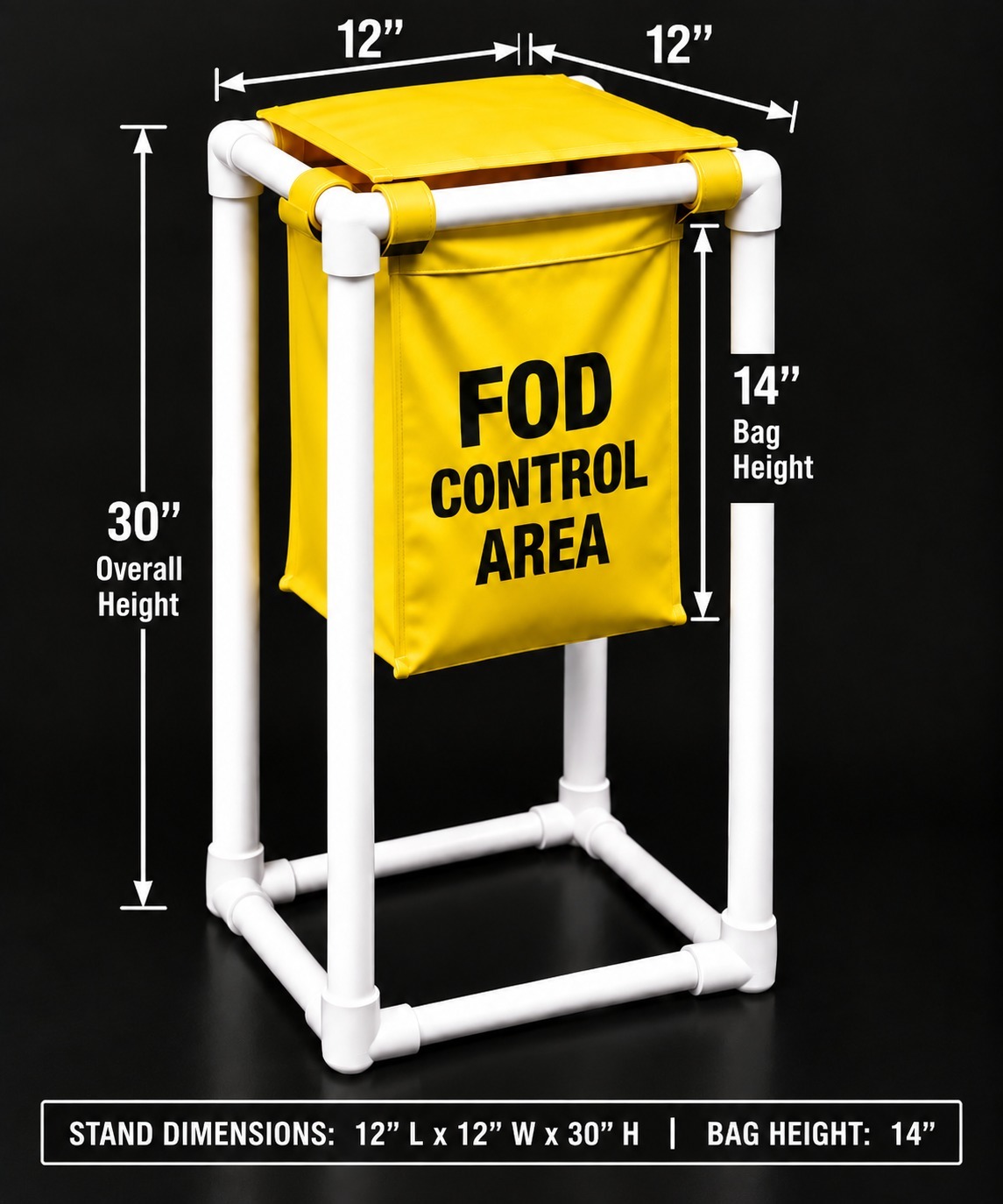
FOD Cans, Bags, and Buckets: Which Format Fits?
FOD cans typically serve as fixed or designated collection points. FOD bags and pouches support personnel who move through inspections or maintenance work. Buckets can provide portable or larger-capacity containment, depending on their design. Many programs use more than one format: mobile personnel collect debris in a bag or pouch and transfer it to an approved review or disposal point.
Explore the broader FOD control products range when a work area also needs portable collection, tool organization, zone marking, signs, stickers, covers, or inspection support.
Built for Consistent Manufacturing
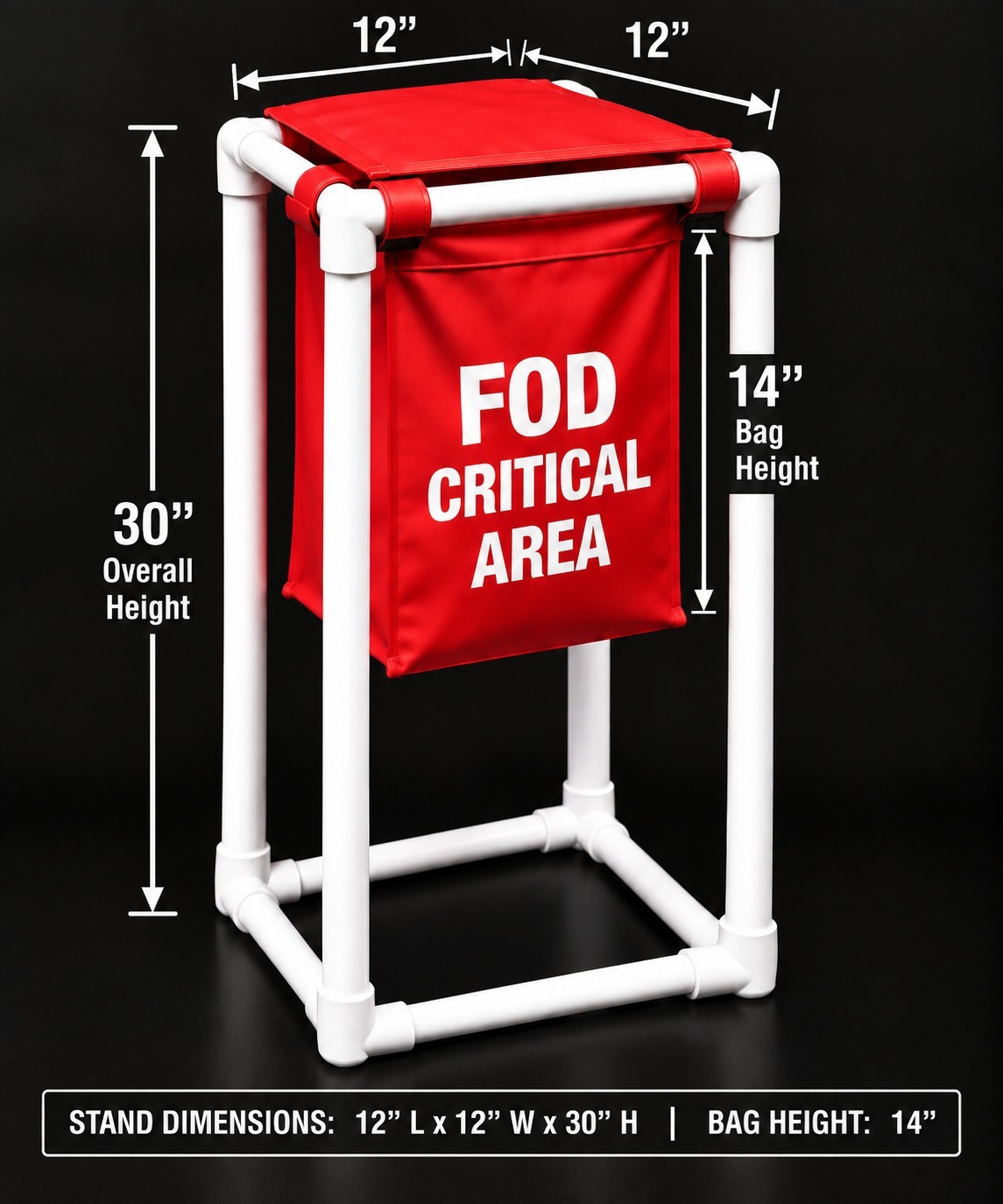
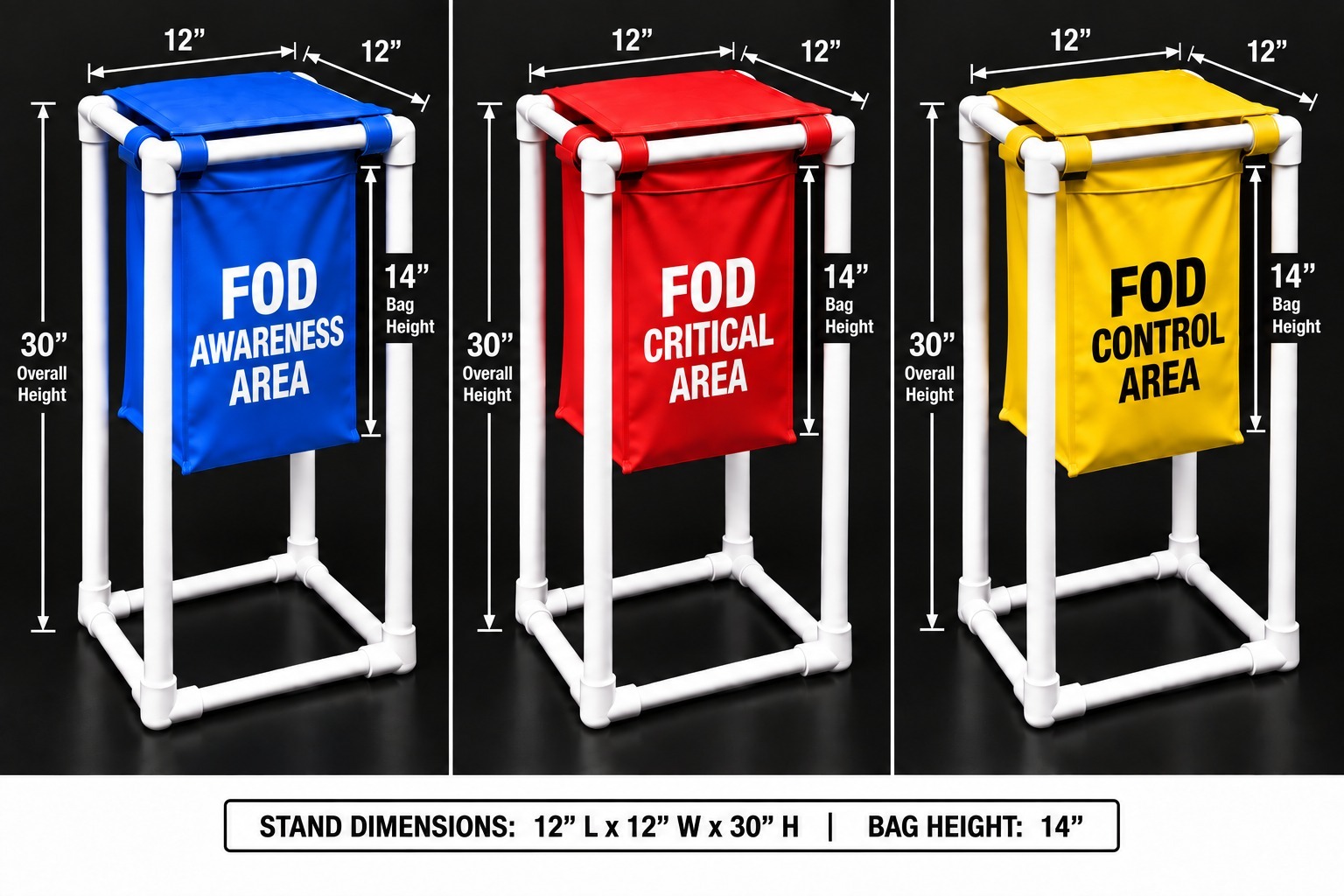
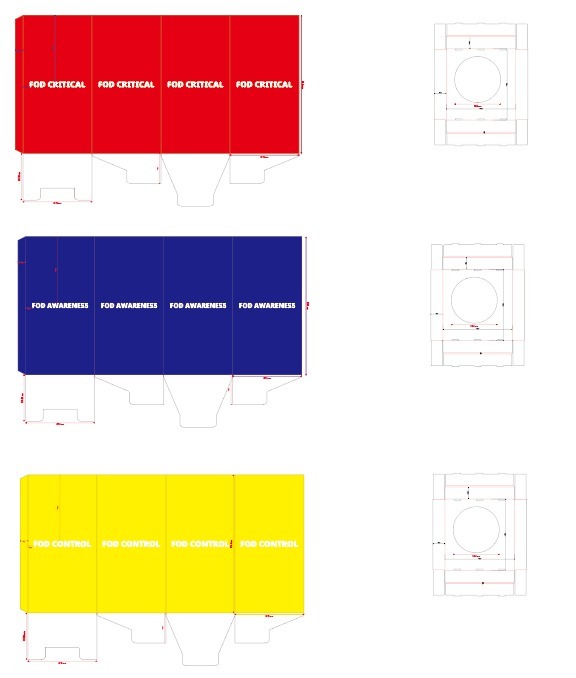
Every FOD can is cut and printed from a fixed production dieline, so Critical, Awareness, and Control Area markings stay consistent from the first unit in a batch to the last. Confirm current dimensions, materials, and marking options with FODBag before ordering.
Choose a FOD Can for Your Work Area
Share the intended location, debris type, approximate volume, placement preference, quantity, and any labeling or customization requirements. FODBag can help identify the questions that should be confirmed before an order is placed.
Frequently Asked Questions
What is a FOD can?
Where should FOD cans be placed?
What size FOD can do I need?
How often should a FOD can be emptied?
What is the difference between a FOD can and a FOD bag?
Can a FOD can be used outdoors?
Are FOD cans NAS412 or AS9146 certified?
Can FOD cans be customized?
Shop FOD Prevention Products
Put this guidance into practice with products built for FOD control.