
FOD Covers for Aircraft and Equipment
Short Answer
A FOD cover is a removable protective barrier specified for an approved opening, component or item of equipment while it is parked, stored or undergoing an authorized process. Correct fit, material, attachment, visibility, environmental limits, installation and removal controls are application-specific. FODBag can review a custom inquiry, but the operator or equipment authority must approve the final configuration and procedure.
Openings and exposed components can become entry points for loose material, dust, moisture, insects or other contaminants. A correctly specified cover may form one part of the organization’s prevention plan during an approved maintenance, storage, manufacturing or ground-handling condition. It must never be selected by appearance alone.
This page helps buyers prepare a useful FOD cover inquiry. It does not provide aircraft maintenance instructions, return-to-service authorization or a universal install/remove rule. Always follow the current aircraft, engine, component or equipment documentation and the organization’s approved procedures.
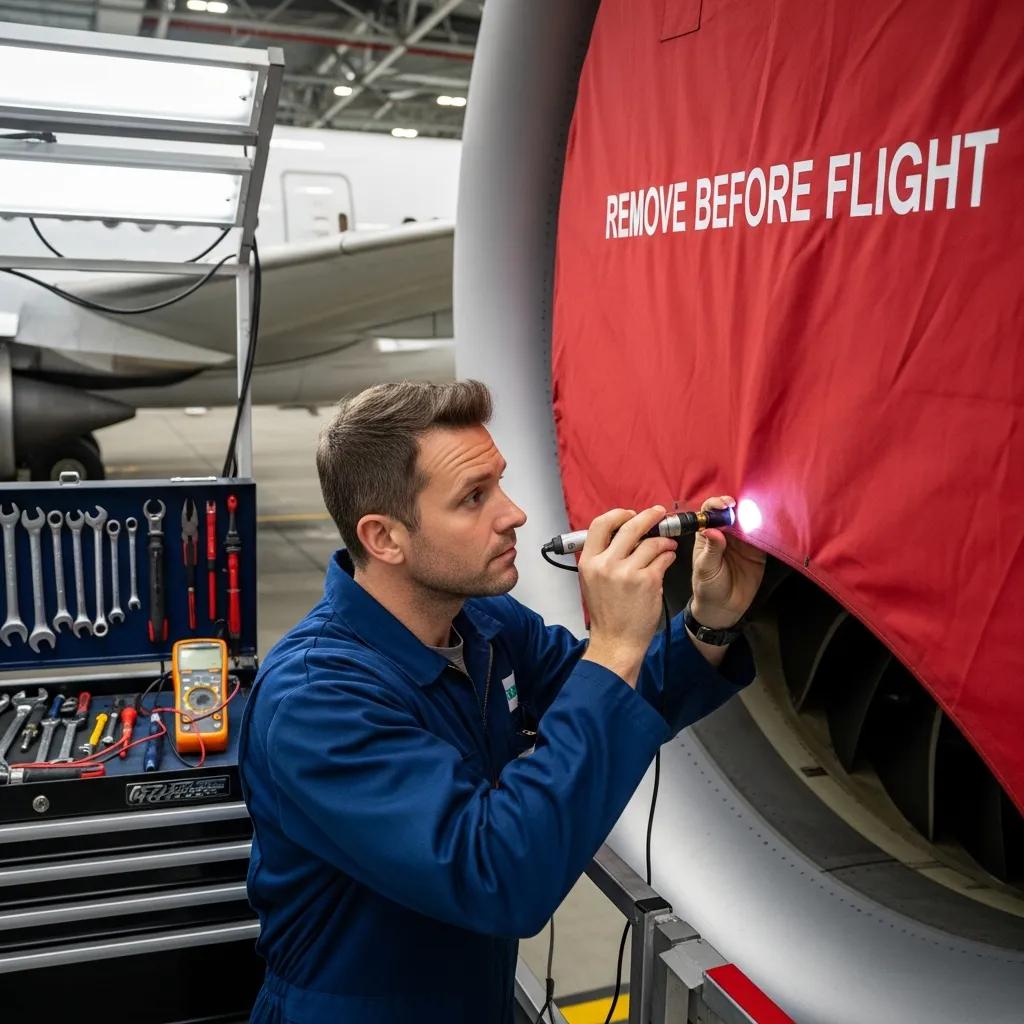
What a FOD Cover Is Intended to Do
A cover creates a temporary physical barrier at a defined location. Depending on an approved design and operating condition, the objective may be to reduce the opportunity for unwanted material or environmental exposure to reach an opening or protected area. The cover’s role and limitations must be documented for the actual application.
- •Protect a specifically identified opening or area during an approved non-operating condition.
- •Provide a visible, accountable item within a documented installation and removal process.
- •Support storage, maintenance, production or ground procedures defined by the responsible organization.
- •Carry approved identification or warning information where the chosen construction permits it.
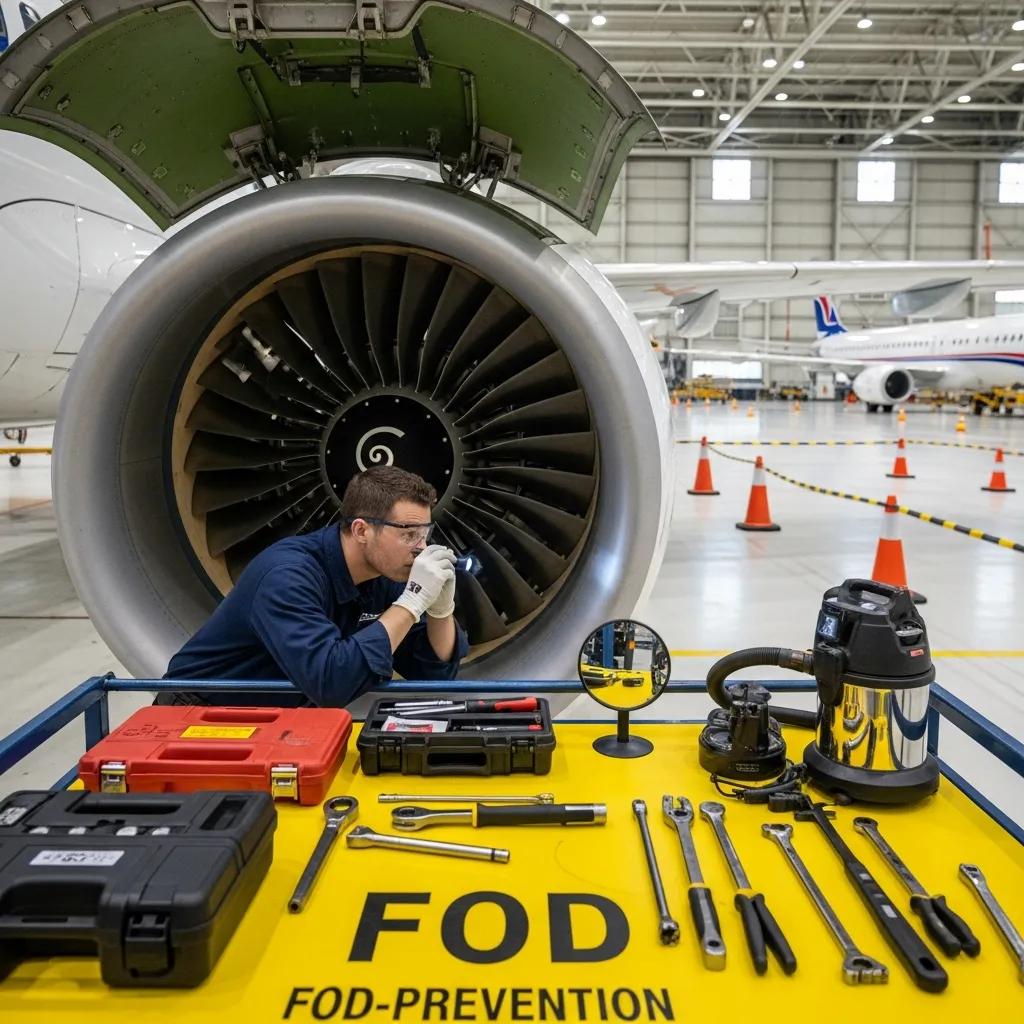
Potential Application Categories
FODBag can evaluate inquiries for aircraft, aerospace, defense, manufacturing and industrial settings. The following are application categories—not claims that one universal product fits every item.
- •Aircraft or engine openings during an approved parked, stored or maintenance condition.
- •Ducts, ports or access openings during an authorized process.
- •Ground-support or industrial equipment openings.
- •Manufacturing and assembly work where an exposed component requires temporary protection.
- •Custom shapes or identification needs supported by complete drawings or measurements.
Do Not Infer Fit
Aircraft model names, component descriptions and nominal dimensions are not sufficient by themselves. The responsible technical authority must confirm the protected item, configuration, clearances, attachment points and permitted use.
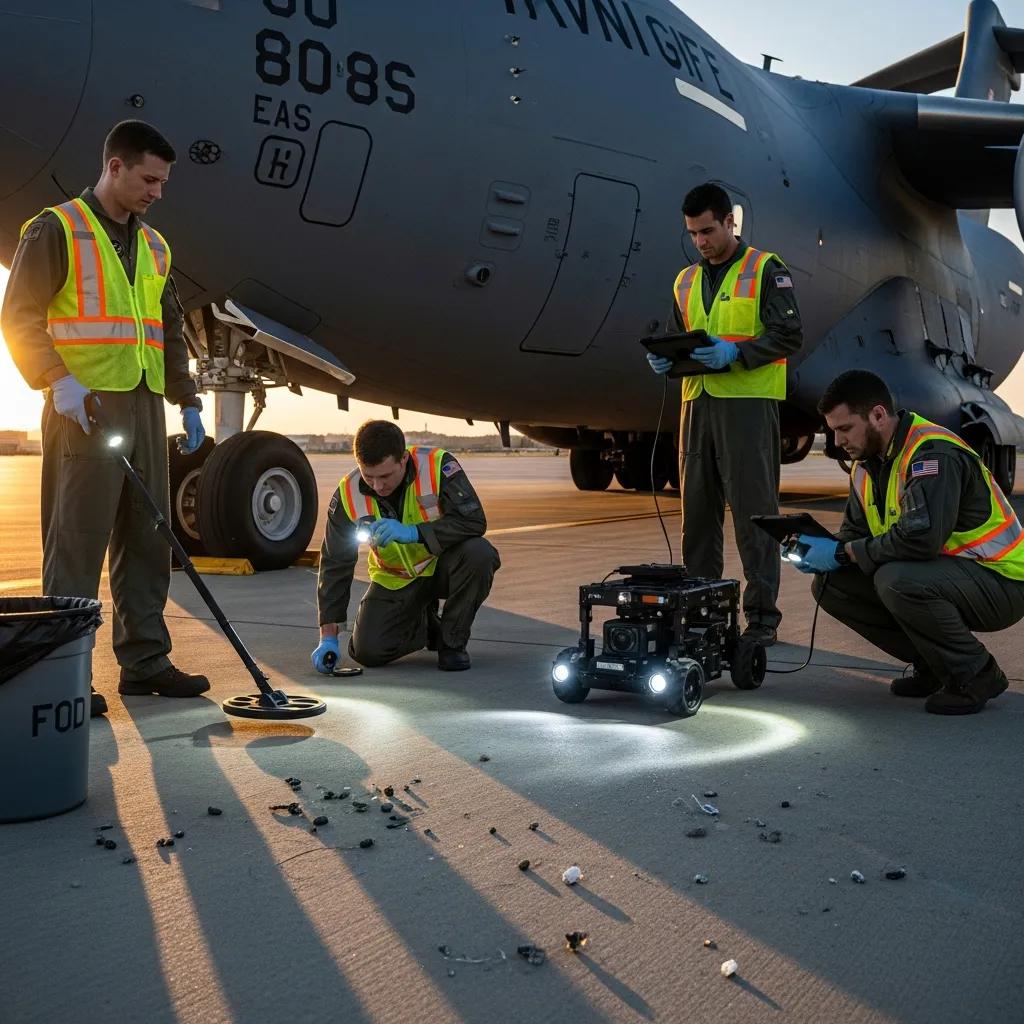
Information Required for a Custom Cover Inquiry
Send the following details so FODBag can identify missing inputs and discuss whether a custom solution can be evaluated.
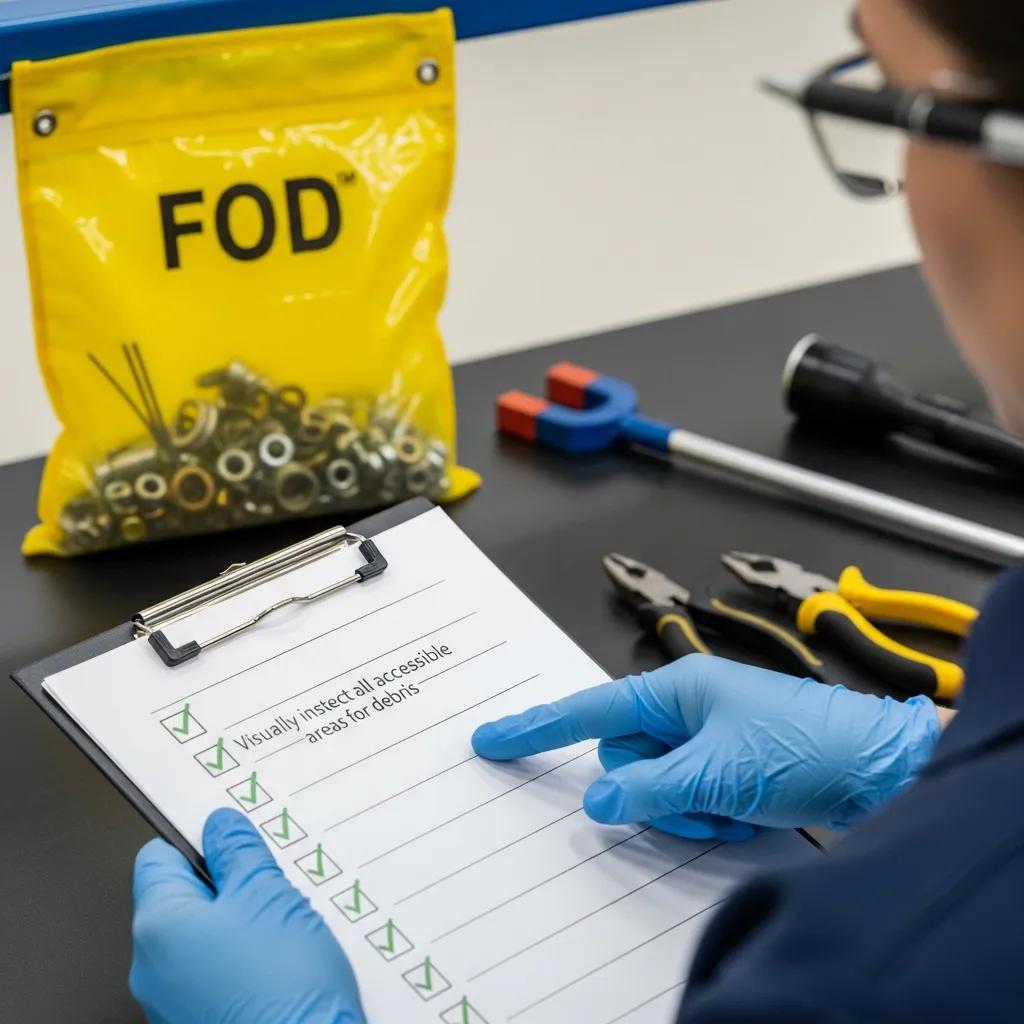
How to Specify a FOD Cover
- •Identify the exact opening, component and authorized use condition.
- •Review the controlling manual, engineering instruction and facility procedure.
- •Document geometry, clearances, permitted contact and attachment points.
- •Define the environmental exposure and required construction properties.
- •Define visibility, identification and accountability requirements.
- •Submit the inquiry and resolve every open specification in writing.
- •Review an artwork or design proof and, where required, a prototype or first article.
- •Obtain technical approval before operational use and record the approved configuration.
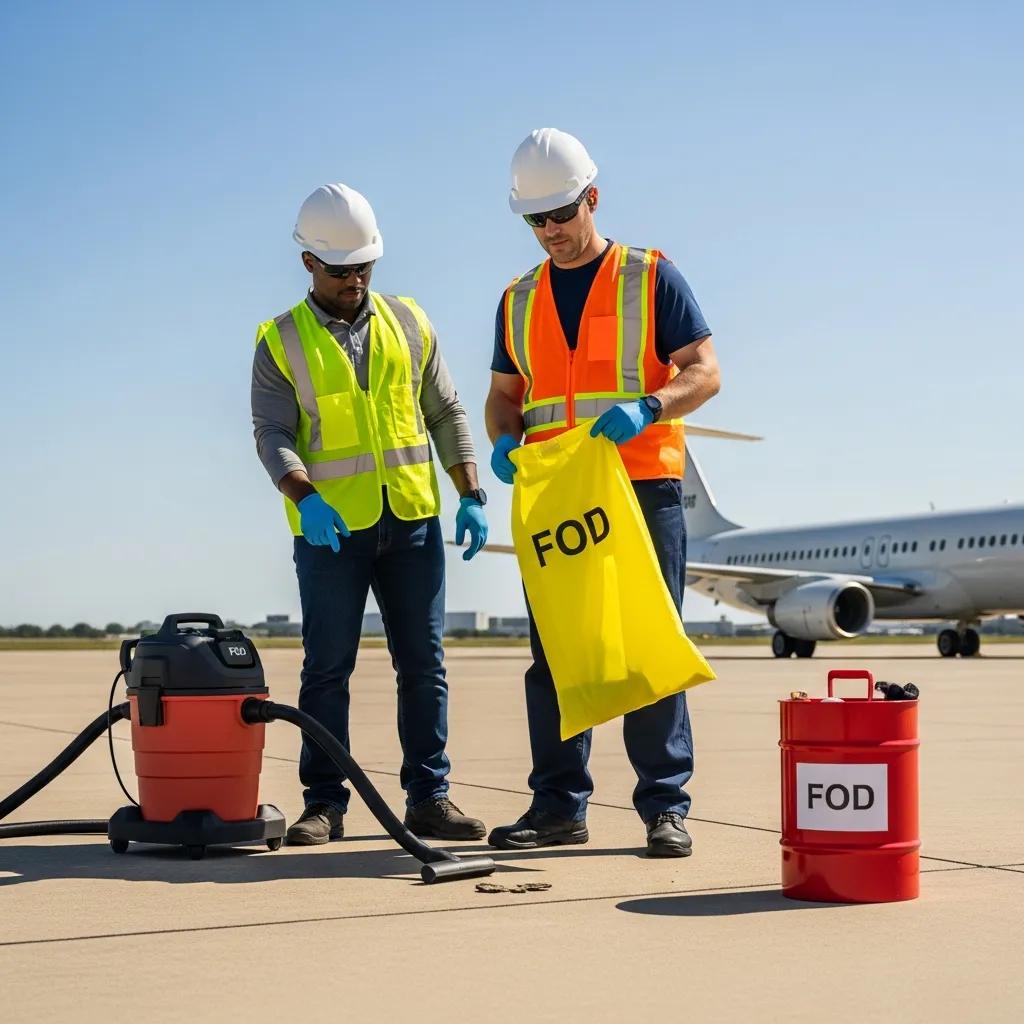
Fit and Attachment Are Safety-Critical Decisions
A cover that is too loose may not remain where intended. A cover that is too tight, abrasive, incorrectly supported or attached to the wrong location may introduce a different risk. Because geometry and permitted contact vary, the final fit and attachment method must be evaluated by the responsible aircraft, component or equipment authority.
Important Limitation
FODBag should receive the approved design inputs and should not be asked to infer airworthiness, clearance or return-to-service requirements. Where information conflicts, stop the order or use process until the responsible authority resolves it.
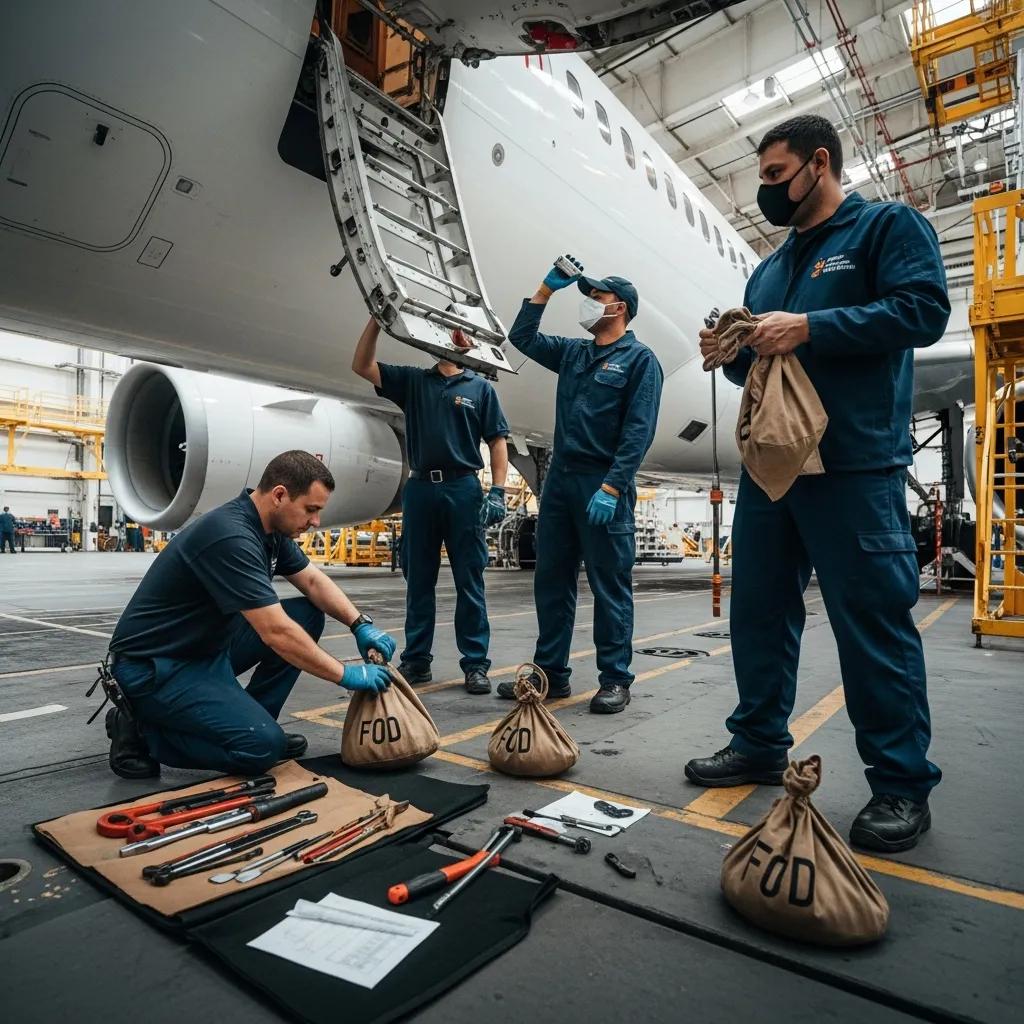
Installation, Accountability and Removal
Installation and removal must follow the current approved procedure for the actual application. A site may incorporate identification, logs, tags, streamers, checklists or independent verification, but the required method is determined by the operator—not by generic web copy.
Inspection and replacement planning: The organization should define acceptance and rejection criteria for each approved cover. Checks may include identity, cleanliness, tears, seam condition, attachment hardware, deformation, legibility and any sign that the cover could no longer perform as specified. Replace, quarantine or evaluate a cover according to the approved process; do not rely on a generic service-life claim.
FOD Covers Compared With Related Controls
| Control | Primary Role | Key Distinction |
|---|---|---|
| FOD cover | Temporary physical barrier at an approved opening or protected area | Requires application-specific fit, attachment, accountability and removal controls. |
| FOD bag | Collection or containment in the configuration for which the bag is designed | Does not substitute for a component-specific protective cover. |
| FOD can | Designated debris collection point | Supports disposal and housekeeping rather than sealing an opening. |
| FOD tape/sign | Boundary or awareness communication | Visual communication is not a physical barrier. |
| Inspection/checklist | Verification of condition and process completion | Must accompany—not be replaced by—the cover. |
For a plain-language foundation, visit What Is FOD? Related product categories include FOD bags, FOD cans and FOD tape.
Discuss Your FOD Cover Requirements
Send the protected-item identification, authorized use condition, measurements or approved drawing, environmental exposure, attachment restrictions, identification needs, quantity, delivery location and target date. FODBag can then identify missing inputs and discuss whether a custom solution can be evaluated.
Frequently Asked Questions
What is a FOD cover?
Are FOD covers universal?
What information is needed for a custom cover?
Can FODBag determine whether a cover is airworthy?
When should a FOD cover be installed or removed?
How can installed covers be accounted for?
How often should a FOD cover be inspected?
Do FOD covers provide NAS412 or AS9146 compliance?
Shop FOD Prevention Products
Put this guidance into practice with products built for FOD control.