
FOD Signs for Aviation & Aerospace Facilities
FOD signs are the visual backbone of a foreign object debris prevention program. Where FOD cans and bags give technicians a place to put debris, and FOD tape marks the physical boundaries of a zone, FOD signs do something equally important: they remind everyone, every time they walk through a space, that debris control is active and expected there. A hangar without signage relies entirely on training and memory. A hangar with clear, consistent FOD signage reinforces that training every single shift, for every person who enters — including visitors, new hires, and contractors who’ve never sat through a formal briefing.
This matters more than it might seem at first glance. FOD incidents rarely happen because someone deliberately ignored procedure. They happen because a moment of inattention, a rushed task, or an unfamiliar work area let a small oversight slip through. Signage closes that gap. It’s a low-cost, always-on layer of prevention that doesn’t depend on someone remembering a policy from a training session months earlier.
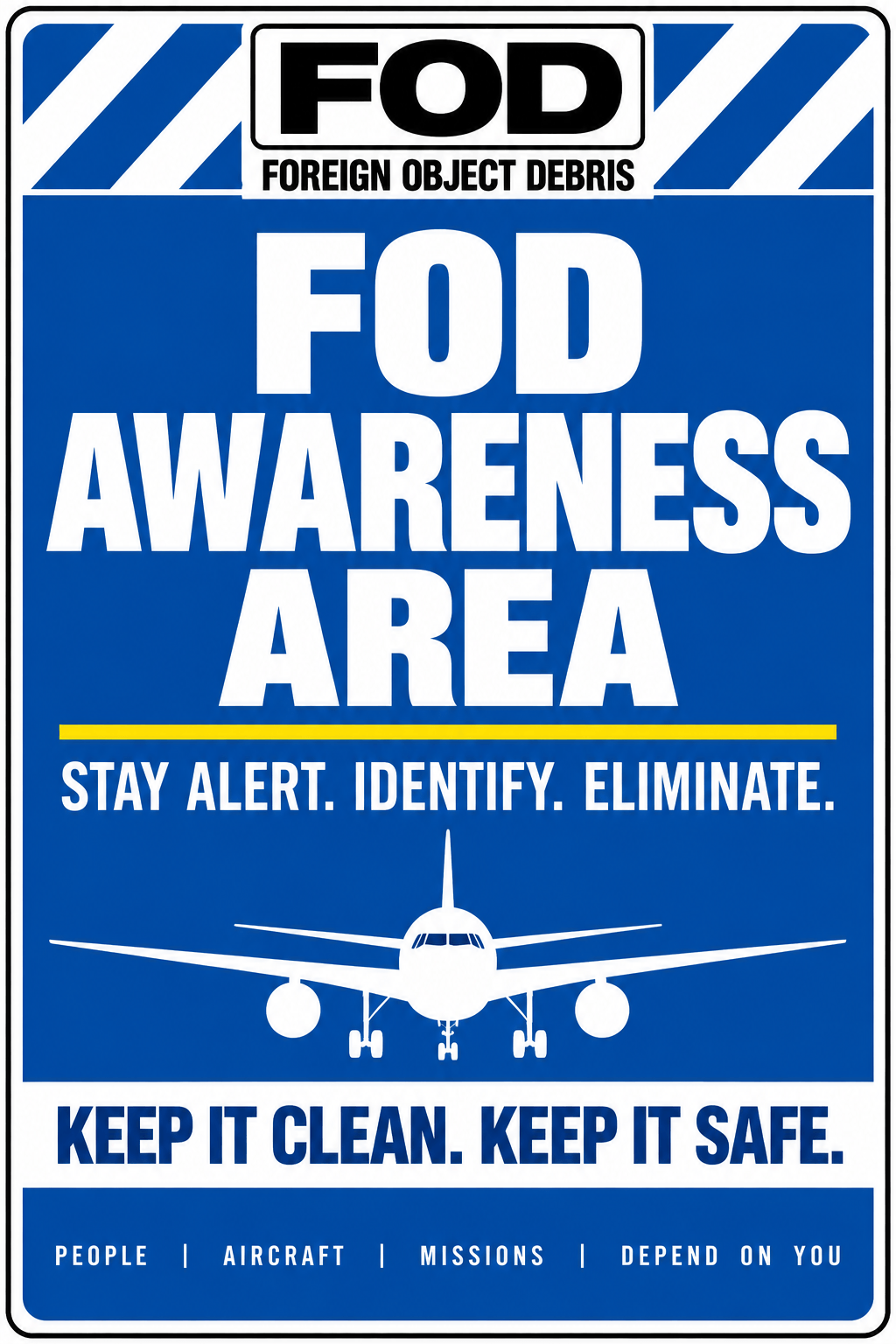
Why FOD Signage Matters
Foreign object debris remains one of the most preventable — and most expensive — categories of damage in aviation and aerospace operations, from engine ingestion events to tire damage to costly aircraft-on-ground delays. Formal FOD prevention programs, including those structured around NAS412 and AS9146, treat visible reinforcement of procedures as a core control, not a nice-to-have addition once the “real” controls are in place.
Signage plays a specific role that other equipment doesn’t fully cover. A FOD can only works if someone chooses to use it. A tool control system only works if someone follows the checkout process. Signs work passively and continuously — they don’t require an action to provide value. Every person who walks past a clearly marked FOD control area gets a reminder, whether or not they consciously register it. Over time, that repeated visual cue is what turns “FOD awareness” from a training topic into an actual habit embedded in how a facility operates.
Where FOD Signs Are Used
- •Hangar and maintenance bay entrances, marking the transition into a controlled zone
- •Ramp and flight line boundaries, where ground crew and vehicles move constantly
- •Tool crib and staging area perimeters
- •Manufacturing and assembly floor zones handling small parts and hardware
- •Visitor and contractor entry points, where formal FOD training may not have occurred
Placement should mirror how people actually move through a facility. A sign posted somewhere out of the natural line of sight does far less than one positioned exactly where someone transitions from a general area into a FOD-sensitive one.
Available Options
FODBag offers FOD signage built for the range of environments and messaging needs a facility actually has, not a single generic warning sign stretched to cover every situation.
Sign Designs
A sample of the FOD sign designs available, mix and match for your facility or request a custom layout.
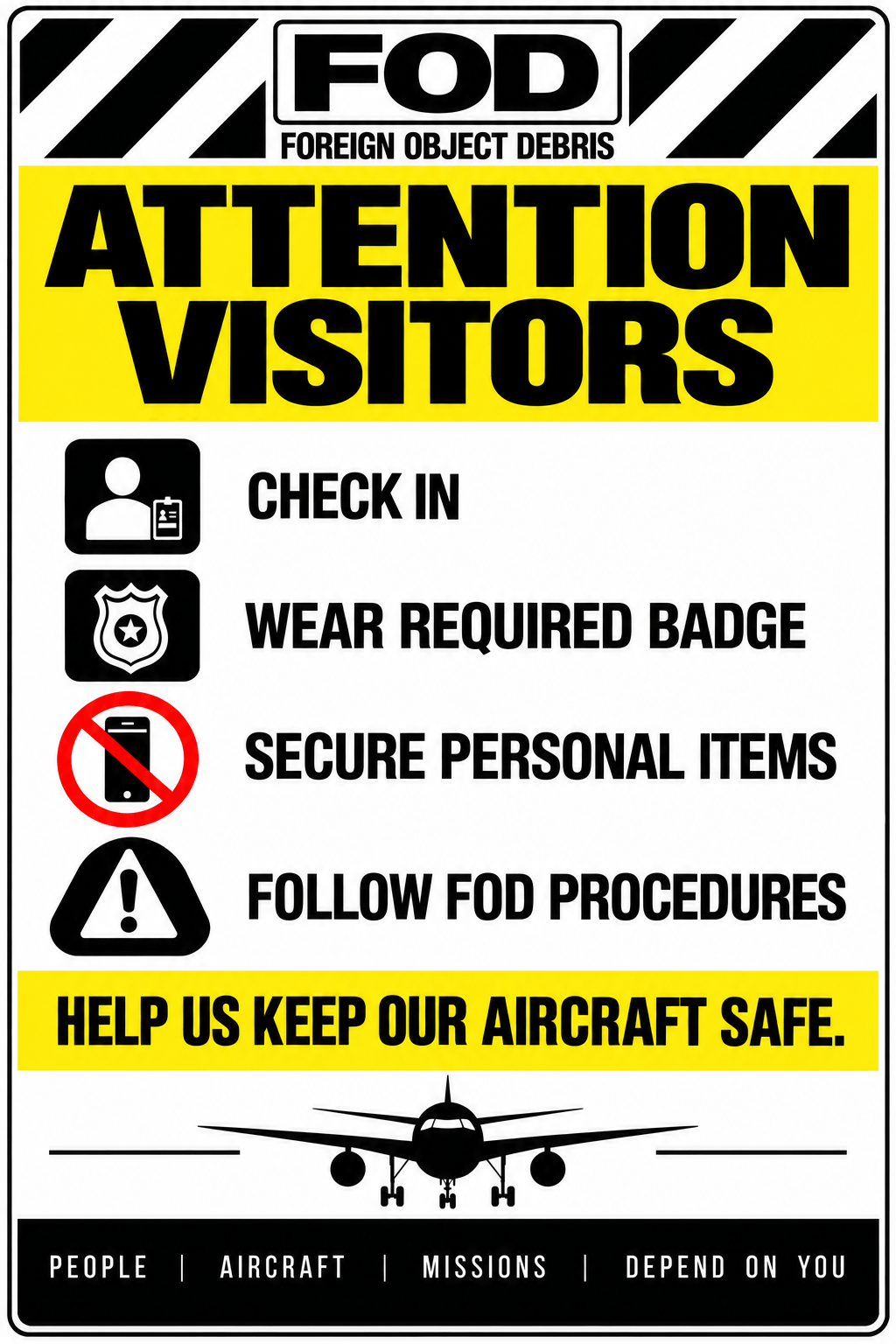
Attention Visitors
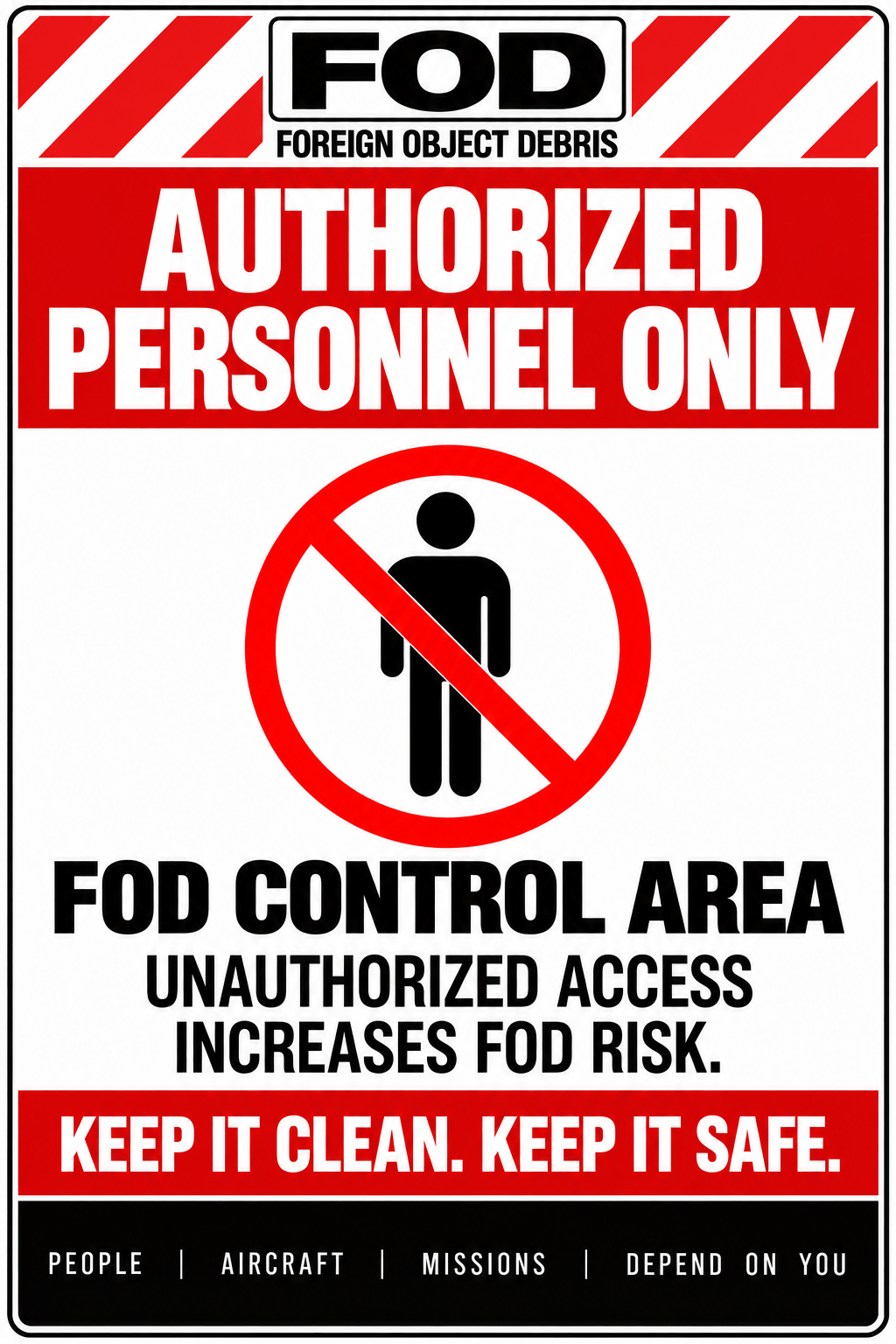
Authorized Personnel Only
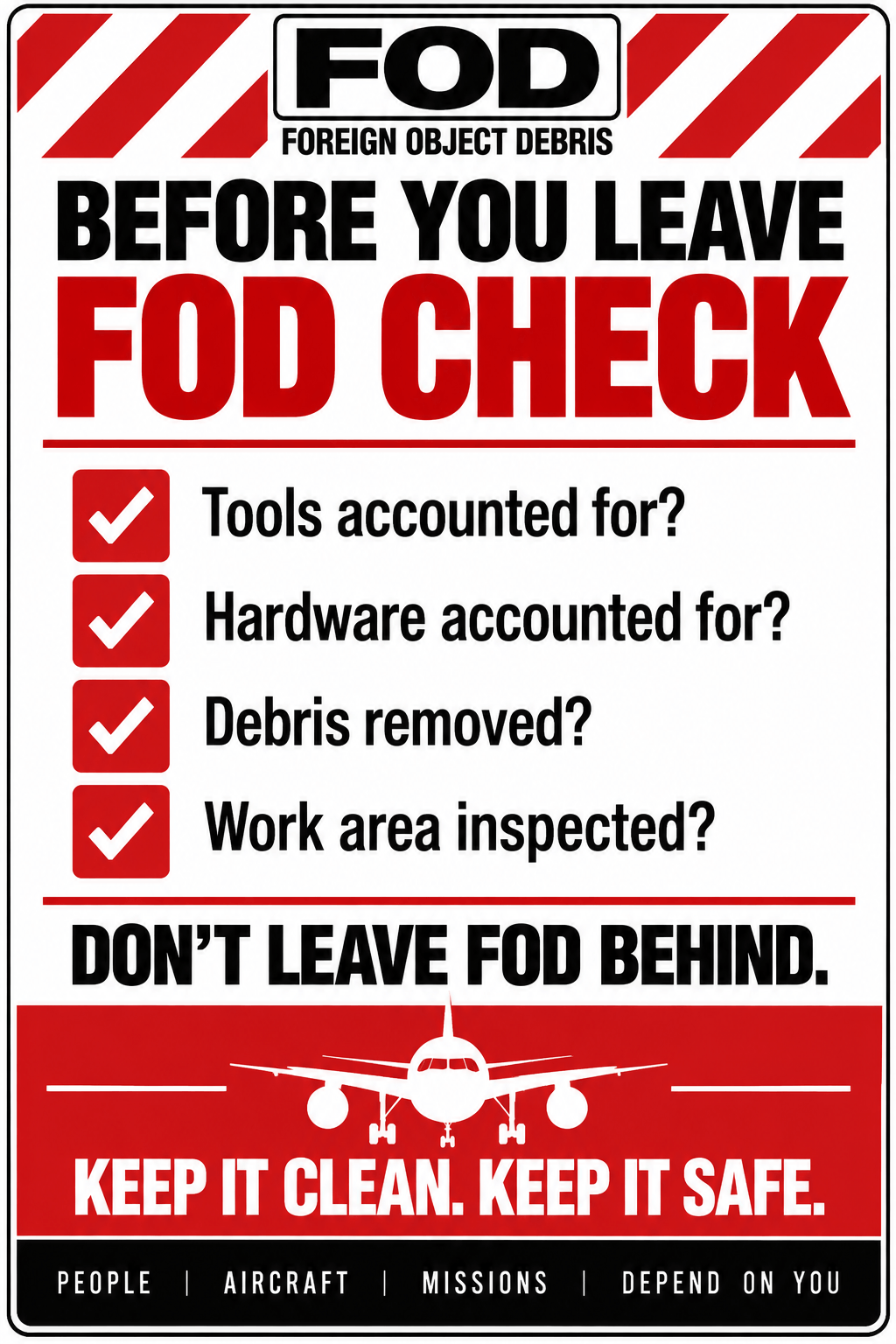
Before You Leave FOD Check
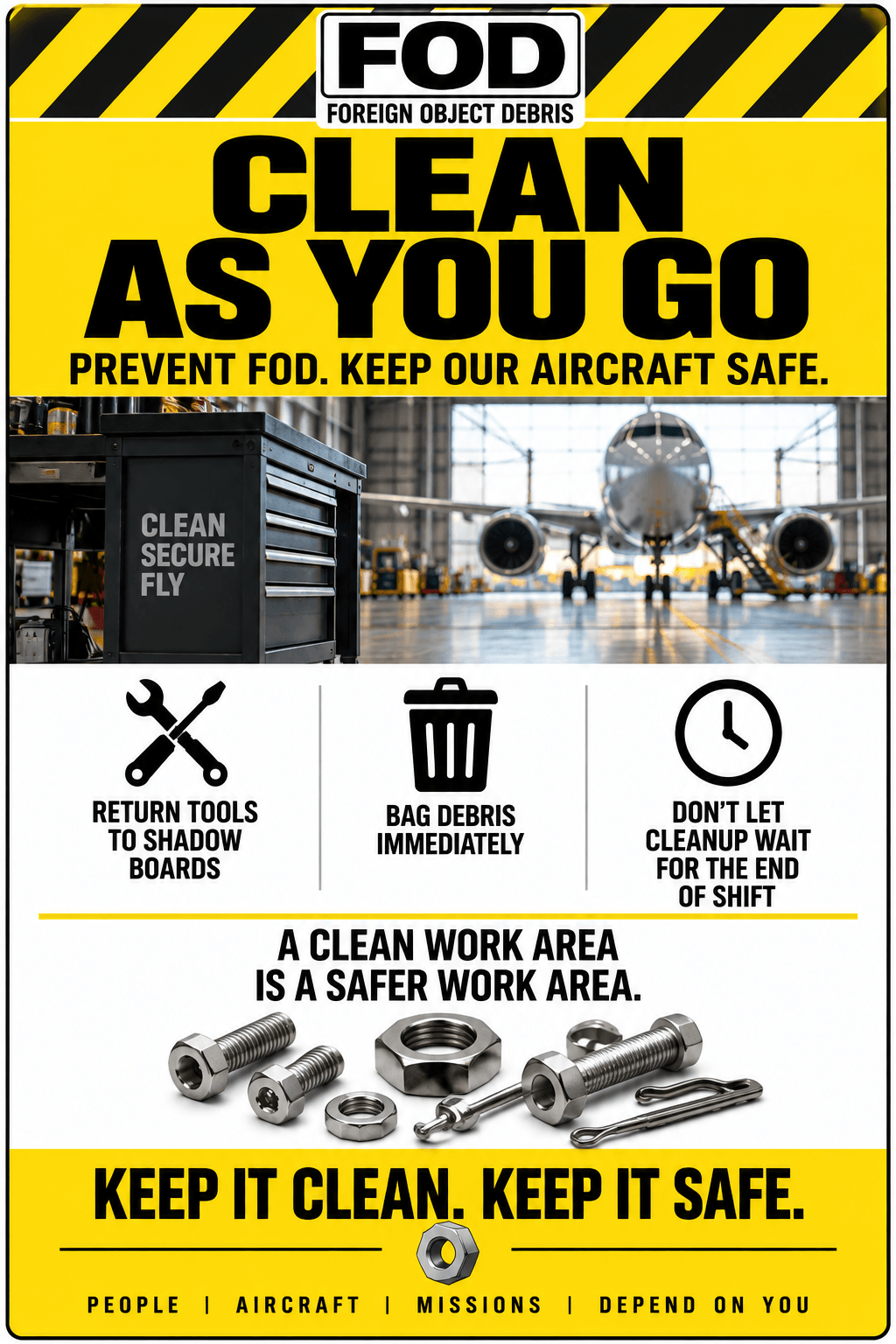
Clean As You Go
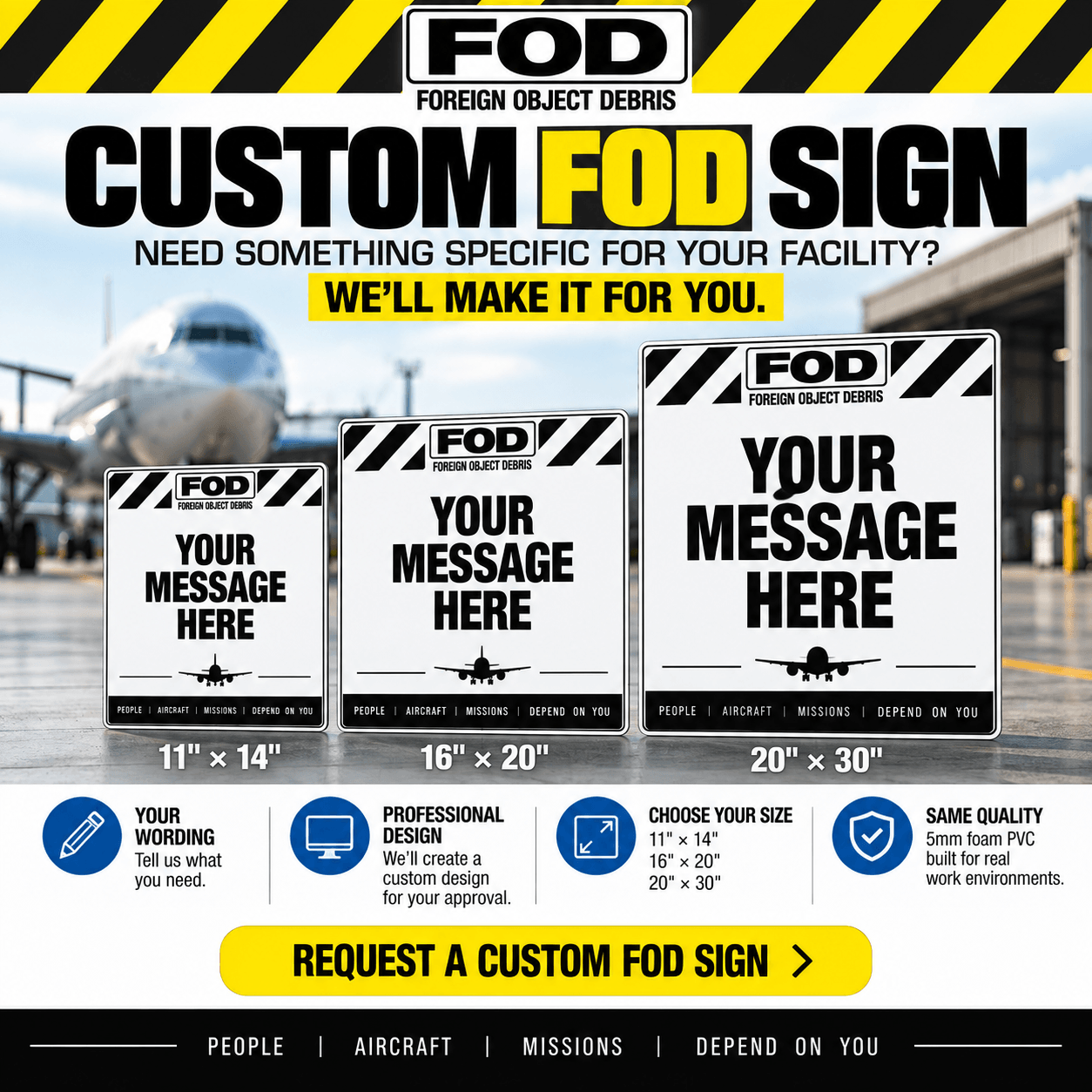
Custom Sign
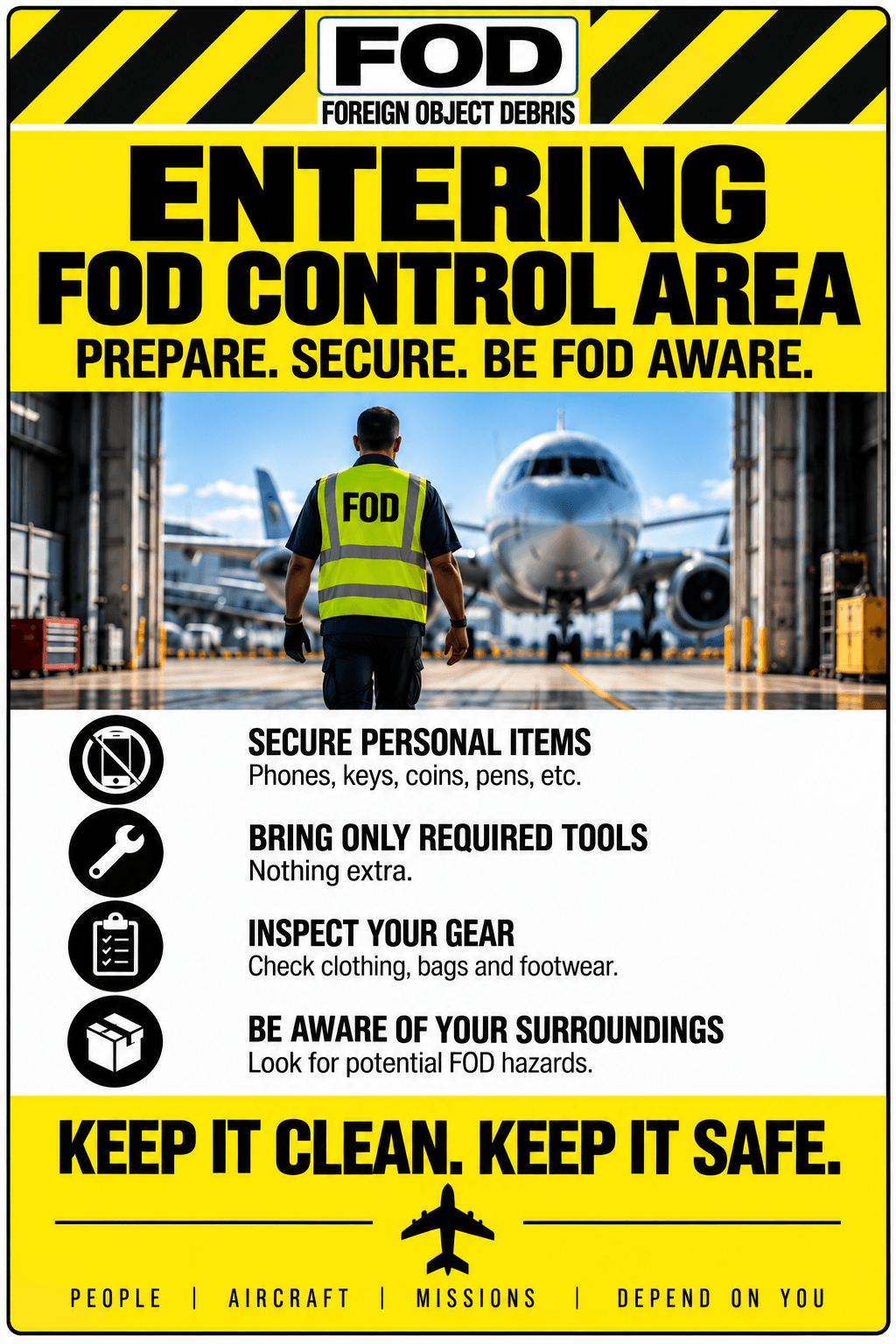
Entering FOD Control Area
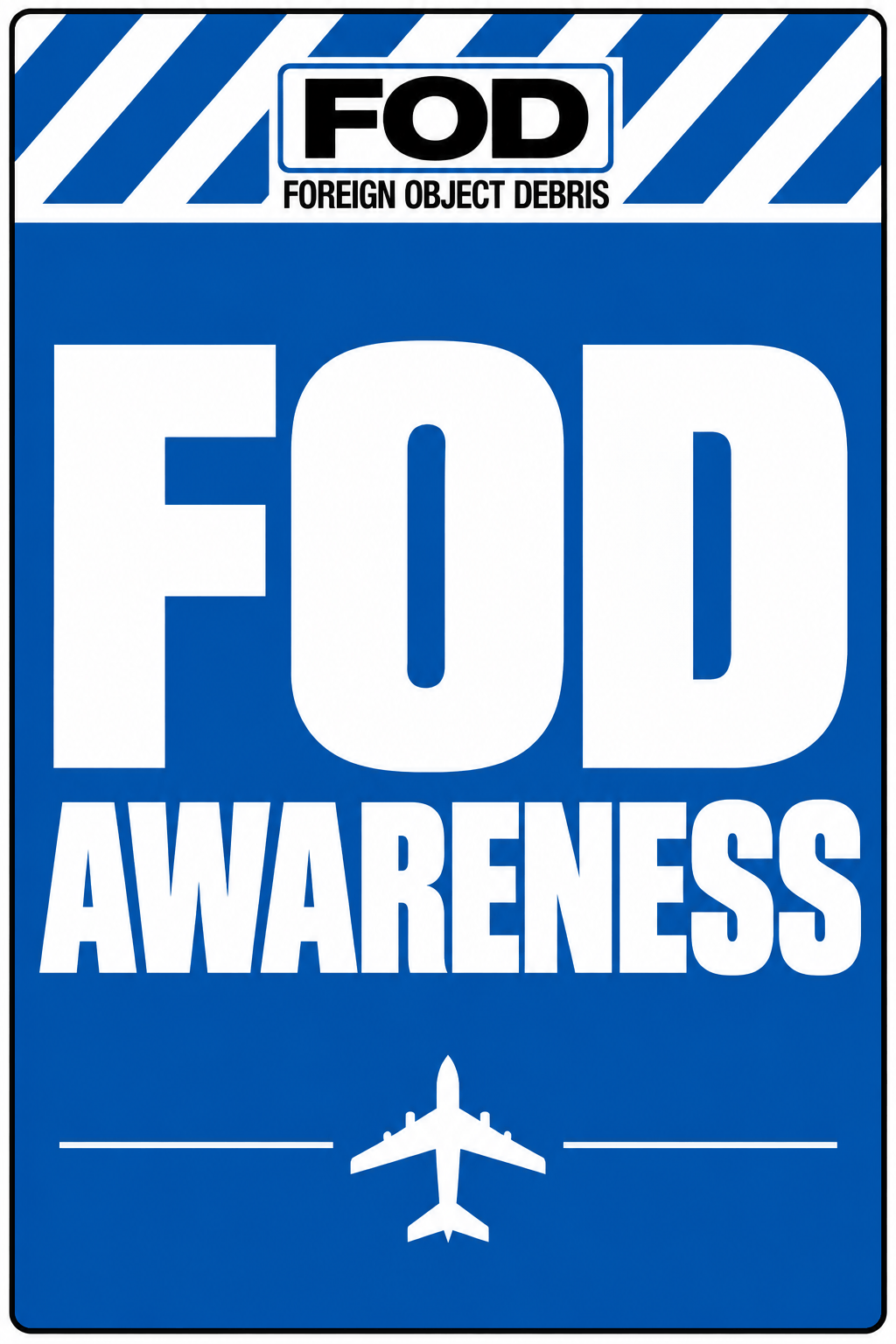
FOD Awareness 2
FOD Awareness
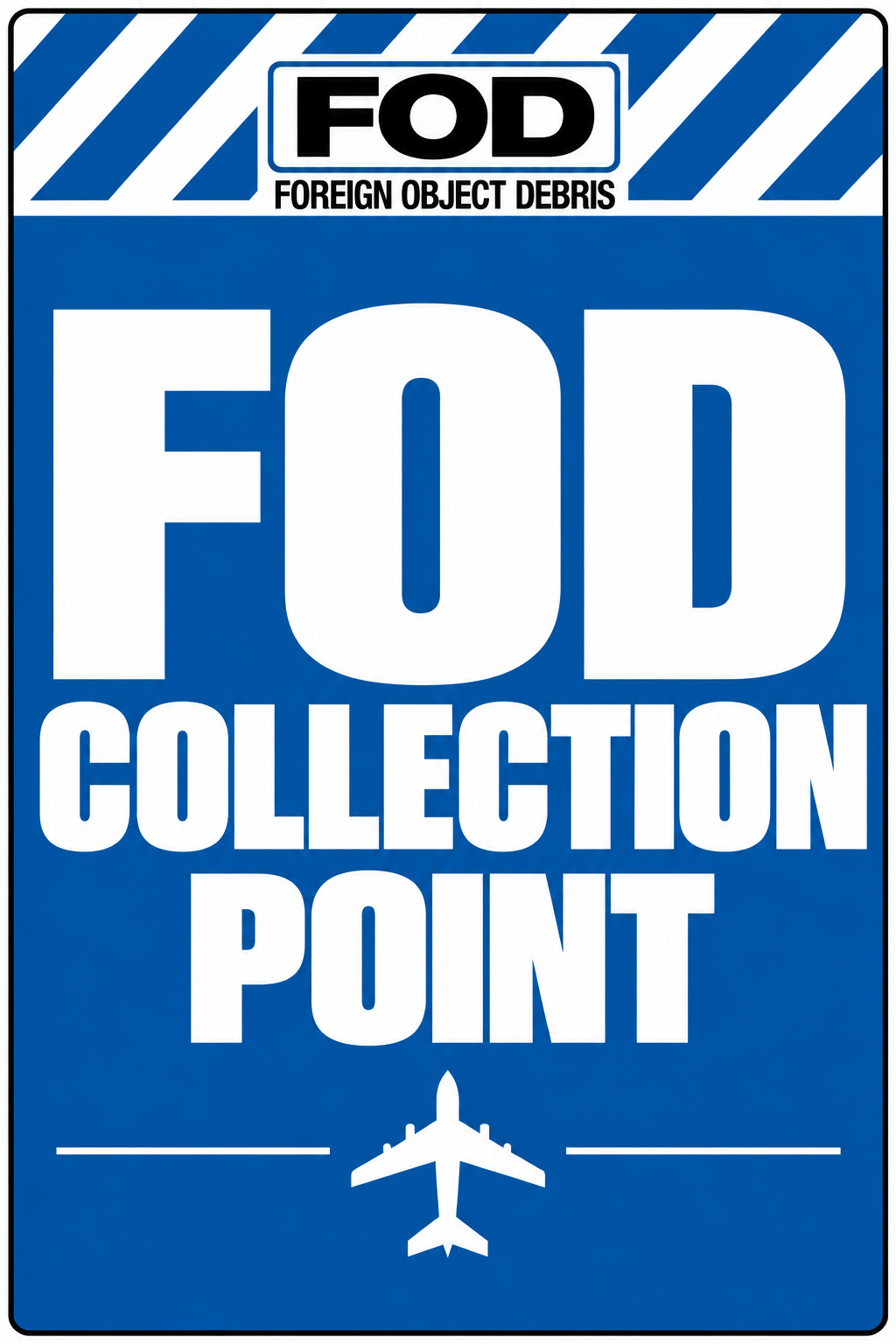
FOD Collection Point
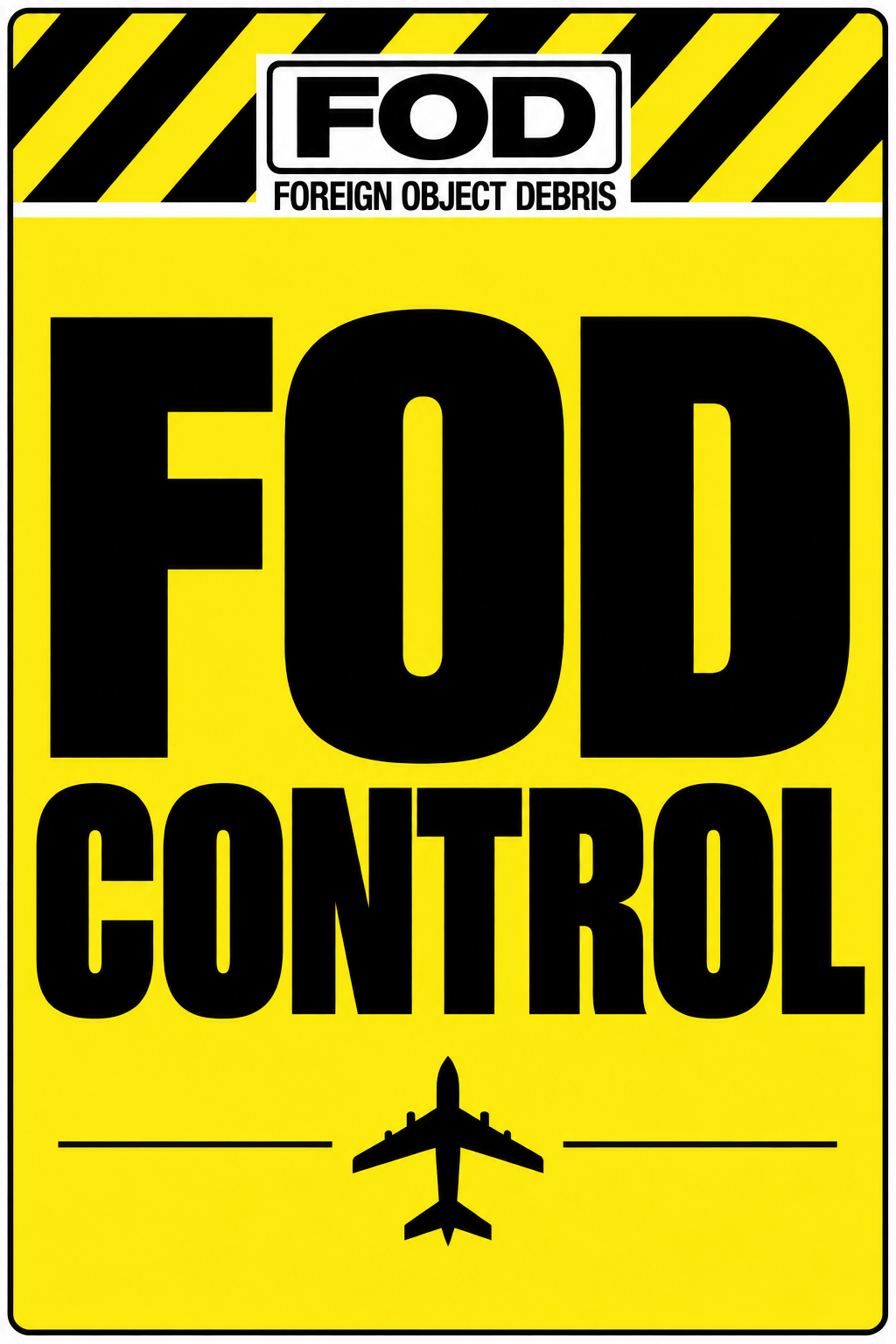
FOD Control 2
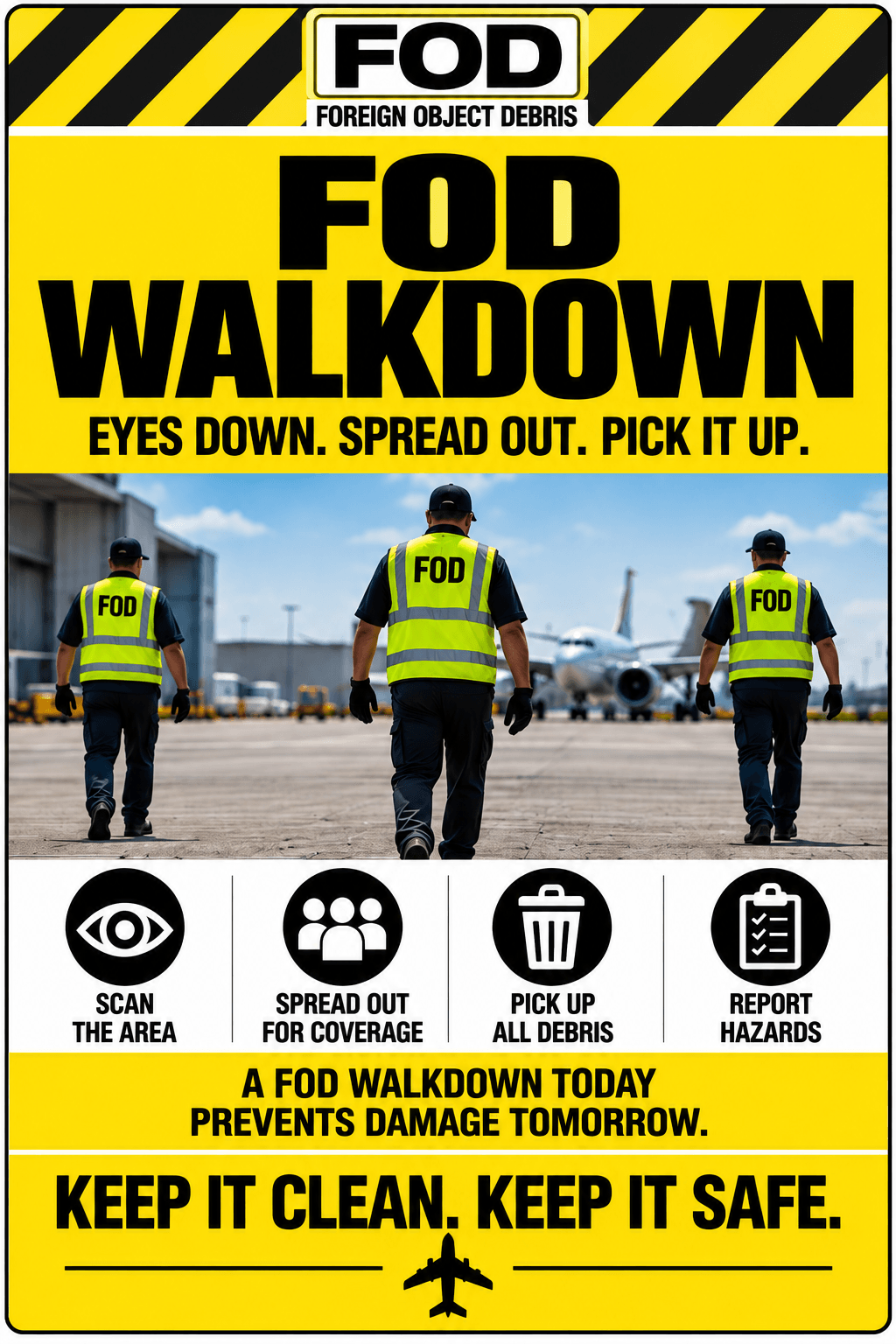
FOD Walkdown
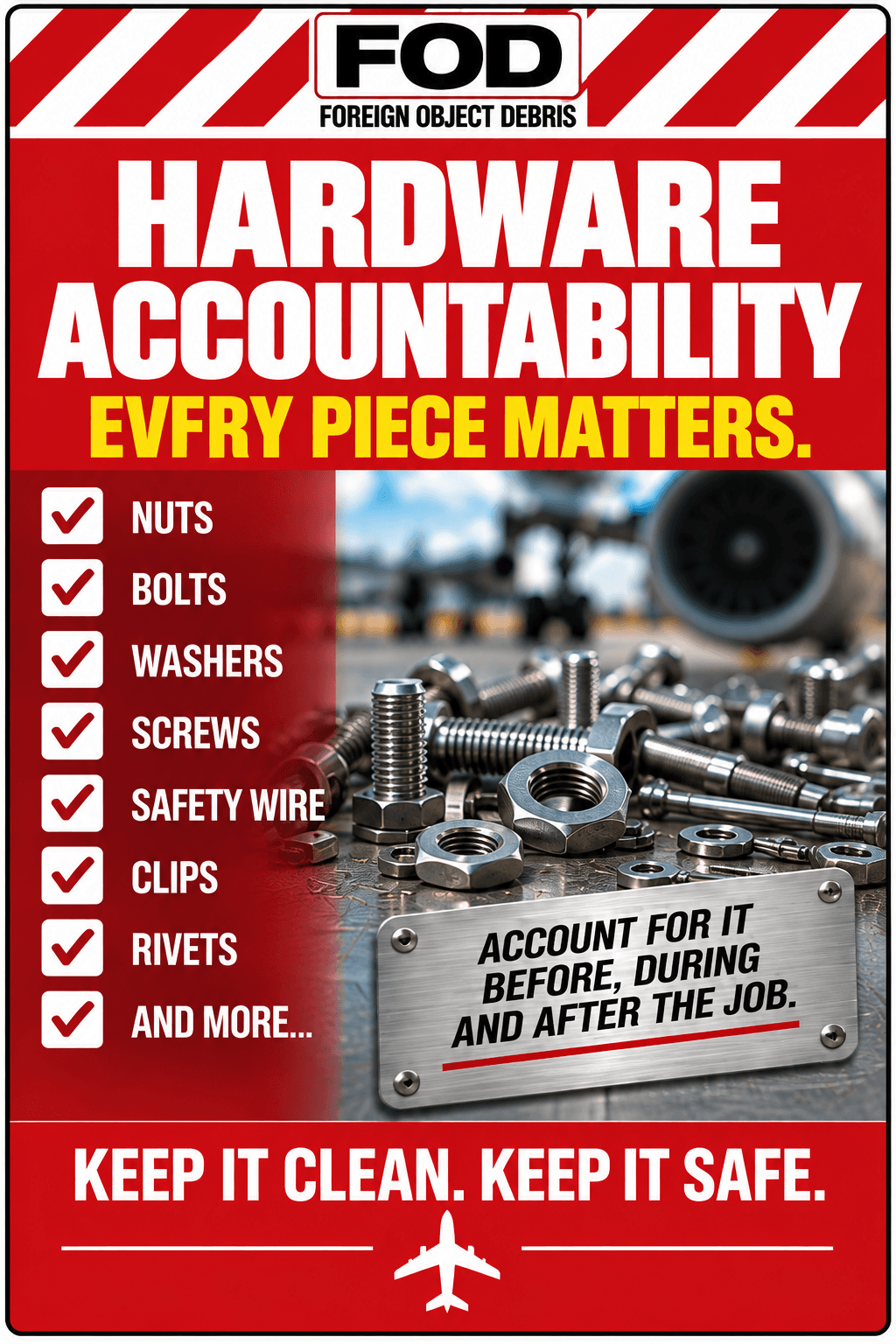
Hardware Accountability
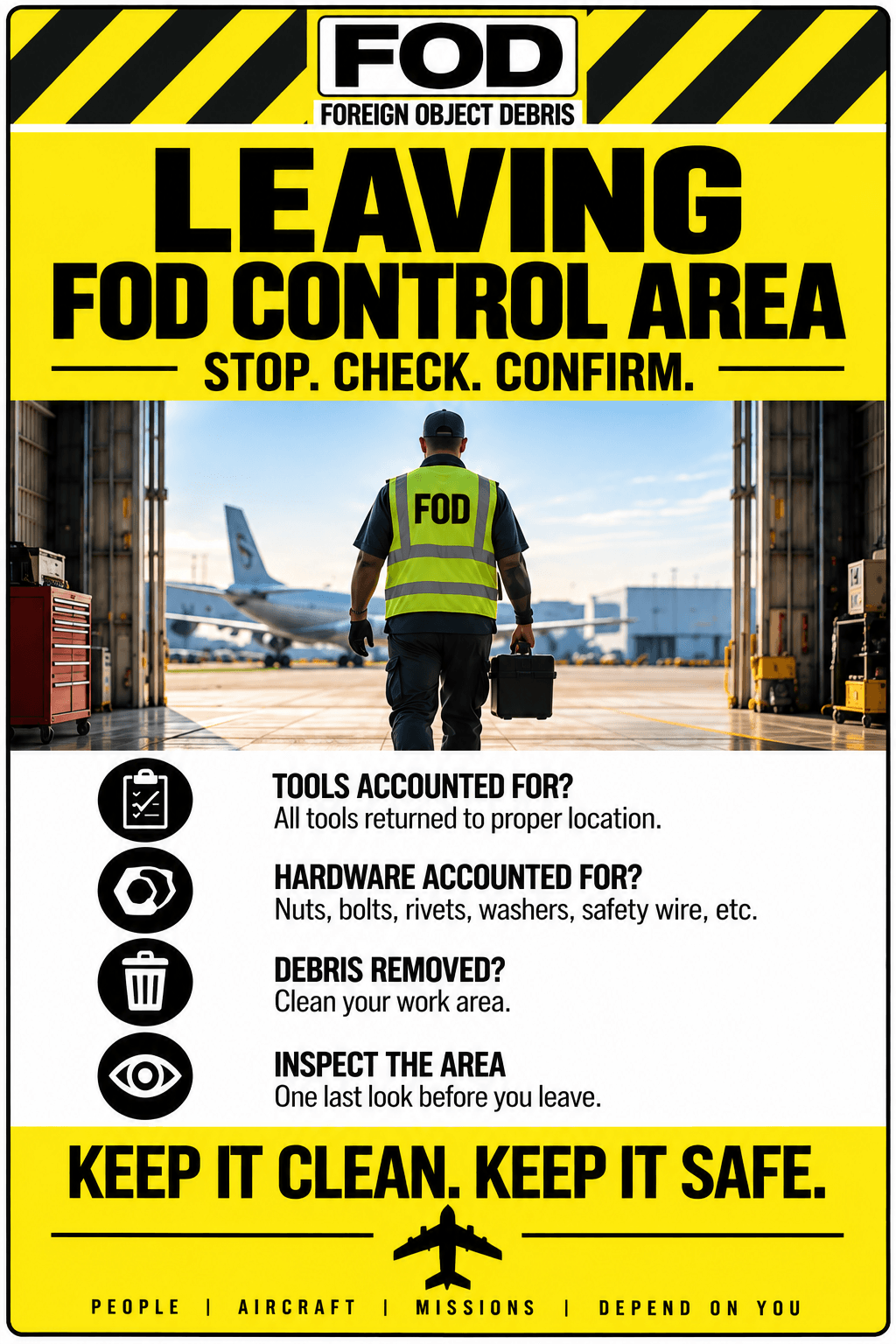
Leaving FOD Control Area
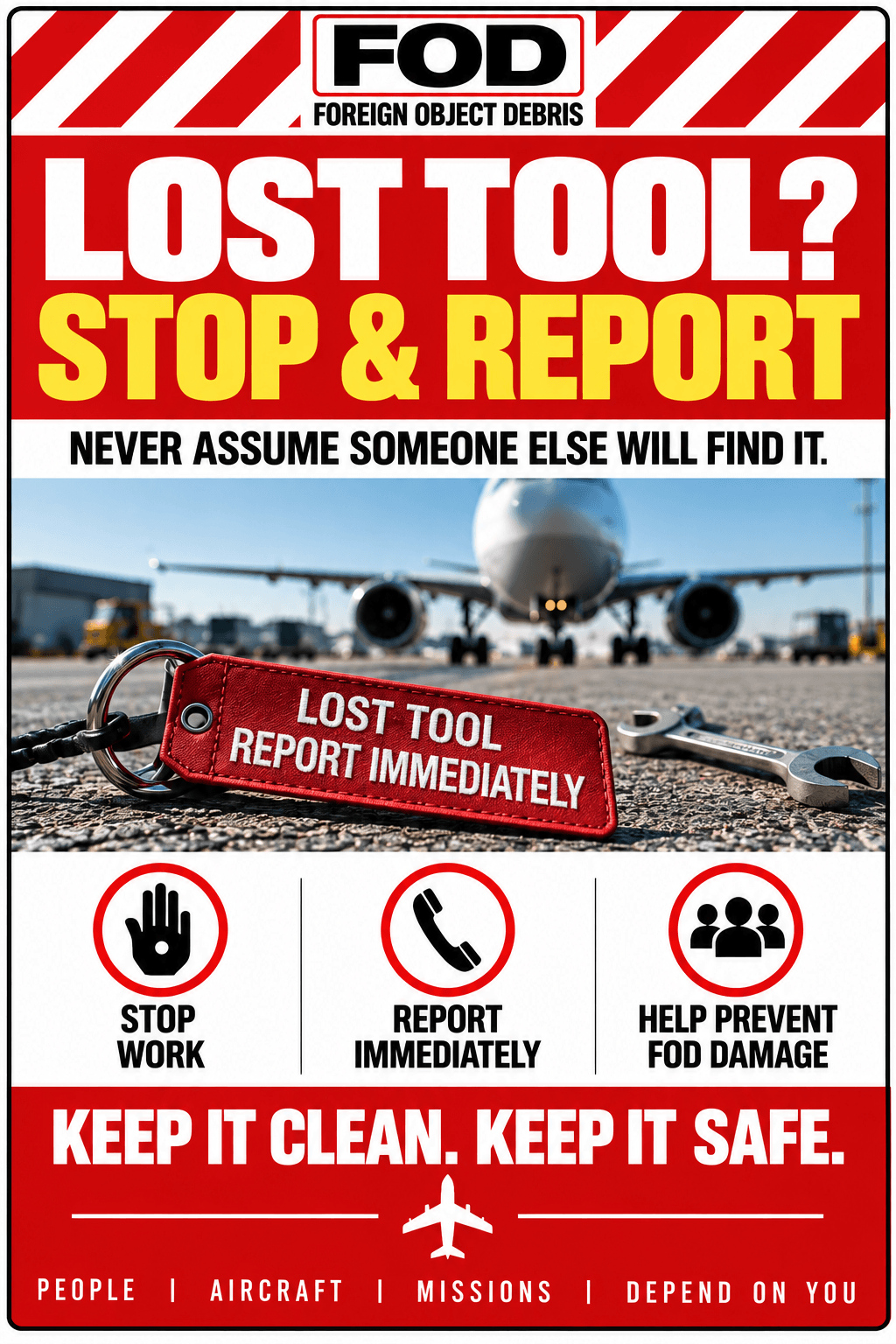
Lost Tool Stop Report
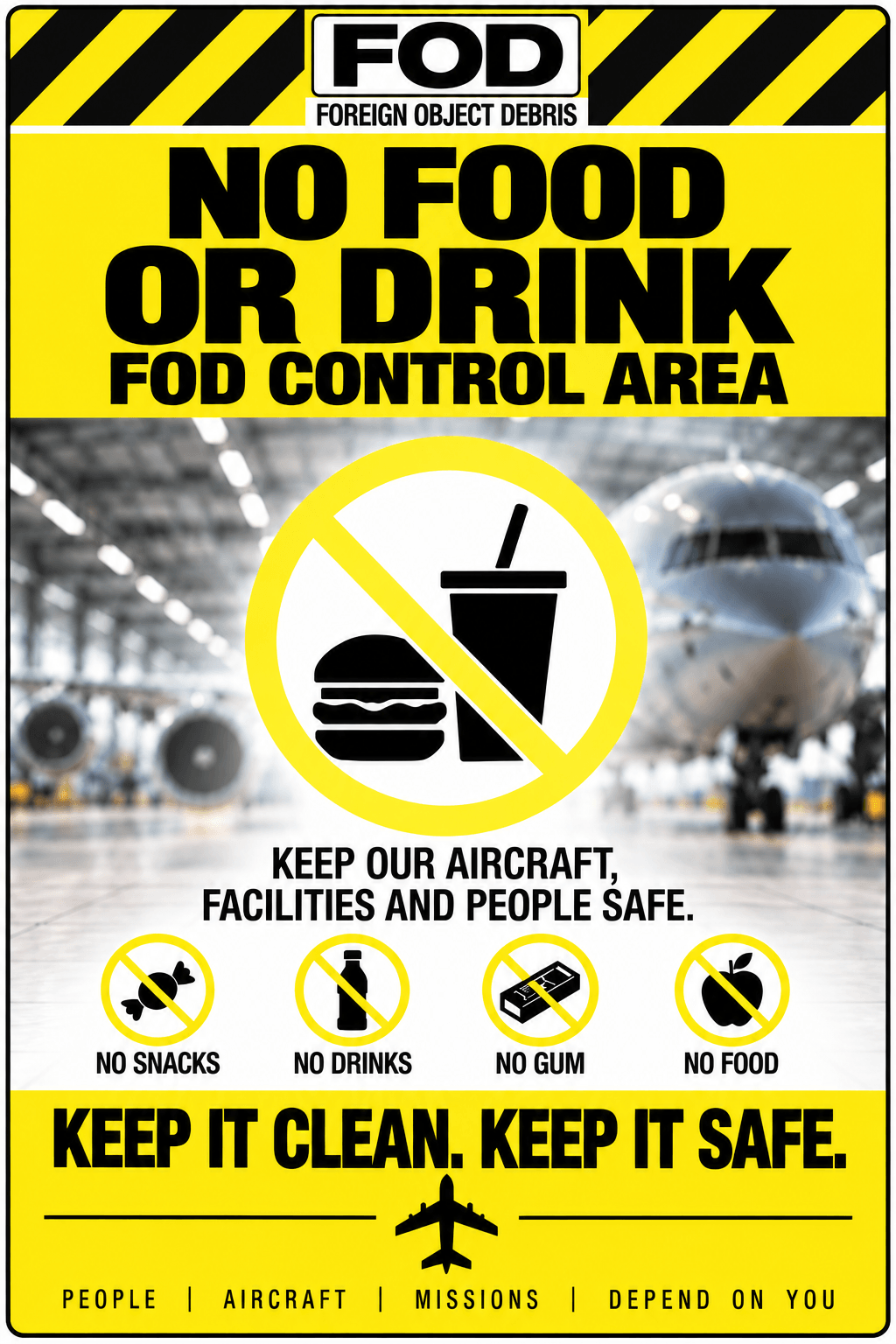
No Food Or Drink
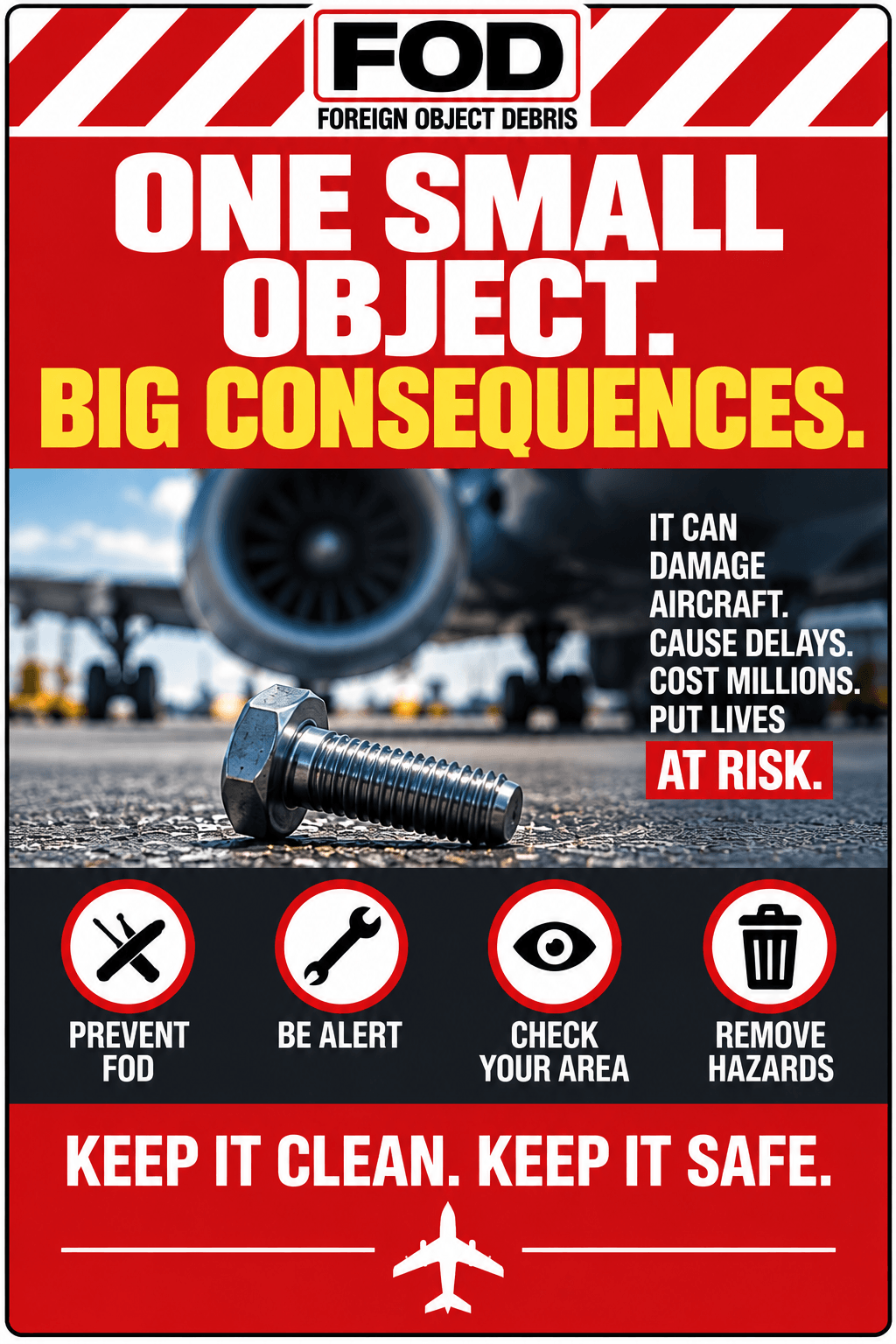
One Small Object, Big Consequences
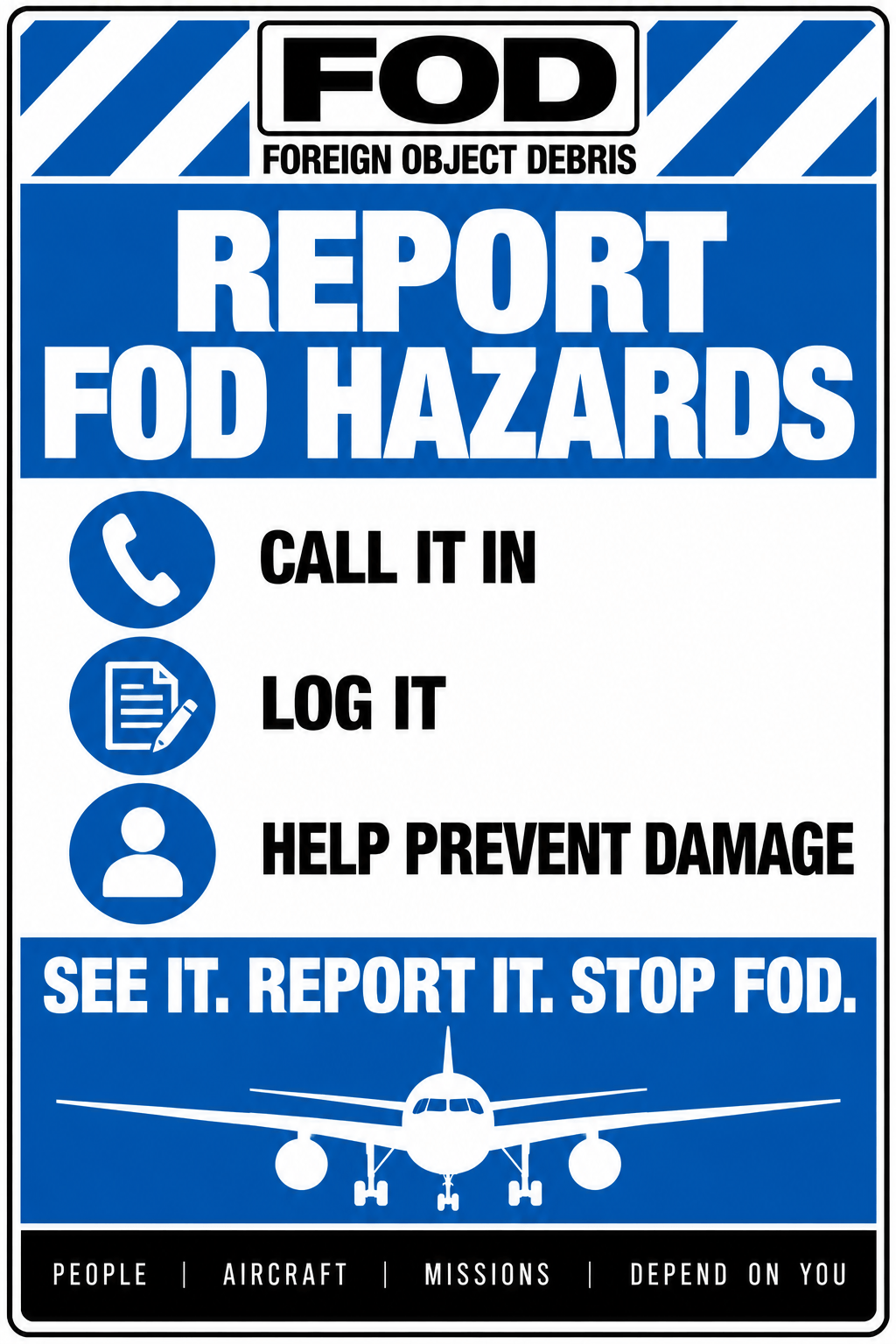
Report FOD Hazards
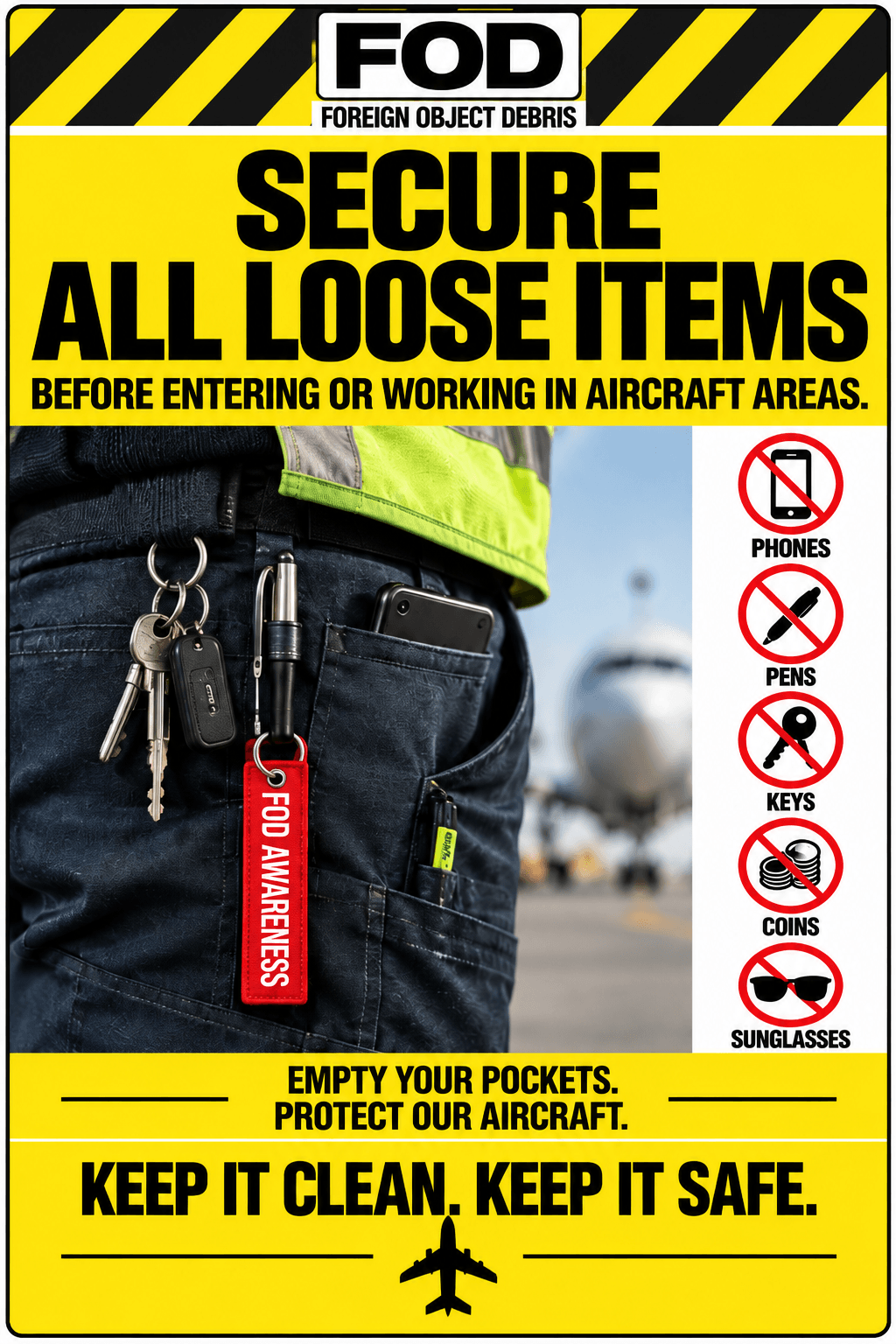
Secure All Loose Items
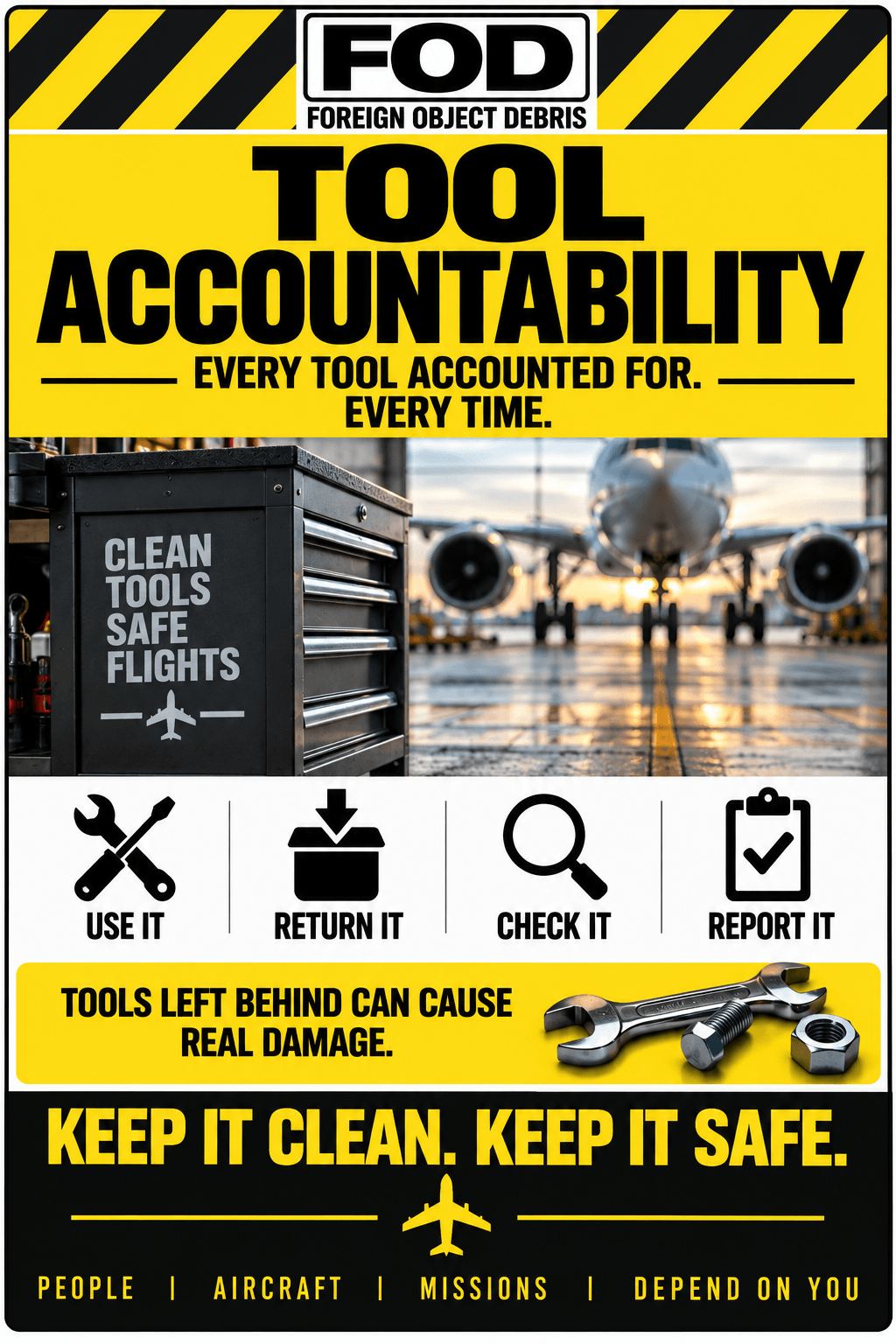
Tool Accountability
FOD Signs and Compliance
FOD signage supports the documented, auditable structure expected under FOD prevention programs built around NAS412 standards, and it’s one of the more visible elements checked during a routine FOD walk. For facilities working toward AS9146 compliance, consistent signage across all FOD-sensitive zones is often one of the simplest, most immediately actionable pieces of demonstrating a program is genuinely operating, not just documented.
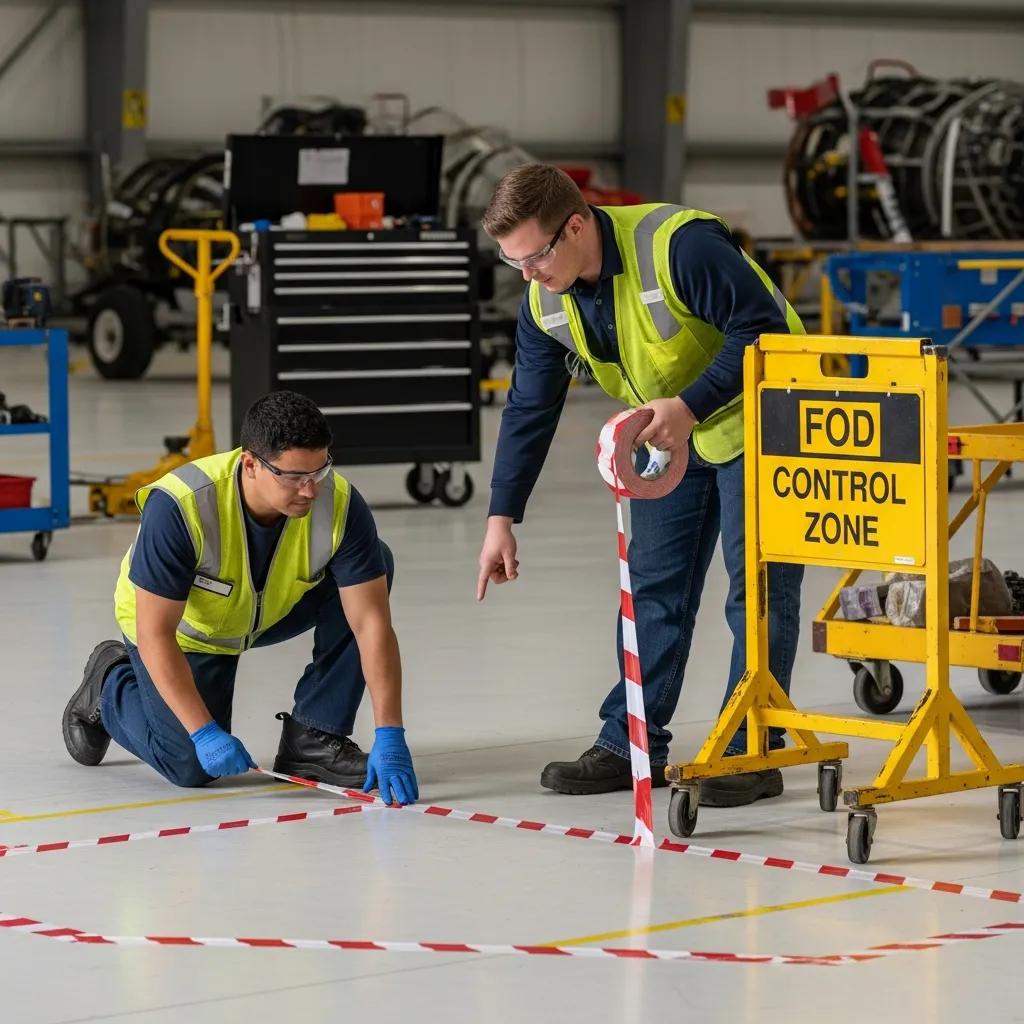
Signage also plays a coordination role alongside other equipment — a FOD control area sign posted near a boundary marked with FOD tape and supported by a nearby FOD can creates a single, coherent system that’s far more effective than any one element alone.
Get FOD Signage for Your Facility
Share your zone types, quantities, mounting needs, and any bilingual or branding requirements. FODBag can help match the right sign type to each area of your facility.
Frequently Asked Questions
What's the difference between a FOD sign and a FOD control sign?
Are FOD signs required by regulation?
What size should FOD signs be for hangar entrances vs. ramp boundaries?
Shop FOD Prevention Products
Put this guidance into practice with products built for FOD control.