
Foreign Object Debris (F.O.D) poses significant risks in various industries, particularly in aerospace and manufacturing. Understanding FOD is crucial for maintaining safety and operational efficiency. This comprehensive guide will delve into the definition of FOD, its associated risks, and effective prevention methods. Readers will learn about the critical importance of managing FOD to protect equipment and personnel, as well as the best practices for implementing F.O.D control measures. The article will cover various aspects, including the types of FOD, the financial implications of FOD incidents, and the tools available for effective FOD management. For authoritative insights, readers can also refer to the FAA Aircraft Maintenance Handbook and the ICAO FOD Prevention Program.
Comprehensive Guide on Foreign Object Debris (FOD)
Foreign Object Debris (FOD) refers to any object that does not belong in a designated area and can potentially cause damage to equipment or pose safety hazards. In the aerospace sector, FOD can lead to catastrophic failures, making its management a top priority. Effective FOD control is essential for ensuring the safety of aircraft operations and protecting the integrity of manufacturing processes. By understanding the nature of FOD and implementing robust management strategies, organizations can significantly reduce the risks associated with debris. For detailed regulatory guidance, the European Union Aviation Safety Agency (EASA) FOD guidelines provide comprehensive standards.
What is FOD?
FOD encompasses a wide range of materials, including tools, parts, and other debris that can inadvertently enter operational areas. Common examples of FOD include loose screws, nuts, and even packaging materials. In aviation, FOD can originate from maintenance activities, ground support equipment, or even the environment. Recognizing the various forms of FOD is the first step in developing effective prevention strategies. The NASA Aeronautics Research on FOD offers valuable research findings on this topic.
Risks Posed by FOD
The risks associated with FOD are substantial and can lead to severe consequences. Some of the primary risks include:
- Engine Damage: FOD can cause significant harm to aircraft engines, leading to costly repairs and potential safety incidents.
- Structural Damage: Debris can impact the structural integrity of aircraft and other machinery, resulting in operational failures.
- Operational Delays: FOD incidents often lead to delays in operations, affecting schedules and increasing costs.
Understanding these risks is vital for organizations to prioritize FOD management effectively. The Aerospace Maintenance Council’s FOD Prevention Guide provides extensive information on these risks.
Common Sources and Types of FOD
FOD can originate from various sources, and identifying these sources is crucial for prevention. Common sources include:
- Maintenance Activities: Tools and parts left behind during maintenance can become FOD.
- Ground Support Equipment: Equipment used to service aircraft can shed components that contribute to FOD.
- Environmental Factors: Natural debris, such as stones or vegetation, can also pose risks.
Recognizing these sources allows organizations to implement targeted strategies to mitigate FOD risks. The Airport Safety and FOD Prevention Best Practices article offers practical advice.
Prevention Methods
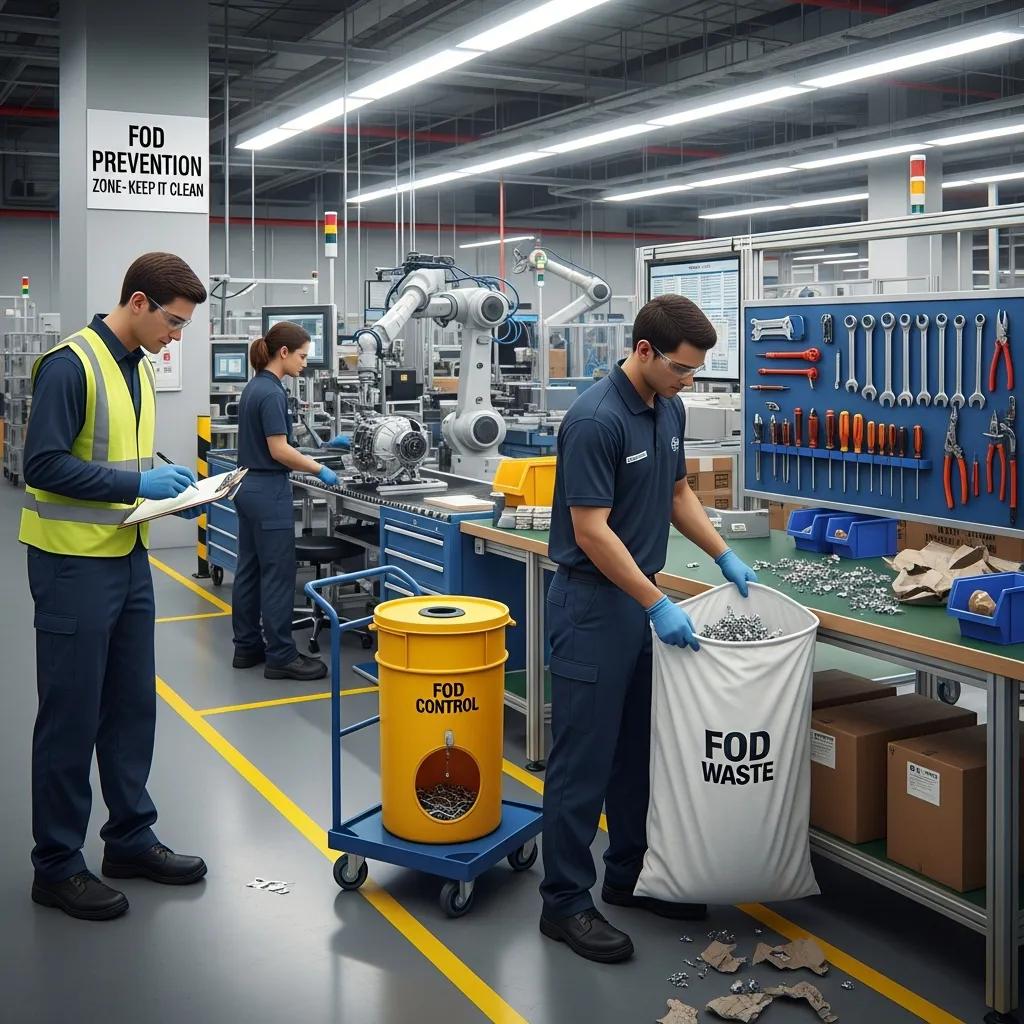
Implementing effective prevention methods is essential for minimizing FOD risks. Key strategies include:
- Routine Inspections: Regular inspections of operational areas can help identify and remove potential FOD.
- FOD Control Programs: Establishing comprehensive FOD control programs ensures that all personnel are trained in FOD awareness and management.
- Training and Awareness: Educating staff about the importance of FOD management fosters a culture of safety and vigilance.
Further emphasizing the importance of structured approaches, a 2008 study provides valuable insights for establishing and maintaining effective FOD prevention programs.
Effective FOD Prevention Programs for Aviation & Manufacturing
It provides civil airports, military organizations, airlines, manufacturing and FBO personnel with useful information on how to start up and maintain an effective FOD prevention program.
Effectiveness of FOD control measures, 2008
To enhance FOD control, organizations can utilize specialized products designed for debris management. Powell Pack Products specializes in manufacturing and supplying FOD control products tailored for aerospace, aviation, and manufacturing sectors.
These products play a crucial role in maintaining a FOD-free environment. For additional product standards and certifications, see the AS9100 Quality Management Standards relevant to aerospace manufacturing.
Effective Damage Control Strategies
In the event of a FOD incident, having effective damage control strategies is essential. Key strategies include:
- Training Programs: Regular training ensures that all personnel are prepared to respond to FOD incidents effectively.
- Regular Audits: Conducting audits helps identify areas for improvement in FOD management practices.
- Collaboration: Encouraging collaboration among teams can enhance communication and improve FOD management efforts.
By implementing these strategies, organizations can minimize the impact of FOD incidents and enhance overall safety. The Aviation Safety Reporting System (ASRS) provides case studies and reports that can inform damage control approaches.
What Is Foreign Object Debris and Why Is It Critical in Aerospace and Manufacturing?
Foreign Object Debris is critical in aerospace and manufacturing due to its potential to cause catastrophic failures. In aviation, FOD can lead to engine failures, resulting in severe safety risks. In manufacturing, FOD can compromise product quality and lead to costly recalls. Understanding the significance of FOD management is essential for maintaining operational integrity and safety. The National Institute of Standards and Technology (NIST) Manufacturing Program offers resources on quality control related to debris management.
How Does FOD Impact Safety and Equipment Integrity?
FOD directly impacts safety and equipment integrity by introducing hazards that can lead to accidents and equipment failures. The presence of debris can compromise the functionality of machinery, leading to unexpected downtimes and costly repairs. Ensuring a FOD-free environment is vital for protecting both personnel and equipment. The Occupational Safety and Health Administration (OSHA) provides guidelines on workplace safety that include debris management.
What Are Common Types and Sources of Foreign Object Debris?
Common types of FOD include:
- Tools: Wrenches, screwdrivers, and other maintenance tools can become FOD if left behind.
- Packaging Materials: Plastic wraps, cardboard, and other packaging can contribute to FOD.
- Natural Debris: Leaves, stones, and other environmental factors can also pose risks.
Identifying these common types and sources is crucial for developing effective prevention strategies. The Air Force Materiel Command’s FOD Prevention Campaign highlights these sources.
What Are the Primary Risks and Consequences of FOD in Operational Environments?
The primary risks and consequences of FOD in operational environments include:
- Safety Risks: FOD can lead to accidents, endangering personnel and equipment.
- Financial Impact: The costs associated with FOD incidents can be substantial, including repairs and operational delays.
- Reputation Damage: Frequent FOD incidents can harm an organization’s reputation, affecting customer trust.
Understanding these consequences emphasizes the importance of proactive FOD management. The International Air Transport Association (IATA) FOD Prevention Program provides industry-wide perspectives.
How Does FOD Cause Equipment Damage and Operational Delays?
FOD can cause equipment damage through direct impacts, leading to mechanical failures and costly repairs. Additionally, operational delays can occur as a result of FOD incidents, disrupting schedules and increasing costs. Organizations must prioritize FOD management to mitigate these risks effectively. The MRO Network’s article on FOD Prevention discusses these impacts in detail.
What Are the Financial and Safety Costs Associated with FOD Incidents?
The financial and safety costs associated with FOD incidents can be significant. Costs may include:
- Repair Expenses: Damage to equipment can lead to high repair costs.
- Operational Downtime: Delays caused by FOD incidents can result in lost revenue.
- Increased Insurance Premiums: Frequent incidents may lead to higher insurance costs.
Understanding these costs highlights the need for effective FOD management strategies. The Boeing Aero Magazine provides case studies on the financial impact of FOD.
Which FOD Prevention Methods Are Most Effective in Aerospace and Manufacturing?
The most effective FOD prevention methods include:
- Training Programs: Regular training ensures that all personnel are aware of FOD risks and management strategies.
- Inspection Protocols: Establishing routine inspections helps identify and mitigate FOD risks.
- Use of Specialized Tools: Implementing tools designed for FOD management can enhance overall safety.
By focusing on these methods, organizations can significantly reduce the risks associated with FOD. The Aviation Today website offers updated best practices.
What Are Best Practices for FOD Control and Containment?
Best practices for FOD control and containment include:
- Regular Training: Ensuring that all staff are trained in FOD management.
- Routine Inspections: Conducting regular inspections to identify potential FOD.
- Effective Tool Organization: Keeping tools organized and secured to prevent accidental loss.
Implementing these best practices can enhance FOD management efforts. The FAA Runway Safety and FOD Prevention page provides detailed guidelines.
How Do Inspection and Detection Tools Enhance FOD Prevention?
Inspection and detection tools play a crucial role in enhancing FOD prevention by allowing organizations to identify and address potential risks proactively. These tools can include:
- Visual Inspection Tools: Devices that help personnel identify FOD visually.
- Detection Systems: Advanced systems that can detect debris in operational areas.
By utilizing these tools, organizations can improve their FOD management strategies. The Aviation Pros article on Technology in FOD Prevention explores these technologies.
What FOD Control Solutions and Safety Products Are Available for Debris Management?

Several FOD control solutions and safety products are available for effective debris management, including:
- FOD Bags: Designed for collecting and containing debris.
- FOD Cans: Secure storage options for tools and equipment.
- FOD Tapes: Used to mark areas where FOD is present.
These products are essential for maintaining a safe and FOD-free environment. For product certifications and standards, see the ISO 9001 Quality Management Systems.
How Do FOD Bags, Cans, Tapes, and Stickers Function in Debris Containment?
FOD bags, cans, tapes, and stickers function as essential tools in debris containment. FOD bags are used to collect loose debris, while cans provide secure storage for tools. Tapes and stickers help mark areas where FOD is present, increasing awareness among personnel. Together, these products create a comprehensive approach to FOD management. The FOD Solutions website offers detailed product information.
What Are the Material and Usage Specifications of Leading FOD Safety Products?
Leading FOD safety products are designed with specific materials and usage specifications to ensure effectiveness. For example, FOD bags are typically made from durable materials that can withstand harsh environments, while FOD cans are constructed to provide secure storage. Understanding these specifications is crucial for selecting the right products for FOD management. The ASTM International standards provide material specifications relevant to FOD products.
How Are FOD Inspection and Detection Techniques Implemented to Ensure Compliance?
FOD inspection and detection techniques are implemented through established protocols that ensure compliance with industry standards. Regular inspections, combined with the use of detection tools, help organizations maintain a FOD-free environment. Compliance with these techniques is essential for ensuring safety and operational integrity. The ICAO Inspection Guidelines offer detailed procedures.
What Are Standard FOD Inspection Protocols and Frequencies?
Standard FOD inspection protocols typically involve:
- Routine Inspections: Conducting inspections at regular intervals to identify potential FOD.
- Documentation: Keeping records of inspections to ensure compliance and track improvements.
- Training: Ensuring that personnel are trained in inspection protocols.
Following these protocols helps organizations maintain a safe operational environment. The FAA FOD Inspection Procedures provide comprehensive guidance.
Which Technologies Support Effective FOD Detection and Monitoring?
Several technologies support effective FOD detection and monitoring, including:
- Automated Detection Systems: Systems that can identify FOD in real-time.
- Visual Inspection Tools: Tools that enhance the ability to spot debris during inspections.
- Data Analytics: Utilizing data to track FOD incidents and improve management strategies.
The financial viability of such advanced detection systems is further supported by a 2023 analysis demonstrating their long-term economic advantages and return on investment.
Cost-Benefit Analysis of FOD Detection Systems
and passenger delay impacts), such systems can be expected to provide a financial benefit over the return-on-investment horizon, which was based on a lifecycle estimate of 12 years.
Foreign Object Debris Detection System Cost-Benefit Analysis, 2023
These technologies play a vital role in enhancing FOD management efforts. For more on technology, see the ResearchGate publication on Advanced FOD Detection Technologies.
What Industry Compliance Standards Govern FOD Control and Safety Practices?
Industry compliance standards for FOD control and safety practices are established to ensure safety and operational integrity. These standards include guidelines from aviation authorities and industry organizations that outline best practices for FOD management. Adhering to these standards is essential for maintaining compliance and ensuring safety. The IATA Safety Standards provide a global framework.
How Do FAA and Aerospace Industry Guidelines Influence FOD Management?
The Federal Aviation Administration (FAA) and aerospace industry guidelines significantly influence FOD management practices. These guidelines provide a framework for organizations to follow, ensuring that they implement effective FOD control measures. Compliance with FAA regulations is crucial for maintaining safety in aviation operations. The FAA FOD Program details these guidelines.
What Certifications and Best Practices Ensure FOD Safety Compliance?
Certifications and best practices play a vital role in ensuring FOD safety compliance. Organizations may seek certifications that demonstrate their commitment to FOD management and safety. Best practices, such as regular training and inspections, further enhance compliance efforts. The AS9100 certification is widely recognized in aerospace quality management.
What Recent Case Studies and Statistics Demonstrate the Impact of FOD Control Solutions?
Recent case studies and statistics highlight the effectiveness of FOD control solutions in reducing incidents. For example, organizations that implemented comprehensive FOD management programs reported a significant decrease in FOD-related incidents. These statistics underscore the importance of proactive FOD management. The FOD Solutions Case Studies provide real-world examples.
How Have FOD Prevention Products Reduced Incidents in 2024-2026?
FOD prevention products have shown a marked reduction in incidents from 2024 to 2026. Organizations utilizing specialized FOD control products have reported fewer FOD-related incidents, leading to improved safety and operational efficiency. Industry reports such as those from Aerospace Manufacturing and Design document these trends.
What Are the Measurable Benefits of Implementing FOD Control Programs?
Implementing FOD control programs offers measurable benefits, including:
- Cost Savings: Reducing FOD incidents leads to lower repair and operational costs.
- Enhanced Safety: A FOD-free environment improves safety for personnel and equipment.
- Operational Efficiency: Streamlined operations result from effective FOD management.
These benefits highlight the importance of investing in FOD control programs. The Aviation Today article on FOD Program Benefits elaborates on these advantages.
What Frequently Asked Questions Address Common Concerns About FOD and Its Management?
Common concerns about FOD and its management include:
- What is the best way to prevent FOD?: Implementing routine inspections and training programs is essential.
- How often should FOD inspections occur?: Regular inspections should be conducted based on operational needs.
- What products are most effective for FOD management?: Specialized FOD control products, such as bags and cans, are highly effective.
Addressing these concerns helps organizations enhance their FOD management strategies. The FAA FOD FAQ page provides additional answers.
How Often Should FOD Inspections Occur to Maintain Safety?
FOD inspections should occur regularly to maintain safety. The frequency of inspections may vary based on operational needs, but routine checks are essential for identifying and mitigating potential FOD risks. Establishing a clear inspection schedule is crucial for effective FOD management. The ICAO recommended inspection frequencies offer guidance.
What Are the Costs and ROI of Investing in FOD Prevention Products?
Investing in FOD prevention products can yield significant returns on investment (ROI). The costs associated with FOD incidents, including repairs and operational delays, can far exceed the investment in prevention products. By implementing effective FOD management strategies, organizations can achieve substantial cost savings and enhance overall safety. The MRO Network’s analysis on FOD ROI provides detailed financial insights.
Shop FOD Prevention Products
Put this guidance into practice with products built for FOD control.