FOD Training for Aviation and Foreign Object Debris Awareness

Foreign Object Debris, commonly called FOD, can create serious risks in aviation, aerospace, manufacturing, maintenance, and industrial environments. A small fastener, loose tool, scrap material, packaging piece, or piece of debris can lead to equipment damage, operational delays, and safety concerns.

FOD training helps personnel understand what foreign object debris is, why it matters, where it comes from, and how to prevent it during daily work. A strong training program supports safer habits, cleaner work areas, better inspections, and a more consistent FOD prevention program.

FODBag.com provides practical FOD control products and educational resources for teams that need to improve debris control in hangars, flight lines, maintenance areas, ramps, tool rooms, and production environments.

What Is FOD Training?

FOD training is the process of teaching employees how to identify, prevent, collect, report, and control foreign object debris. It helps personnel understand the risks of debris and the role each person plays in keeping work areas clean and safe.

FOD training usually covers:

  • What FOD means
  • Common examples of FOD
  • How FOD damage occurs
  • FOD prevention procedures
  • FOD walk expectations
  • Tool and hardware accountability
  • Clean-as-you-go habits
  • Debris reporting procedures
  • Use of FOD bags, cans, signs, tape, and stickers
  • Team responsibilities during inspections

The goal is to make FOD prevention part of daily behavior, not just a written policy.

Why FOD Training Matters

FOD prevention depends on people. Even the best equipment, signs, and procedures will not work if personnel do not understand why FOD control matters or how to act when they find debris.

FOD training helps teams:

  • Recognize FOD hazards faster
  • Remove debris before it causes damage
  • Follow consistent inspection procedures
  • Improve tool accountability
  • Support cleaner work areas
  • Reduce preventable maintenance issues
  • Strengthen safety culture
  • Prepare for internal audits

The FAA describes FOD as a continuing airport safety concern and identifies FOD management programs as an important part of reducing hazards in airport environments. Source: FAA Foreign Object Debris Program

Who Needs FOD Training?

FOD training is useful for anyone who works in or around FOD-sensitive areas.

This may include:

  • Aircraft maintenance technicians
  • Ground support personnel
  • Flight line crews
  • Hangar personnel
  • Aerospace production workers
  • Tool room attendants
  • Quality control teams
  • Safety managers
  • Supervisors
  • Contractors
  • Cleaning crews
  • New employees
  • Visitors entering controlled work areas

Anyone who can create, move, miss, or remove debris should understand the facility’s FOD procedures.

FOD Training for Aviation

In aviation environments, FOD training is especially important because debris can affect aircraft, engines, tires, systems, tools, and ground operations.

Aviation FOD training should help personnel understand:

  • What aircraft FOD is
  • Why debris is dangerous near aircraft
  • How FOD can lead to FOD damage
  • Why FOD walks are required
  • Where FOD is most likely to appear
  • How to use FOD cans and collection points
  • How to report repeated debris issues

Training should be practical and connected to the real work area.

FOD Training for Aerospace Facilities

Aerospace facilities often deal with sensitive parts, small hardware, precision assemblies, and strict quality expectations. FOD training helps workers understand how small debris can affect larger systems.

Aerospace FOD training may include:

  • Clean-as-you-go procedures
  • Tool accountability
  • Small parts control
  • Packaging control
  • Workbench cleanliness
  • Inspection habits
  • Controlled area requirements
  • FOD reporting procedures

Training should be repeated regularly, especially when procedures, personnel, work areas, or products change.

What Should FOD Training Include?

A complete FOD training program should cover both awareness and action. Personnel should not only know what FOD is; they should know what to do when they see it.

Training Topic Purpose Example
FOD Meaning Defines the hazard Explains foreign object debris
FOD Examples Builds recognition Tools, hardware, trash, stones, packaging
FOD Damage Explains consequences Aircraft, engines, tires, equipment
FOD Walks Supports inspections Area walkdowns and debris removal
Tool Control Prevents missing tools Check-in/check-out procedures
Debris Collection Supports removal Use of bags, cans, and pouches
Reporting Tracks recurring issues Incident forms and supervisor notification
Visual Awareness Reinforces habits Signs, stickers, tape, and labels

Core FOD Training Topics

A strong FOD training session should include these core topics:

  • What is foreign object debris?
  • What causes FOD?
  • What are the most common FOD sources?
  • Why is FOD dangerous in aviation?
  • How does FOD affect engines, tires, tools, and equipment?
  • How should debris be collected and disposed of?
  • What should personnel do during a FOD walk?
  • How should tools and small parts be controlled?
  • Where are FOD cans and collection points located?
  • How should FOD concerns be reported?

For a deeper definition page, see What Is Foreign Object Debris?

FOD Awareness Training

FOD awareness training introduces employees to the basic risks and responsibilities of debris control. It is often used for new employees, visitors, contractors, and personnel who work near FOD-sensitive areas.

FOD awareness training should explain:

  • What FOD means
  • Why FOD matters
  • What common debris looks like
  • Where debris is often found
  • How to report or remove debris
  • What facility rules must be followed

Awareness training should be simple, visual, and repeated often.

FOD Prevention Training

FOD prevention training goes deeper than awareness. It teaches personnel how to prevent debris from being created, left behind, or moved into sensitive areas.

FOD prevention training may include:

  • Clean-as-you-go practices
  • Tool accountability procedures
  • Hardware control
  • Material and packaging control
  • Work area organization
  • Inspection responsibilities
  • Use of FOD tape
  • Use of FOD stickers
  • Use of FOD control products

FOD Walk Training

FOD walk training teaches personnel how to inspect an area for foreign object debris. A FOD walk should be systematic, consistent, and documented when required.

FOD walk training should cover:

  • Where the walk begins and ends
  • What areas must be inspected
  • What types of debris to look for
  • How to collect debris safely
  • Where debris should be placed
  • How findings should be reported
  • When follow-up action is required

For a detailed guide, see FOD Walk Procedures.

FOD Toolbox Talks

FOD toolbox talks are short safety discussions that reinforce key habits. They are useful before shifts, during safety meetings, or before work in a FOD-sensitive area.

Possible FOD toolbox talk topics include:

  • What is FOD?
  • Why FOD prevention matters
  • Clean-as-you-go habits
  • Tool control and accountability
  • How to perform a FOD walk
  • Reporting FOD hazards
  • Using FOD bags and cans correctly
  • Keeping hangars and work areas clean

Toolbox talks are most effective when they are short, practical, and connected to the work being done that day.

FOD Training Materials

FOD training materials can help make the program easier to teach and repeat.

Useful materials include:

  • Printable checklists
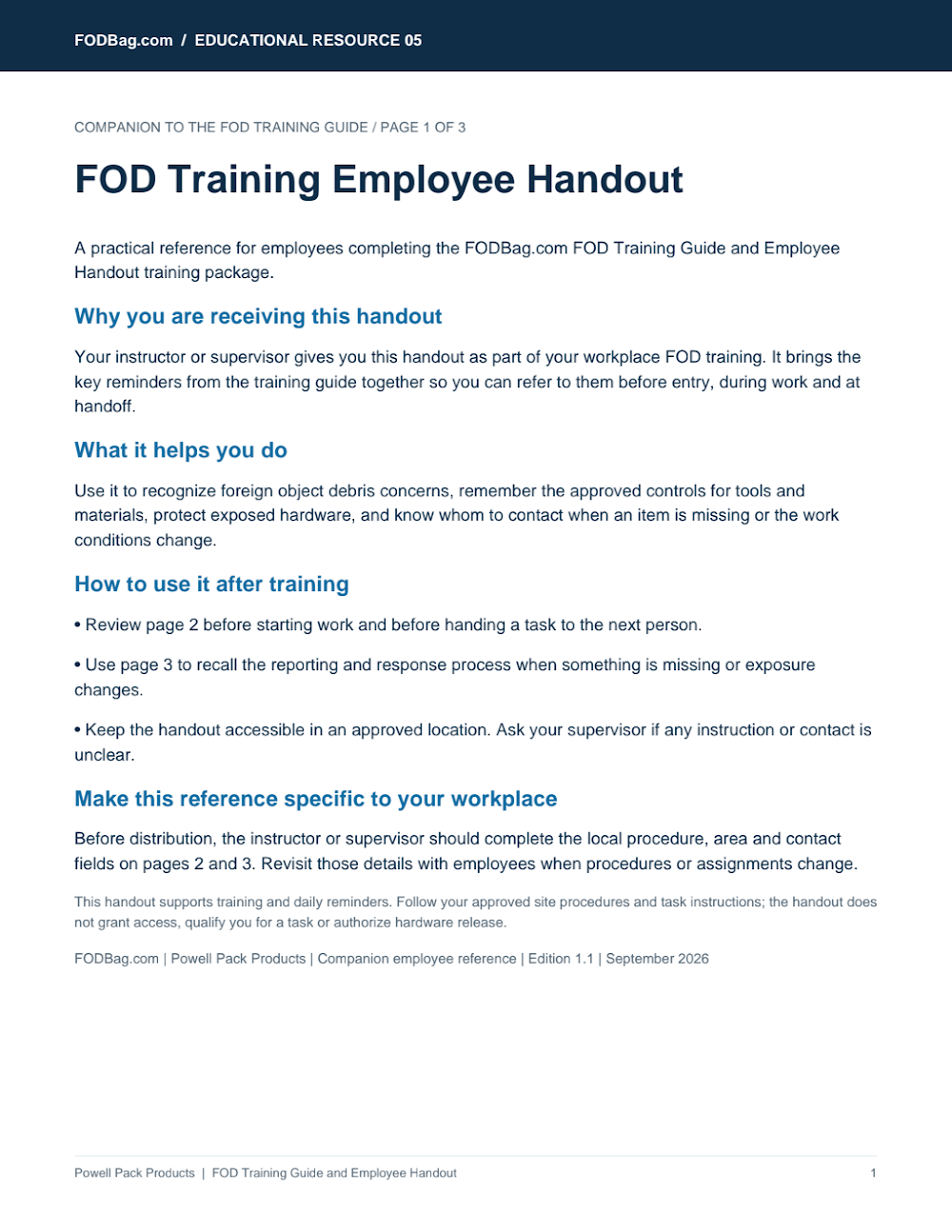
  • Training handouts
  • Safety posters
  • Inspection forms
  • Toolbox talk sheets
  • Awareness signs
  • FOD labels
  • New employee guides
  • Audit checklists
  • Quick reference sheets

These materials can also support a larger FOD resources library.

Products That Support FOD Training

Training becomes stronger when personnel have the tools needed to follow the procedure.

Helpful products include:

  • FOD bags for debris collection
  • FOD pouches for small parts and hardware
  • FOD cans for disposal points
  • FOD tape for marking zones
  • FOD stickers for reminders
  • FOD signs for awareness
  • FOD kits for organized work areas

These products help turn training into visible daily action.

How Often Should FOD Training Be Done?

FOD training should be done regularly enough to keep procedures fresh. Many facilities provide FOD training during onboarding, annual refreshers, safety meetings, and after any major procedure change or FOD incident.

Training may be needed when:

  • A new employee starts
  • A contractor enters a controlled area
  • A new FOD procedure is introduced
  • A new work area is opened
  • A FOD incident occurs
  • Audit findings show repeated issues
  • Personnel need refresher training

Building a FOD Training Program

A practical FOD training program should include:

  1. A clear explanation of FOD risks
  2. Facility-specific examples
  3. Defined employee responsibilities
  4. Inspection and reporting procedures
  5. Tool and hardware control expectations
  6. Product and disposal point locations
  7. Refresher training schedule
  8. Documentation of completed training

Training should be easy to understand and easy to apply.

Related FOD Training and Prevention Resources

Explore these related pages:

Why Choose FODBag.com?

FODBag.com helps aviation, aerospace, and industrial teams build stronger foreign object debris prevention systems. Our products support daily inspections, clean work areas, tool control, debris collection, and employee awareness.

Whether your team needs FOD bags, pouches, cans, signs, stickers, tape, kits, or training resources, FODBag.com can help support a cleaner and more controlled work environment.

Frequently Asked Questions

What is FOD training?

FOD training teaches personnel how to identify, prevent, collect, report, and control foreign object debris in aviation, aerospace, manufacturing, and industrial environments.

Who needs FOD training?

FOD training is useful for aircraft maintenance technicians, ground crews, flight line personnel, aerospace workers, supervisors, contractors, safety teams, and anyone who works in or near FOD-sensitive areas.

What should FOD training include?

FOD training should include FOD meaning, common examples, prevention procedures, FOD walk expectations, tool control, debris collection, reporting, and use of FOD control products.

How often should FOD training be completed?

FOD training should be completed during onboarding, repeated through refresher sessions, and updated whenever procedures, work areas, or responsibilities change.

What is FOD awareness training?

FOD awareness training introduces personnel to the risks of foreign object debris and explains how to recognize, report, and prevent debris in the workplace.

What is a FOD toolbox talk?

A FOD toolbox talk is a short safety discussion focused on a specific FOD prevention topic, such as tool control, clean-as-you-go habits, FOD walks, or debris reporting.

Does FOD training help with audits?

Yes. FOD training can support audit readiness by helping personnel understand procedures, responsibilities, inspection expectations, and documentation requirements.

Sources