
FOD Incident Investigation and Root Cause Guide
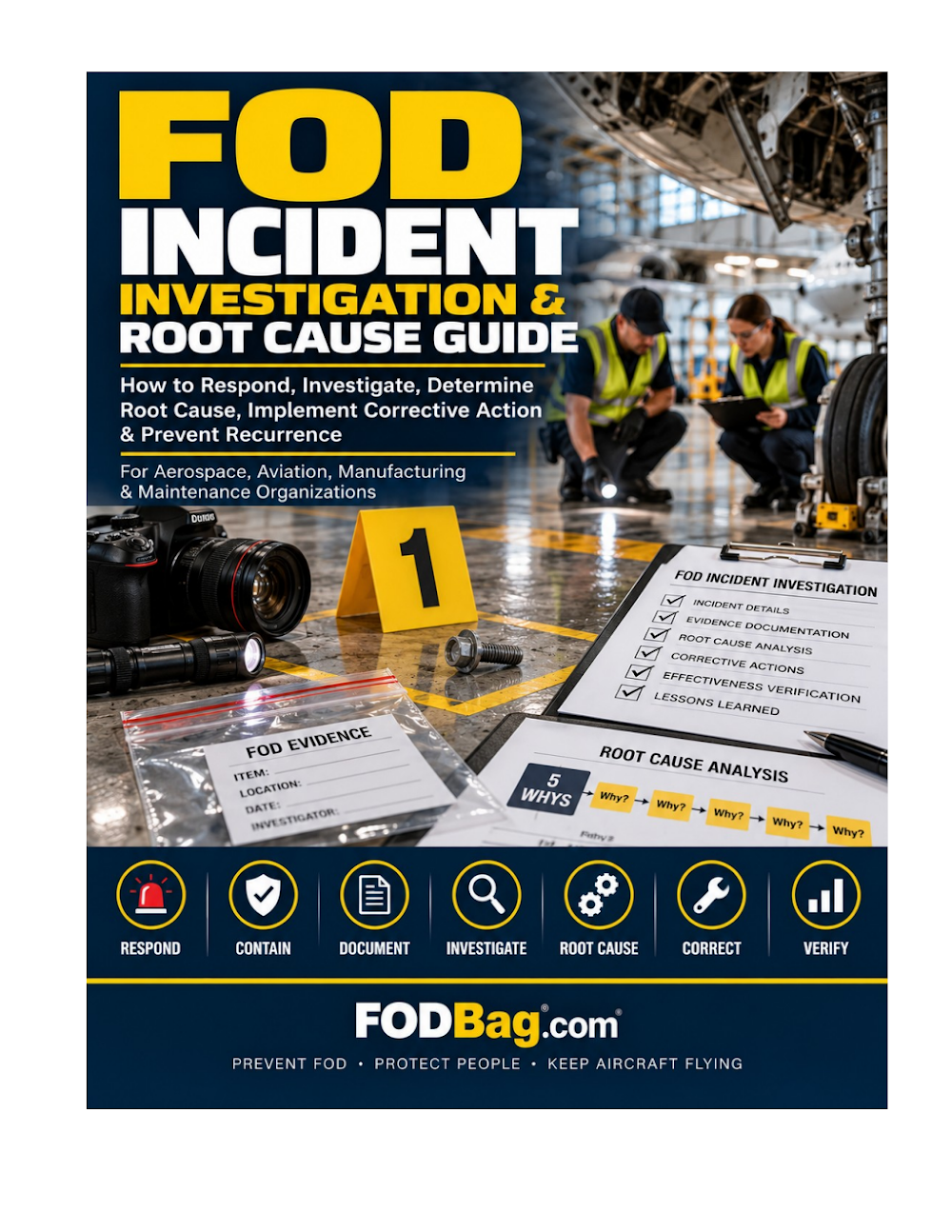
A practical guide for responding to FOD events, preserving evidence, determining contributing and root causes, implementing corrective action, verifying effectiveness and preventing recurrence. Get the Free GuideSee What's Inside17
Pages
15
Sections
7
Ready-to-Use Forms
5
Whys Worksheet
About the FOD Incident Investigation and Root Cause Guide
Quick answer: Removing the object addresses the immediate condition. Investigation addresses why the condition existed. This guide walks through immediate response and containment, notification, evidence, investigation planning, cause analysis, 5 Whys, cause categories and human factors, corrective action, effectiveness verification, trending and closeout.
Who it is for: FOD managers, quality and safety teams, investigators and supervisors in aerospace, aviation, manufacturing, maintenance, repair, overhaul and defense environments.
What’s Inside the Guide
Fifteen sections from the first minutes of an event to lessons learned.
What Is a FOD Incident
Response, Escalation and Evidence
Investigation Planning and Cause Analysis
Cause Categories and Human Factors
Corrective Action and Verification
Trending, Closeout and Forms
Key Principles From the Guide
A short preview of how the guide approaches an investigation.
The first minutes matter
Preserve the story
Start with facts, not conclusions
Immediate cause is not root cause
Completed is not the same as effective
Avoid the common failures
How to Use This Guide
- Use Sections 1 to 4 for immediate response, containment, notification and evidence preservation.
- Use Sections 5 to 8 to distinguish symptoms, immediate causes, contributing factors and root causes.
- Use Sections 9 to 11 to develop corrective actions, verify effectiveness and capture lessons learned.
- Use the ready-to-use worksheets as starting points and tailor them to your approved FOD Prevention Program.
Investigation Flow
- Contain the event and protect the product.
- Notify the responsible people through the written escalation path.
- Preserve and document the evidence.
- Plan the investigation and reconstruct the facts.
- Analyze causes and agree corrective and preventive actions.
- Verify effectiveness, trend the data and close out the investigation.
Forms in the Toolkit
- Form A: FOD Incident Report
- Form B: FOD Evidence / Item Log
- Form C: Investigation Worksheet
- Form D: 5 Whys Worksheet
- Form E: Cause Category Worksheet
- Form F: Corrective Action and Effectiveness Tracker
- Form G: Investigation Closeout Checklist
Get the FOD Incident Investigation and Root Cause Guide
Enter your details and we will email you the PDF right away.
- 17-page guide (PDF)
- 7 ready-to-use investigation forms
- 5 Whys and cause-category worksheets
- Corrective action and effectiveness tracker
Free for internal organizational use. Educational resource from FODBag.com, a Powell Pack Products company.
Get the Free Guide
Enter your details and we will email you the PDF of FOD Incident Investigation & Root Cause Guide right away.
Related Reading
Go deeper on the topics in the FOD Incident Investigation and Root Cause Guide.
More Free FOD Prevention Guides
Each guide is free to request and written for aerospace, aviation, MRO and manufacturing teams.