
FOD Manager's Handbook
A field-oriented handbook for the person responsible for making FOD prevention work every day, not merely maintaining a procedure. Get the Free GuideSee What's Inside30
Pages
6
Quick-Start Steps
4
Weeks in the First-30-Days Plan
9
Incident Playbook Steps
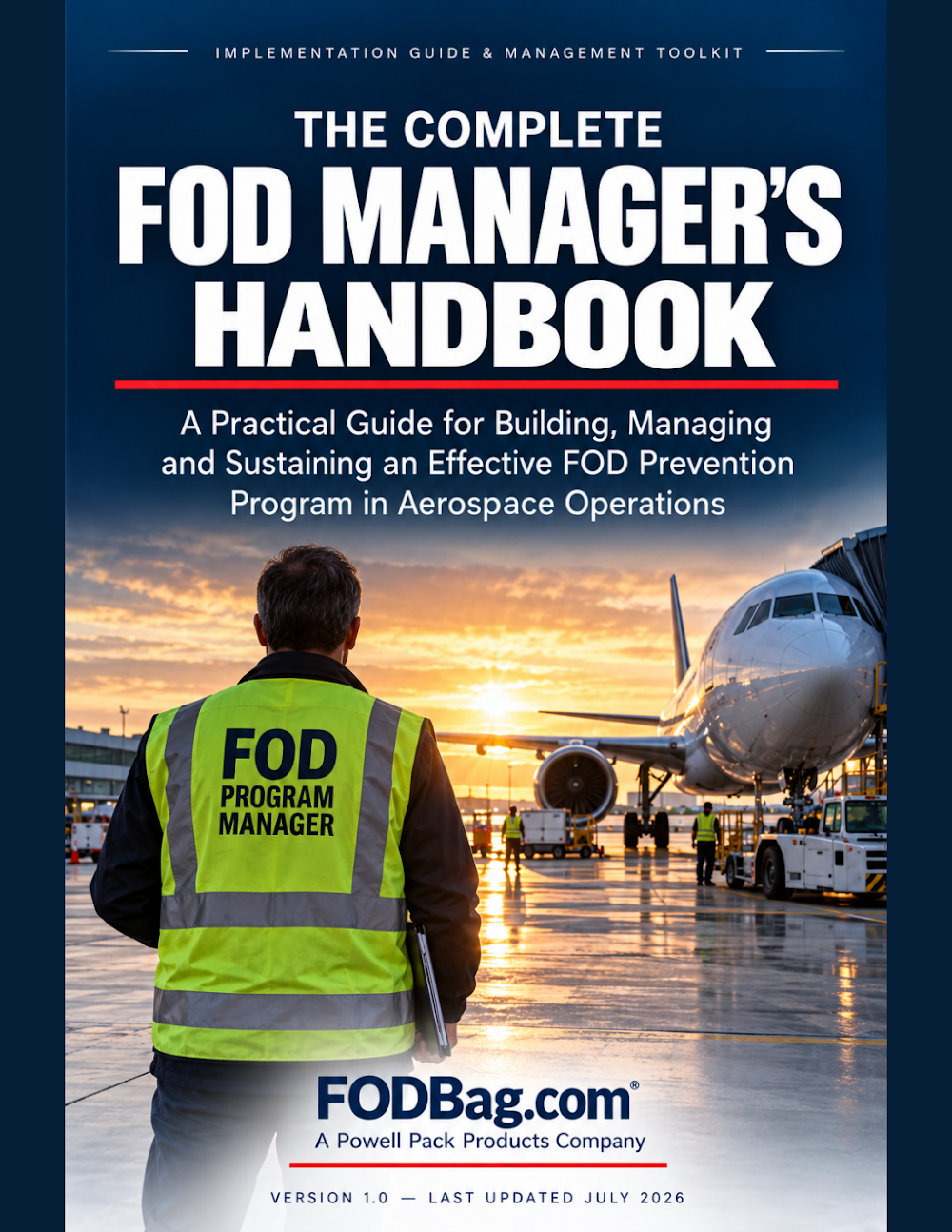
About the FOD Manager’s Handbook
Quick answer: A FOD Manager translates standards, customer requirements and organizational risk into practical controls that people can understand, follow and prove effective. This handbook covers the role’s authority and scope, a program charter, the first 30 days, requirements control, risk management, inspection and training rhythm, incident response, metrics, management review and audit readiness.
Who it is for: FOD managers and program owners who connect quality, operations, manufacturing, maintenance, engineering, supply chain, training and leadership.

What’s Inside the Handbook
From the manager’s role and charter to the monthly dashboard and self-assessment.
Role, Charter and First 30 Days
Requirements and Risk
Area Control and Manager Rhythm
Inspection, Training and Accountability
Change, Incidents and Corrective Action
Metrics, Review and Audit Readiness
Key Ideas From the Handbook
A short preview of how the handbook frames the role.
Authority must match responsibility
Write a short program charter
Learn the real system before redesigning it
Inspect controls, not just cleanliness
Respond to incidents in order
Use metrics that reveal sources, not reward under-reporting
The FOD Manager Mission
- Prevent foreign objects from reaching or damaging product, equipment and operating environments.
- Build risk-based controls that are practical enough to be followed consistently.
- Create objective evidence that the FOD prevention program is implemented and effective.
- Detect weak signals early, investigate failures and drive corrective action.
- Give leadership a clear view of FOD risk, trends, priorities and resource needs.
Quick-Start Path
- Confirm your authority, scope and applicable requirements.
- Map FOD-sensitive areas, products and processes.
- Establish a risk-based inspection and control rhythm.
- Build training, accountability and incident-response systems.
- Use the dashboard and management-review tools in this handbook.
- Audit the system and continuously improve it.
Tools in the Handbook
- Program charter
- FOD risk register
- Monthly FOD manager dashboard
- FOD Manager self-assessment
- Manager’s audit evidence file
- Weekly FOD Manager checklist
Get the FOD Manager’s Handbook
Enter your details and we will email you the PDF right away.
- 30-page handbook (PDF)
- Program charter and first-30-days plan
- Risk register, dashboard and self-assessment
- Weekly manager checklist and FAQ
Free for internal organizational use. Educational resource from FODBag.com, a Powell Pack Products company.
Get the Free Guide
Enter your details and we will email you the PDF of FOD Manager's Handbook right away.
Related Reading
Go deeper on the topics in the FOD Manager’s Handbook.
More Free FOD Prevention Guides
Each guide is free to request and written for aerospace, aviation, MRO and manufacturing teams.